
AI search has changed where buyers form opinions about products. ChatGPT, Perplexity, and Google AI Overviews now routinely surface brand recommendations before a user ever visits a website. For most B2B SaaS companies, being cited in those answers drives more qualified traffic than page-two Google rankings ever did.
Answer Engine Optimization (AEO) is the discipline of ensuring your brand is visible and positively represented in AI-generated answers. Dedicated AEO tools track which prompts mention your brand, which sources AI models cite, and what competitors are doing that you’re not. Without them, you have no visibility into this channel and no way to measure whether your efforts are working.
This guide covers the 12 best AEO tools in 2026—purpose-built platforms that track AI visibility across ChatGPT, Google AI Overviews, Perplexity, and other major AI platforms, with pricing from $24/mo to enterprise custom.
What are the best AEO tools in 2026?
The top 12 AEO tools are Airefs, Profound, Peec AI, Otterly AI, AthenaHQ, Scrunch AI, Knowatoa, Superlines, Promptwatch, Writesonic GEO, Semrush AI Toolkit, and Ahrefs Brand Radar.
Top AEO tools — Comparison table
| Platform | Starting Price | AI Platforms | Best For | Key Differentiator | Free Trial |
|---|---|---|---|---|---|
| Airefs | $24/mo | ChatGPT by default (+ other LLMs on request) | Startups, SMBs, agencies | Reddit monitoring + done-for-you option | Yes (7-day) |
| Profound | $99/mo | ChatGPT only (Starter); 10+ platforms (Growth+) | Enterprise teams | G2 Winter 2026 Leader, 10+ platform coverage | Free AEO Report |
| Peec AI | $89/mo | ChatGPT, Perplexity, AI Overviews + add-ons | Global brands, accuracy-focused teams | UI scraping + 115+ languages | 14 days |
| Otterly AI | $29/mo | ChatGPT, AI Overviews, AI Mode, Perplexity, Gemini, Copilot | SMBs, budget-conscious teams | Gartner Cool Vendor + 4.9/5 rating | 14 days |
| AthenaHQ | $295/mo | ChatGPT, Perplexity, AI Overviews, AI Mode, Gemini, Claude, Copilot, Grok (8+) | Mid-market, growth teams | YC-backed + proven 10x citation growth | Yes (67% off first month) |
| Scrunch AI | $250/mo | ChatGPT, Perplexity, Google AIO, Copilot (Core); 9+ (Enterprise) | Enterprises wanting active optimization | Agent Experience Platform (AXP) | 7 days |
| Knowatoa | $59/mo | ChatGPT, AI Mode, AI Overviews (Starter); + Claude, Gemini, Meta AI, Perplexity (Growth) | Teams wanting structured support + daily tracking | BISCUIT Framework + dedicated account rep | 7 days |
| Superlines | EUR 74/mo (annual) | ChatGPT, Perplexity, Copilot, AI Overviews, AI Mode, Gemini, DeepSeek, Claude, Mistral, Grok (10+) | European teams, agencies, technical users | Real live AI interface data + MCP server | 7 days |
| Promptwatch | $99/mo | ChatGPT, Gemini, Claude, Perplexity, Grok, Copilot, DeepSeek, AI Overviews, Mistral, Meta AI (10) | Agencies, 10-platform coverage | 1.11B citations dataset | 7 days |
| Writesonic GEO | $249/mo | ChatGPT, Perplexity, AI Overviews, Gemini (Professional+) | Teams wanting GEO tracking + content creation | 120M+ AI conversation dataset + content engine | Yes |
| Semrush AI Toolkit | $99/mo (per domain) | ChatGPT, Google AI Overviews, AI Mode, Perplexity, Gemini | SEO teams already on Semrush | Full SEO platform integration | No (demo reports) |
| Ahrefs Brand Radar | EUR 773/mo (min.) | ChatGPT, Perplexity, Gemini, Copilot, Google AI Overviews, AI Mode | SEO teams already on Ahrefs | 253M+ monthly prompts + Ahrefs SEO integration | No |
1. Airefs: Best AEO tool for startups and SMBs
Airefs is built around two ideas most AEO tools miss: focus and action. On focus—it tracks prompts on ChatGPT by default, where the bulk of AI search demand actually is, similar to how SEO focuses on Google rather than spreading effort across every search engine. On action—the platform doesn’t just show you where you’re mentioned; it surfaces the specific Reddit threads to join, the content gaps your competitors are filling, and the sources AI models cite most in your category.
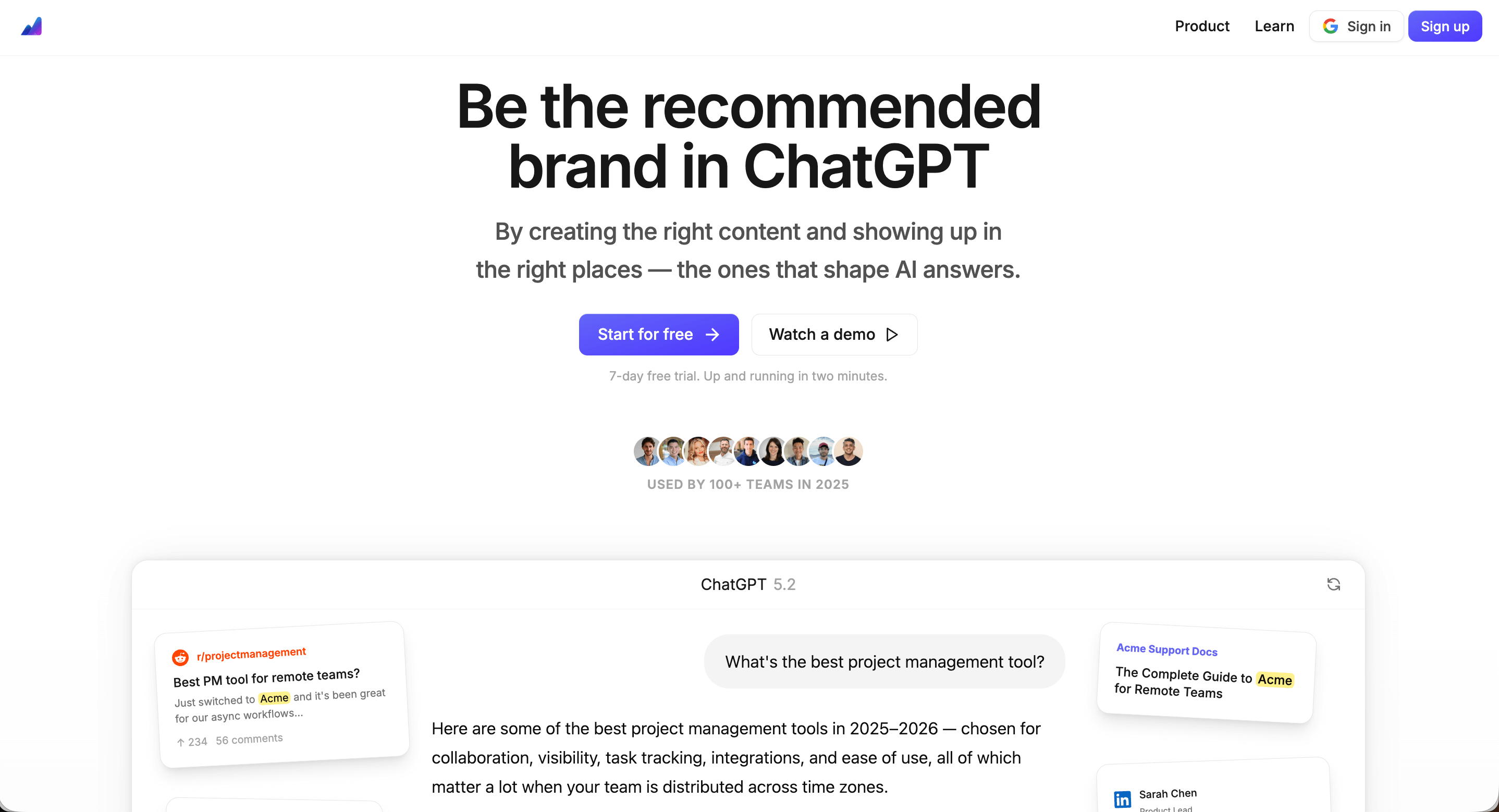
Airefs combines two tracking methods: Prompt Tracking (runs user-like prompts on ChatGPT, other LLMs available on request) and AI Search Analytics (monitors AI crawlers visiting your site across all LLMs by default). This tells you not just if you’re mentioned, but why—and what to do about it.
For teams ready to move from tracking to execution, the done-for-you tier at $249/mo+ includes content creation and community engagement on your behalf. That combination of tracking software and optional agency execution is unusual in the AEO category.
Key features
- ChatGPT-first prompt tracking: Prompts tracked on ChatGPT by default—where most AI search demand is—with other LLMs available upon request
- AI Search Analytics: Monitor AI crawler activity across all LLMs and see real traffic from AI search coming to your site
- Reddit keyword monitoring: Track 3–30 keywords (plan-dependent) to spot relevant conversations before they become established AI sources
- Competitor source analysis: Identify sources your competitors are cited in that you’re not
- Content opportunity identification: Surface specific articles and discussions AI models rely on in your market
- Done-for-you tier: Full content creation and community engagement managed by the Airefs team
Pricing
All plans reflect yearly pricing.
- Lite: $24/mo — 1 domain, 3 competitors, 25 prompts, 2-day refresh, 7-day analytics history, 3 Reddit keywords
- Pro: $49/mo — 3 domains, 5 competitors, 60 prompts, daily refresh, 90-day history, 10 Reddit keywords, 2 seats, 7-day free trial
- Expert: $83/mo — Unlimited domains, 10 competitors, 150 prompts, 30 Reddit keywords, 10 seats, AEO strategist access
- Done-for-you: $249/mo+ — Monthly strategy calls, content creation, discussion participation
Pros & cons
Pros:
- Lowest cost of entry at $24/mo with a 7-day free trial on the Pro plan
- Reddit monitoring has no equivalent in most AEO tools
- AI Search Analytics covers all LLMs for crawler activity by default
- Done-for-you tier bridges the gap between tracking and execution
Cons:
- Prompt tracking defaults to ChatGPT (other LLMs available on request)
- No AI content generation feature like Profound Agents or Writesonic
- Smaller customer base than enterprise-funded competitors
Customers
Airefs serves 100+ teams across startups, B2B SaaS, agencies, and content teams in North America and Europe with a 5.0/5 rating.
While every other AI search visibility tool showed me whether I was being cited, Airefs showed me all 571 URLs that were being cited.
— Lillian P, Fractional CMO
Website: getairefs.com
2. Profound: Best AEO tool for enterprise teams
Profound is the most well-funded platform in the AEO category—$58.5M raised from Khosla Ventures, Kleiner Perkins, and Sequoia—and its feature set reflects that investment. It tracks brand mentions, citations, sentiment, and prompt volume data across 10+ AI platforms, and its Agents feature creates AEO-optimized content at scale with human-in-the-loop review.
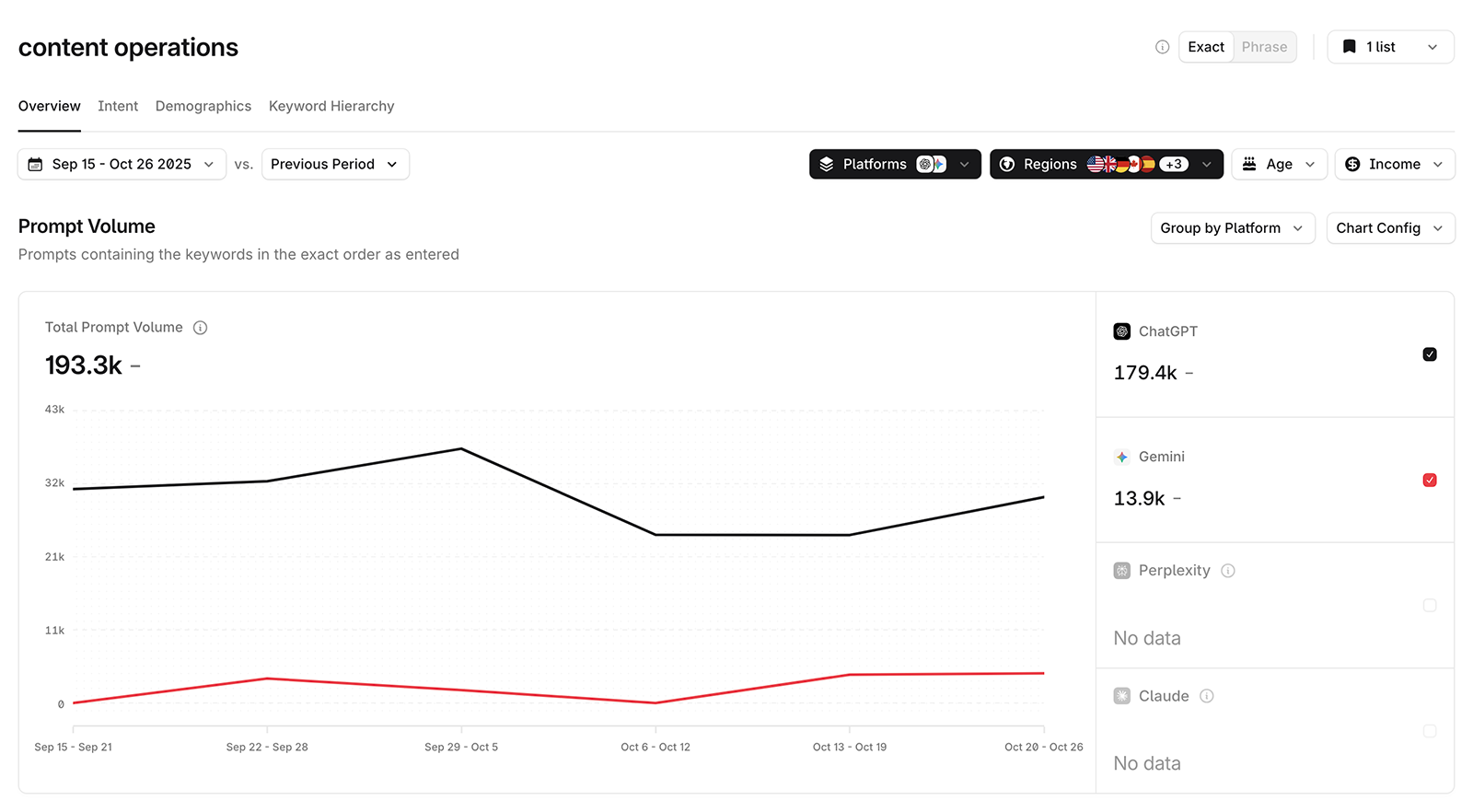
The G2 Winter 2026 AEO Leader designation and customer list (MongoDB, Ramp, Figma, Docusign, Zapier) confirm its position as the enterprise default. The catch: the $99/mo Starter plan covers ChatGPT only with 50 prompts—deliberately limited to encourage upgrades. Meaningful functionality begins at the $399/mo Growth plan.
For teams with the budget who want the most complete platform in the market—monitoring, content creation, prompt volume data, and ChatGPT Shopping tracking—Profound is the benchmark everything else is measured against.
Key features
- 10+ platform coverage: ChatGPT, Perplexity, Claude, Gemini, Grok, Copilot, Meta AI, DeepSeek, Google AI Overviews
- Prompt volumes: AI search demand data showing volume trends for tracked queries—unique in the market
- ChatGPT Shopping: Tracks product recommendations and shopping triggers for e-commerce brands
- Agents: AI-optimized content creation at scale (listicles, how-tos, comparisons) with human-in-the-loop review
- Answer Engine Insights: Brand mention tracking, citation discovery, AI response analysis
Pricing
- Starter: $99/mo — ChatGPT only, 50 prompts
- Growth: $399/mo — ChatGPT, Perplexity, Google AI Overviews, 100 prompts, AI content generation
- Enterprise: Custom — All 10+ platforms, API access, full features
- Agency Growth: $99/mo — 10 pitch workspaces
- Agency Full: $399/mo+ — Full client workspaces
Pros & cons
Pros:
- Most comprehensive platform coverage (10+ AI models)
- Prompt volume data is a unique differentiating feature no alternative matches
- G2 Winter 2026 Leader with proven enterprise results (Ramp: 7x AI visibility)
- Full-service platform combining monitoring + content generation + shopping tracking
Cons:
- Starter plan ($99/mo) is deliberately limited—ChatGPT only, 50 prompts
- $399/mo Growth plan required for meaningful multi-platform tracking
- No transparent Enterprise pricing
- Premium pricing vs alternatives at equivalent or better functionality
Customers
Profound serves MongoDB, Indeed, Mercury, Docusign, Zapier, Ramp, Figma, Zocdoc, G2, US Bank, Chime, Clay, and others. Ramp boosted AI visibility 7x and became the 5th most visible fintech brand globally within weeks.
Website: tryprofound.com
3. Peec AI: Best AEO tool for accuracy and global brands
Profound uses a proprietary AI crawler. Peec AI uses UI scraping—it simulates real user interactions and tracks what users actually see rather than what an API returns. For teams where data accuracy is non-negotiable, this methodology matters.
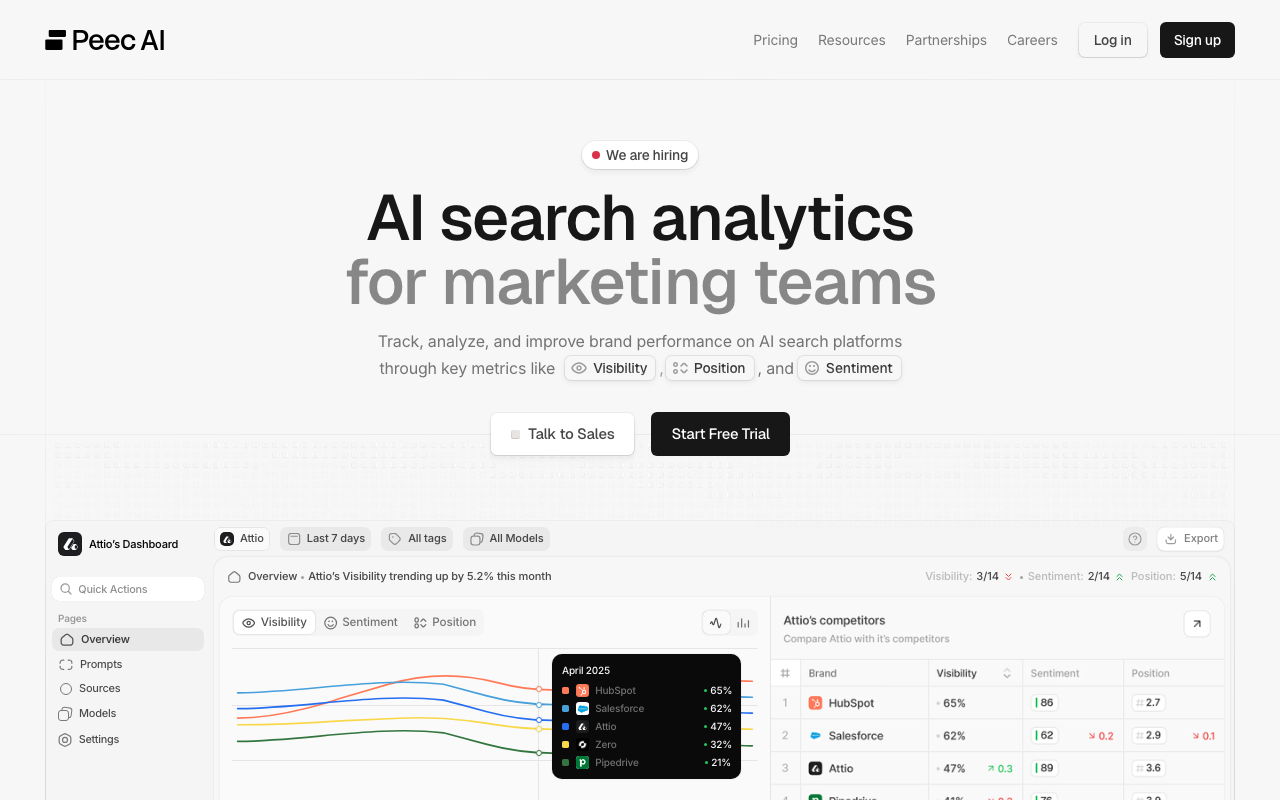
Peec launched in early 2025, hit EUR 650K ARR within four months, and closed a $21M Series A by November—the fastest-growing funded AEO platform by revenue velocity. Its 115+ language support is the broadest in the category and essential for any brand operating in non-English markets.
The limitation is scope: Peec monitors, diagnoses, and recommends—but it doesn’t write content. Teams needing a monitoring-to-content workflow will find Profound or Writesonic GEO more complete.
Key features
- UI scraping technology: Tracks actual user-facing results, not synthetic API responses
- 115+ language support: Broadest language coverage in the AEO category
- Brand visibility percentage metrics: Exact share of relevant AI responses mentioning your brand
- Source and citation tracking: Identify which sources AI models cite in your category
- Competitor benchmarking with regional breakdowns: Compare visibility by country and platform
- Daily tracking: All plans include daily refresh of core platforms
Pricing
- Starting at $89/mo — 14-day free trial; ChatGPT, Perplexity, and AI Overviews included on all plans
- Additional platforms: Claude, Gemini, DeepSeek, Grok — EUR 20–30/mo each
Pros & cons
Pros:
- UI scraping accuracy reflects what users actually see
- 115+ languages—critical for global or non-English markets
- $30M+ funding with proven enterprise case studies (Wix: 5x LLM traffic YoY)
- 14-day free trial—longer than most competitors
Cons:
- No content generation capability
- Pay-per-platform model can get expensive for full coverage
- No GA4, GSC, or BI tool integrations
Customers
Peec AI serves Wix, Glide, Graphite, and Merge. Wix achieved a 5x year-over-year increase in LLM traffic and demo requests. Glide got blog posts ranking in ChatGPT and Perplexity within 24 hours of publishing.
Peec allows us to pinpoint the exact types of content that are surfaced in specific LLMs.
— Crystal Carter, Head of SEO Comms, Wix
Website: peec.ai
4. Otterly AI: Best AEO tool for SMBs on a budget
Otterly AI is the most accessible AEO platform in this list. At $29/mo, it tracks brand mentions, citations, and sentiment across six AI engines—ChatGPT, AI Overviews, AI Mode, Perplexity, Gemini, and Copilot—and has earned Gartner Cool Vendor 2025 recognition alongside a 4.9/5 rating across 250 reviews.
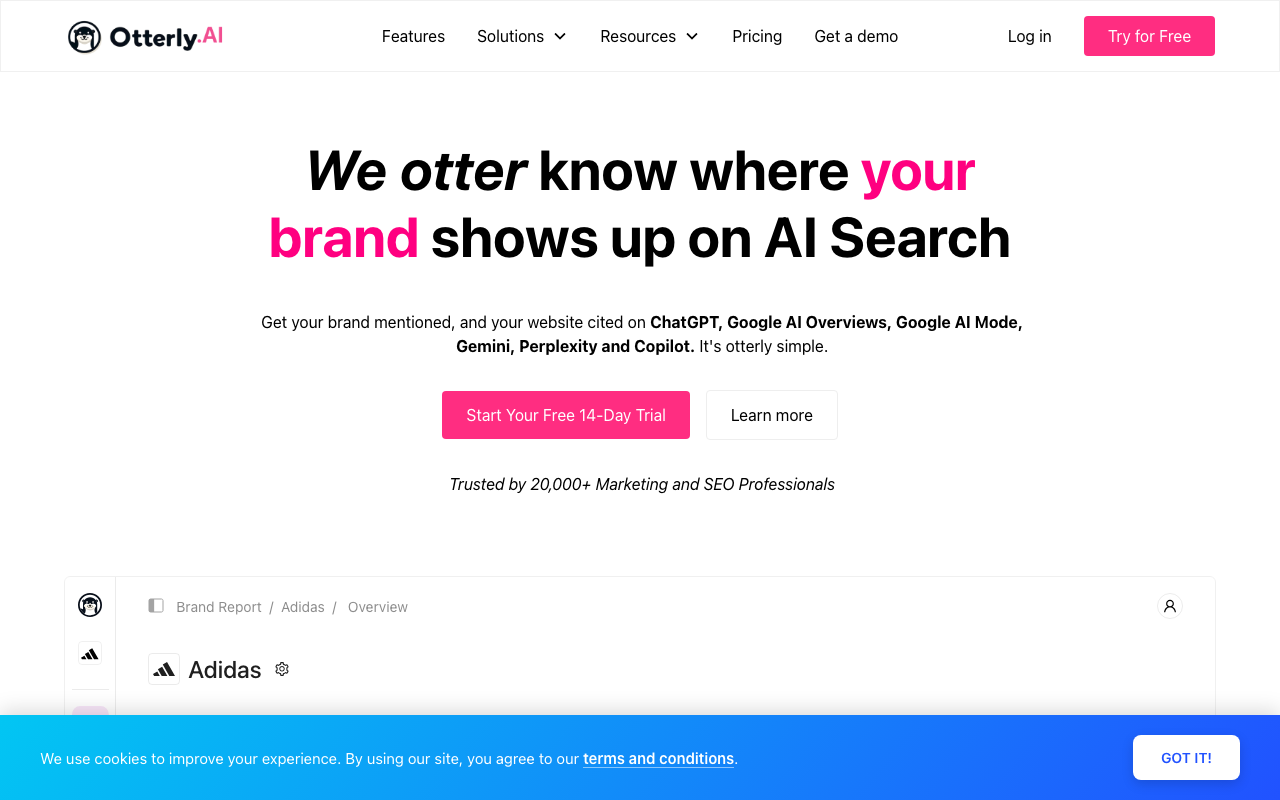
Founded in 2024 in Austria, the company serves 20,000+ marketing and SEO professionals across 40+ countries. For teams that want to prove AI visibility ROI before committing to a larger budget, Otterly’s 14-day free trial (no credit card) and transparent pricing make it the easiest platform to evaluate.
The GEO Audit feature—analyzing 25+ on-page factors and providing specific optimization recommendations—adds an actionable layer most entry-tier platforms skip.
Key features
- 6-platform tracking: ChatGPT, AI Overviews, AI Mode, Perplexity, Gemini, Copilot
- GEO Audit: 25+ on-page factor analysis with specific optimization recommendations
- Brand mention tracking: Sentiment analysis, position tracking, citation discovery
- Competitor benchmarking: Share of voice tracking across AI platforms
- AI keyword research and prompt discovery: Identifies prompts triggering brand mentions
- Automated weekly reports: Regular performance summaries
Pricing
- Starter: $29/mo
- Growth: $189/mo
- Business: $489/mo
- Enterprise: Custom
- Add-ons: AI Mode & Gemini tracking $9–149/mo by plan tier
- Free trial: 14 days, no credit card
Pros & cons
Pros:
- Most affordable in this list at $29/mo with a proper feature set
- Gartner Cool Vendor 2025 + G2 High Performer recognition
- 4.9/5 across 250 reviews with 95% of customers seeing insights within 1 month
- 40+ countries with multi-language monitoring
Cons:
- Small team (2–10 employees) may limit support pace
- Add-on pricing for Gemini and AI Mode adds to base cost
- Austria-based (timezone friction for US customers)
- No GA4 or GSC integrations listed
Customers
Otterly AI serves 20,000+ marketing and SEO professionals including Opera, Bacula Systems, XXXLutz, Avis Budget Group, Roadsurfer, Auto1, A1 Telekom, SmartRecruiters, and Campaign Monitor across 40+ countries.
Otterly is a game changer. The GEO audit feature alone has helped us identify and fix issues we didn’t even know existed.
— Roman Kalkowski, Head of Marketing, Vaadin
Website: otterly.ai
5. AthenaHQ: Best AEO tool for teams that need to prove ROI
AthenaHQ is Y Combinator-backed, built by a team from Google and DeepMind, and has advisors from OpenAI, Anthropic, and elite marketing backgrounds (ex-Estée Lauder, Algolia, PepsiCo). More importantly, its case studies are the most quantified in the category.
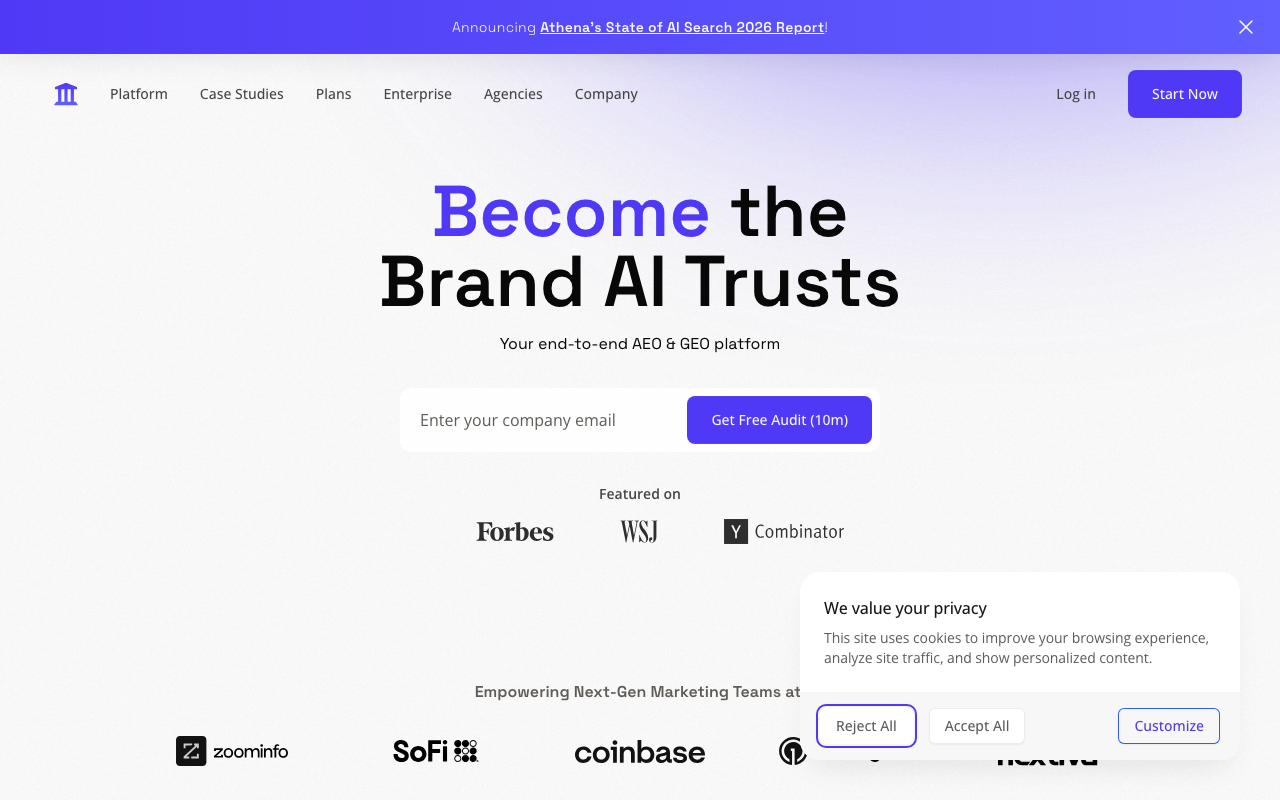
Rootly achieved approximately 10x citation rate growth with $126K in incremental media value. Lago saw a 50% increase in demos from AI search. Gruns grew share of voice from 2.0% to 12.6% in 60 days. For teams that need to justify AEO investment internally, that kind of documented result is valuable—alongside the platform’s own report of 85% faster response to brand mentions and 5x increase in AI content citations.
The platform tracks 8 LLMs with a credit-based system. Enterprise adds a content optimization AI agent with Deep Research and the proprietary ACE citation engine for identifying high-impact citation opportunities.
Key features
- Flexible AI visibility tracking across 8 LLMs with credit-based system
- On/off-page GEO analysis: Both owned content and external sources
- AI blindspot detection: Reveals gaps where your brand should appear but doesn’t
- Impersonation detection: Flags AI misrepresenting your brand
- Citation intelligence: Deep analysis of which sources AI models trust
- Content optimization AI agent (Enterprise): Deep Research with ACE citation engine
- Unlimited seats with RBAC on all plans
Pricing
- Self-Serve: $295/mo (first month 67% off at $95; 17% annual discount)
- 3,600 credits, GA4 + Google Search Console integrations, single language/region
- Enterprise: Custom — content optimization AI agent, ACE citation engine, API access, SAML/OIDC SSO, dedicated GEO specialist, BI tools
Pros & cons
Pros:
- Strongest documented case studies in the AEO category (10x citation growth, 50% demo increase)
- YC backing + advisors from OpenAI, Anthropic, DeepMind
- GA4 and Google Search Console integrations on Self-Serve plan
- Unlimited seats with RBAC on all plans
Cons:
- $295/mo minimum is high for early-stage companies
- Self-Serve limited to single language/region
- Credit-based pricing adds complexity
- Missing Meta AI and DeepSeek tracking
Customers
AthenaHQ serves ZoomInfo, SoFi, Coinbase, OneSignal, Nextiva, Paperless Post, DeVry University, Volkswagen, Render, Rootly, Lago, and Gruns.
With AthenaHQ, Rootly achieved approximately 10x citation rate growth, with non-branded mentions increasing by 126%. This translated to $126,000 in incremental media value. GEO has become our #1 growth pillar.
— Rootly Case Study
Website: athenahq.ai
6. Scrunch AI: Best AEO tool for AI agent optimization
Scrunch AI is the only platform in this list that actively optimizes how AI agents interact with your website content—not just monitors visibility. The Agent Experience Platform (AXP), available on Enterprise, creates a parallel AI-optimized version of your site: one documented case reduced a page from 263,220 bytes to 4,578 bytes (98% reduction) while maintaining all essential information for AI agents.
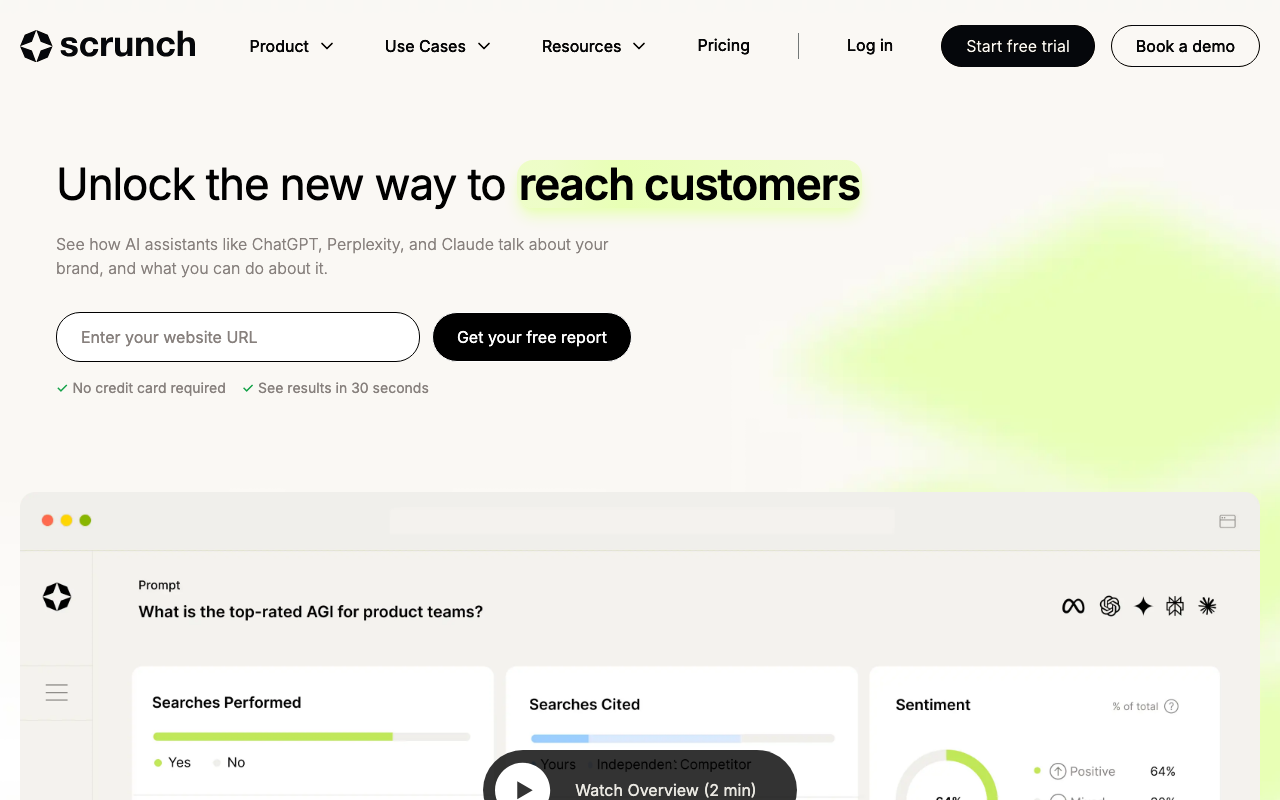
The Core plan ($250/mo) covers 4 LLMs with 125 prompts, sentiment analysis, and Looker Studio integration. Enterprise adds Claude, Gemini, Meta AI, AI Mode, and Grok alongside the AXP technology and dedicated account team.
With $15M+ in funding and customers like Lenovo, Clerk, Skims, and Penn State, Scrunch AI is the most technically ambitious platform in this comparison. For enterprises where AI crawler optimization matters as much as monitoring, it’s the only option.
Key features
- AXP (Agent Experience Platform): Creates a parallel AI-optimized version of your content specifically for AI agents visiting your site
- Monitoring across 9+ LLMs: Brand presence, competitor analysis, persona and topic comparisons
- AI bot traffic feed: Real-time monitoring of AI crawler activity on your site
- Citation source discovery: Which pages and domains AI models cite for your brand
- Data API: Programmatic access for integration into internal systems and AI workflows
- Looker Studio integration: Custom dashboards and reporting
Pricing
- Core: $250/mo — 125 prompts, 4 LLMs (ChatGPT, Perplexity, Google AIO, Copilot), 1 brand, 5 users, sentiment analysis, Looker Studio
- Enterprise: Custom — 9+ LLMs, AXP, advanced API, SSO (SAML/OIDC), dedicated account team
- Free trial: 7 days
- Add-ons: +$25/mo per user, +$75/mo for 5 seats
Pros & cons
Pros:
- AXP is unique—no other platform actively optimizes content for AI agent consumption
- SOC 2 Type II compliant with RBAC for enterprise governance
- Looker Studio integration and Data API for custom reporting workflows
Cons:
- AXP is Enterprise-only; Core users only get monitoring
- Core limited to 4 LLMs—need Enterprise for Claude, Gemini, and others
- Higher entry price ($250/mo) than most competitors
- No G2 reviews despite press coverage from TechCrunch, The Information, Axios
Customers
Scrunch AI serves 500+ companies including Lenovo, BairesDev, Clerk, Skims, BigTime, Penn State University, and Crunchbase.
We’re seeing 4x growth since adopting it. The AXP platform completely changed how AI models interact with our content.
— Emmett Fear, Growth Lead, Runpod
Website: scrunch.com
7. Knowatoa: Best AEO tool for structured support and daily tracking
Most AEO platforms at the $59/mo price point give you a dashboard to interpret on your own. Knowatoa gives you daily data refreshes, a dedicated account rep, Slack and email support, and a proprietary framework called BISCUIT—all on its entry plan.
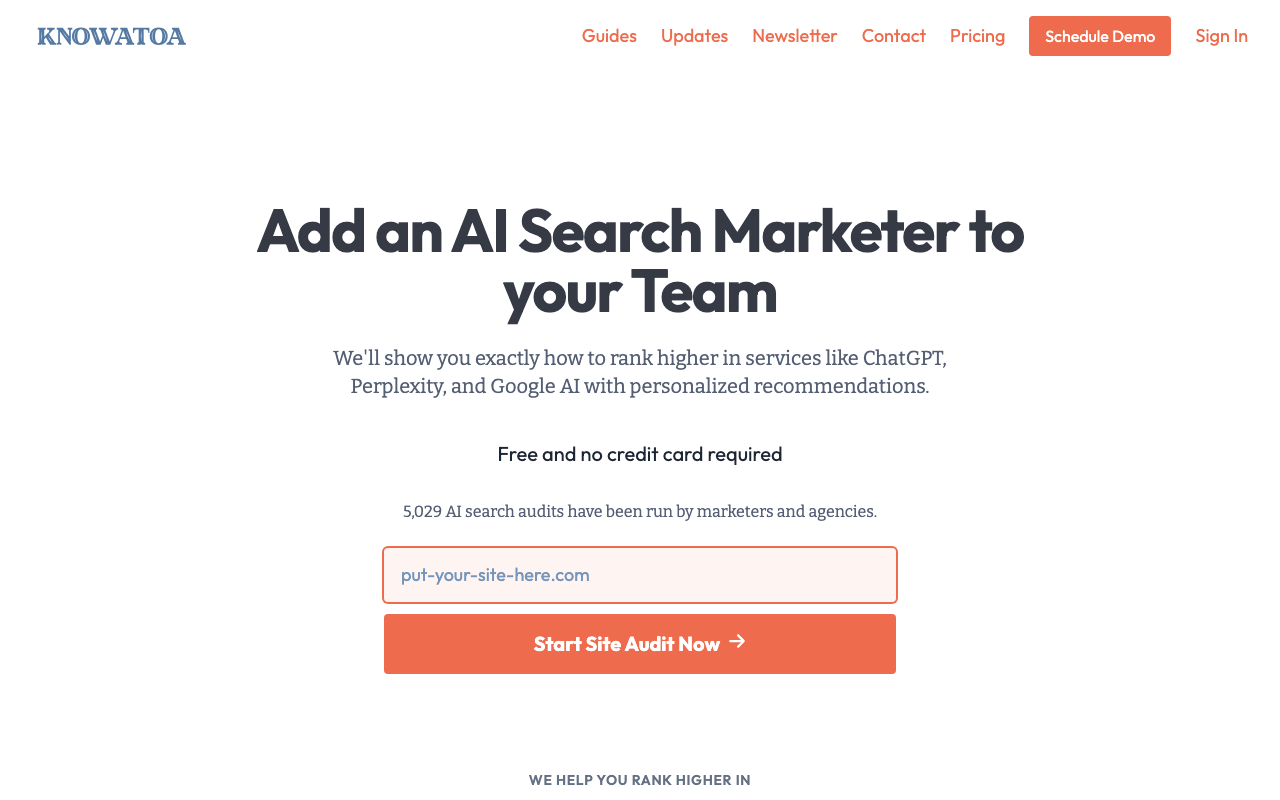
The BISCUIT Framework is described as “like PageRank for AI”—it reverse-engineers how AI systems make recommendations across commercial queries, providing a structured model for why AI models recommend competitors and what changes would shift that. This goes beyond reporting what’s happening to explaining why.
The Starter plan ($59/mo) covers ChatGPT, AI Mode, and AI Overviews with 30 tracked questions and 2,790 AI answers per month. Growth ($199/mo) adds Claude, Gemini, Meta AI, and Perplexity with API access and Looker Studio integration.
Key features
- BISCUIT Framework: Proprietary methodology reverse-engineering AI recommendations—explains why, not just what
- Daily data refreshes on both plans
- Dedicated account rep included on both Starter and Growth—unusual at this price
- Competitor gap analysis: Which prompts competitors appear in that you don’t
- Source opportunities: Specific sources and pages you need to be cited in
- Free AI visibility audit: No-signup tool for initial brand assessment
Pricing
- Starter: $59/mo — 30 questions, 2,790 AI answers/mo, ChatGPT + AI Mode + AI Overviews, daily refresh, dedicated account rep, CSV exports, 7-day trial (no credit card)
- Growth: $199/mo — 100 questions, 21,700 AI answers/mo, + Claude, Gemini, Meta AI, Perplexity, API access, Looker Studio, Ninja Cat integrations
Pros & cons
Pros:
- Dedicated account rep on $59/mo plan—Profound doesn’t offer this below enterprise
- Daily refresh and BISCUIT Framework analytical model on all plans
- Free AI visibility audit with no signup required
- 7-day free trial, no credit card
Cons:
- Only 3 AI platforms on Starter; need Growth ($199/mo) for Claude and Perplexity
- Only 2 pricing tiers with a significant jump ($59 to $199)
- 5,029 audits completed suggests early-stage scale
- No G2 reviews or third-party category recognition yet
Customers
Knowatoa serves B2B SaaS, content, and agency teams. Ross Hudgens, Founder of Siege Media, describes it as “rank tracking for AI search services like ChatGPT, Perplexity, and Claude.”
Not just a tool, it’s a smarter way to approach visibility in AI search.
— Craig Hewitt, Castos
Website: knowatoa.com
8. Superlines: Best AEO tool for 10-platform coverage
Superlines tracks 10+ AI platforms from its entry tier—ChatGPT, Perplexity, Copilot, AI Overviews, AI Mode, Gemini, DeepSeek, Claude, Mistral, and Grok—at EUR 74/mo annually (~$80/mo). That’s the same breadth Profound charges $399/mo to access.
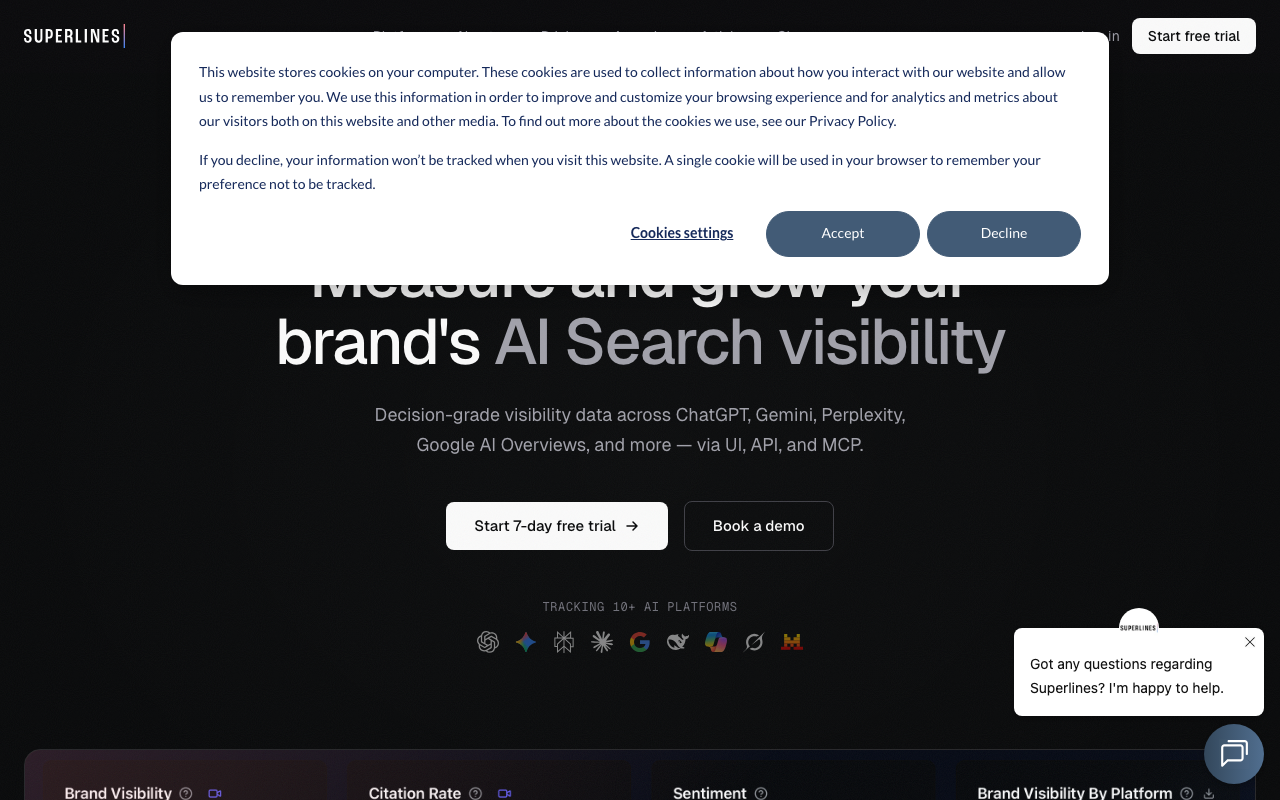
The methodology distinction matters: Superlines uses real live AI interface data rather than API calls, producing results that reflect what users actually see. The platform also offers an enterprise MCP server for agentic workflow integration and unlimited brands and domains on all plans—making it particularly strong for agencies managing multiple clients.
Founded in 2024 as part of the Google for AI Startups Cloud Program, Superlines is primarily used in Europe with customers including Tallink Silja, Supabase, and Tietoevry. The platform holds a 4.8/5 rating across 50 reviews.
Key features
- 10+ platform tracking: ChatGPT, Perplexity, Copilot, AI Overviews, AI Mode, Gemini, DeepSeek, Claude, Mistral, Grok
- Real live AI interface data: Tracks actual UI results, not API responses
- Unlimited brands and domains on all plans
- Enterprise MCP server and API: Pipe AI visibility data into agentic workflows
- In-app AI agent for interpreting visibility data and identifying opportunities
- Share of voice, sentiment, and citation analysis: Full monitoring suite
Pricing
- Starter: EUR 89/mo (EUR 74/mo annual, ~$80/mo) — 7-day free trial
- Growth: EUR 379/mo (EUR 315/mo annual) — 7-day free trial
- Agency Growth: EUR 299/mo
- Enterprise: Custom
Pros & cons
Pros:
- 10+ platform coverage at ~$80/mo—same breadth Profound charges $399/mo for
- Real live UI tracking produces more representative results than API-only platforms
- Unlimited brands and domains on all plans—strong agency value
- MCP server support for agentic workflows is unique at this price point
Cons:
- EUR-based pricing adds currency uncertainty for US teams (~$80/mo, fluctuates)
- Primarily European customer base and timezone
- English, Swedish, and Finnish only—limited language support
- No GA4 or Google Search Console integrations
Customers
Superlines serves Tallink Silja, Elo, Tietoevry, Finnlines, Supabase, and Taito AI. Markku Nykanen, Head of SEO at Tulos, calls it “the leader amongst available GEO solutions in the market.”
Website: superlines.io
9. Promptwatch: Best AEO tool for agencies with large datasets
Promptwatch covers 10 AI platforms—ChatGPT, Gemini, Claude, Perplexity, Grok, Copilot, DeepSeek, AI Overviews, Mistral, and Meta AI—including Mistral and Meta AI that Profound doesn’t track. Its Starter plan at $99/mo matches Profound’s Starter price while offering dramatically more platform coverage.
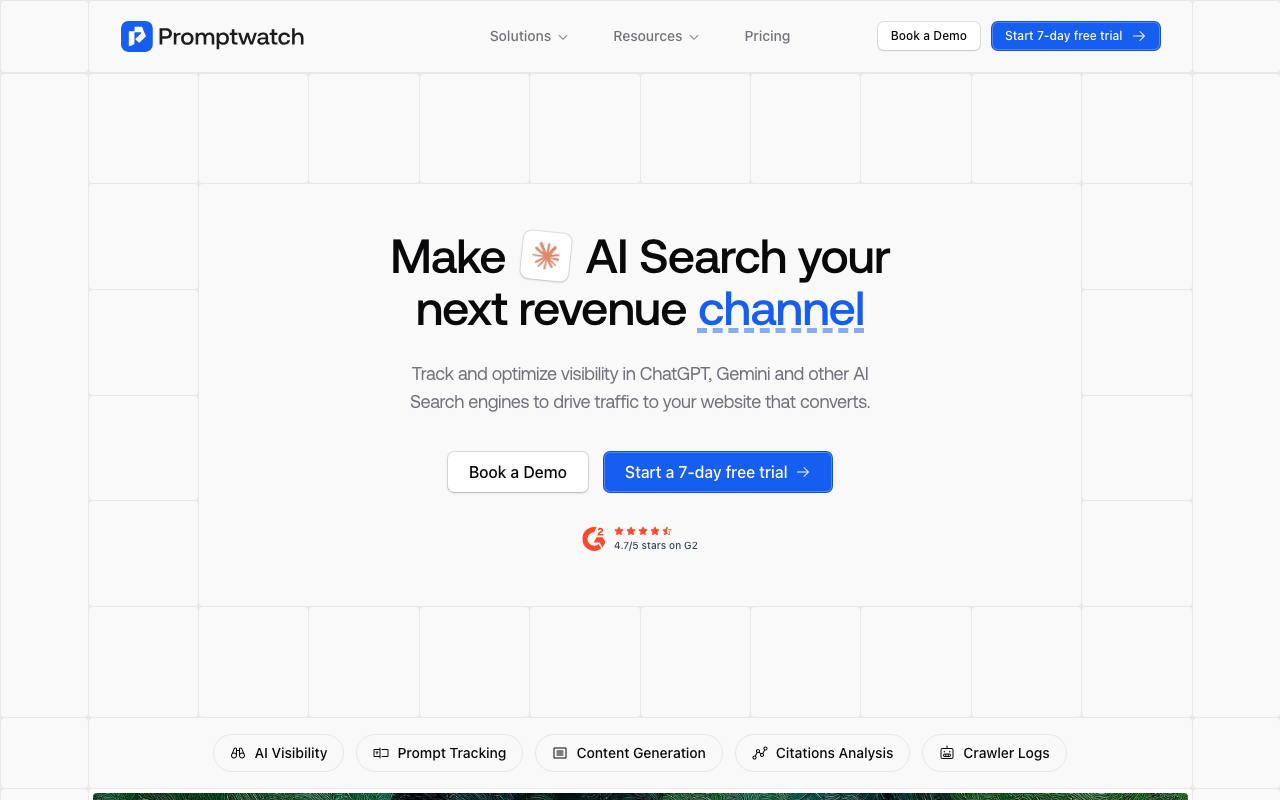
The dataset behind Promptwatch is substantial: 1.11 billion citations, clicks, and prompts collected across 6,900+ brands and agencies. That scale supports reliable benchmark comparisons beyond your own data in isolation. The platform also goes in directions Profound doesn’t: YouTube analysis, entity tracking, Reddit monitoring, and ChatGPT Shopping data.
For agencies, Promptwatch’s free tools—AI Brand Visibility Report, LLMs.txt Generator, and GEO Glossary—are useful for demonstrating AEO value to prospective clients before they commit.
Key features
- 10-platform tracking: ChatGPT, Gemini, Claude, Perplexity, Grok, Copilot, DeepSeek, AI Overviews, Mistral, Meta AI
- Crawler logs: Real-time monitoring of AI bots visiting your site
- ChatGPT Shopping data: Product recommendation and shopping trigger tracking
- Reddit and YouTube tracking: Brand conversation monitoring beyond AI platforms
- Entity tracker: How AI models define and describe your brand
- Content generation: Create and optimize AEO content within the platform
- Free client prospecting tools: AI Brand Visibility Report, LLMs.txt Generator, GEO Glossary
Pricing
- Starter: $99/mo
- Growth: $249/mo
- Business: $579/mo
- Enterprise: Custom
- Free trial: 7 days
Pros & cons
Pros:
- 10-platform coverage at $249/mo Growth vs Profound’s $399/mo—$150/mo cheaper for equivalent breadth
- Includes Mistral and Meta AI that Profound doesn’t track
- 1.11 billion data points supports reliable category benchmarking
- Free tools are genuinely useful for agency client prospecting
- G2 4.7/5 rating
Cons:
- Starter plan feature details not fully disclosed
- No disclosed integrations with GA4, GSC, or BI tools
- Amsterdam HQ may mean timezone friction for US teams
Customers
Promptwatch serves 6,900+ brands and agencies including Booking.com, Center Parcs, and Elaboratum.
Promptwatch is a game changer. It provides actionable insights on AI Visibility that we can actually use.
— Alessandro Di Vito, Managing Consultant, Elaboratum
Website: promptwatch.com
10. Writesonic GEO: Best AEO tool combining tracking with content creation
Most AEO tools stop at measurement. Writesonic GEO combines AI visibility tracking with a full content engine—tracking visibility, identifying opportunities, and creating content to capture them without switching tools.
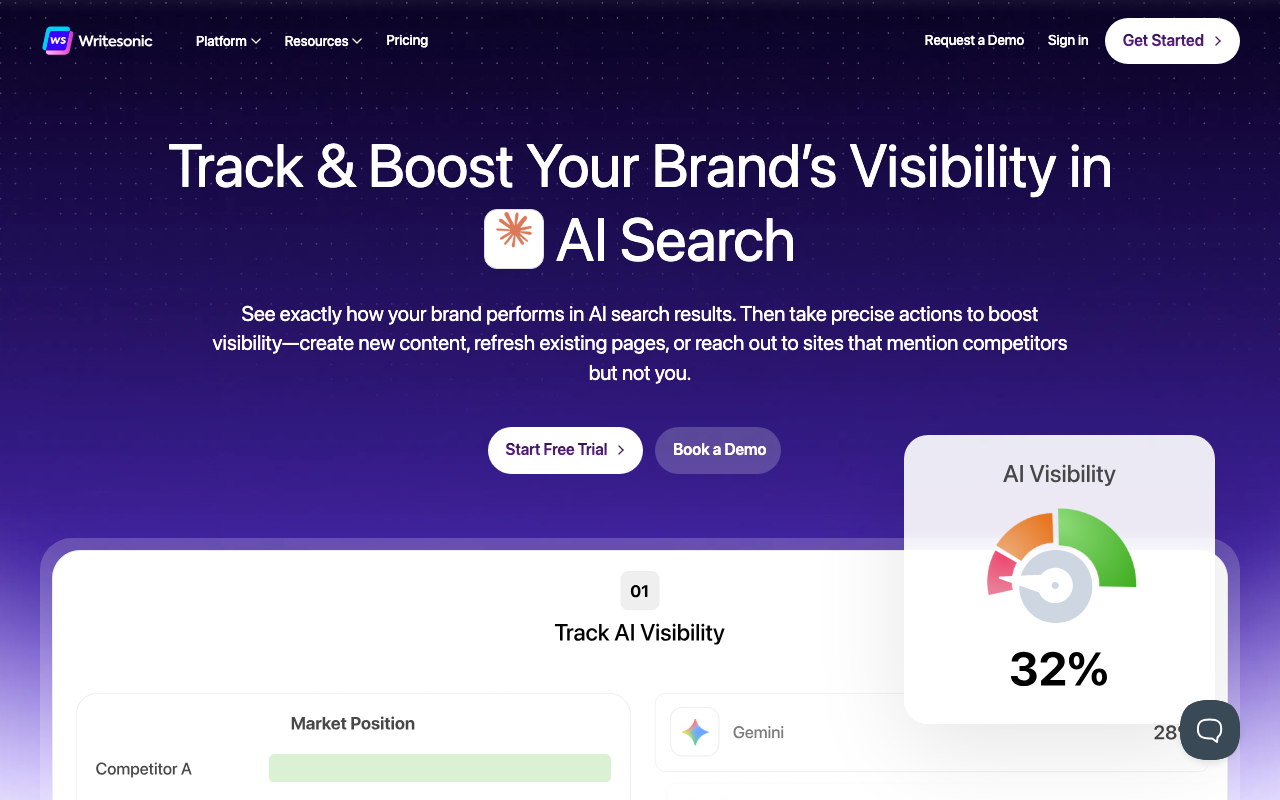
The AI Search Volume Explorer is powered by 120M+ proprietary AI chatbot conversations, providing a different data source than most platforms which rely solely on their own prompt tracking. The platform also integrates with Ahrefs and Google Keyword Planner for traditional SEO alongside GEO features—for teams wanting both in one platform, see our guide on best SEO ranking and reporting software for how these compare.
One important note: GEO features require the Professional plan ($249/mo) or above. Lite ($49/mo) and Standard ($99/mo) plans don’t include any AI visibility tracking.
Key features
- AI visibility tracking across 4–10+ platforms with daily refresh (Professional+)
- AI Search Volume Explorer: 120M+ AI chatbot conversations dataset for prompt research
- AI Visibility Action Center: Citation gap identification, content opportunity recommendations, Reddit/Quora/forum discovery
- Content Engine: 100+ source-backed articles with auto fact-checking, EEAT signals, internal linking
- SEO Suite: Ahrefs + Google Keyword Planner integration, topic clusters, technical SEO fixes
Pricing
- Lite: $49/mo ($39 annual) — No GEO features
- Standard: $99/mo ($79 annual) — No GEO features
- Professional: $249/mo ($199 annual) — ChatGPT, Perplexity, AI Overviews; 100 prompts; daily refresh; 1 region/language
- Advanced: $499/mo ($399 annual) — + Gemini; 200 prompts; sentiment analysis
- Enterprise: Custom — All 10+ platforms
Pros & cons
Pros:
- Combines GEO tracking and content creation in one platform
- Unique 120M+ AI conversation dataset for prompt research
- Strong case studies (25% AI traffic growth, $200K in new revenue from AI visibility)
- SEO suite with Ahrefs and Google Keyword Planner integration
Cons:
- GEO features locked behind Professional plan ($249/mo)—no affordable entry
- Professional limited to 1 region/language only
- Y Combinator backed with 20,000+ users but no dedicated G2 AEO category ranking
Customers
Writesonic serves 20,000+ teams. Dennis Yu, Co-founder BlitzMetrics: “We landed two $100,000 clients who found us through ChatGPT. That’s $200,000 in revenue directly from AI visibility.”
Website: writesonic.com
11. Semrush AI Toolkit: Best AEO tool for teams already on Semrush
Semrush’s AI Visibility Toolkit adds AEO tracking to an established SEO platform with 10M+ users. For teams already using Semrush for keyword research, backlink analysis, and rank tracking, it avoids adding another vendor while getting AI visibility data in the same workspace.
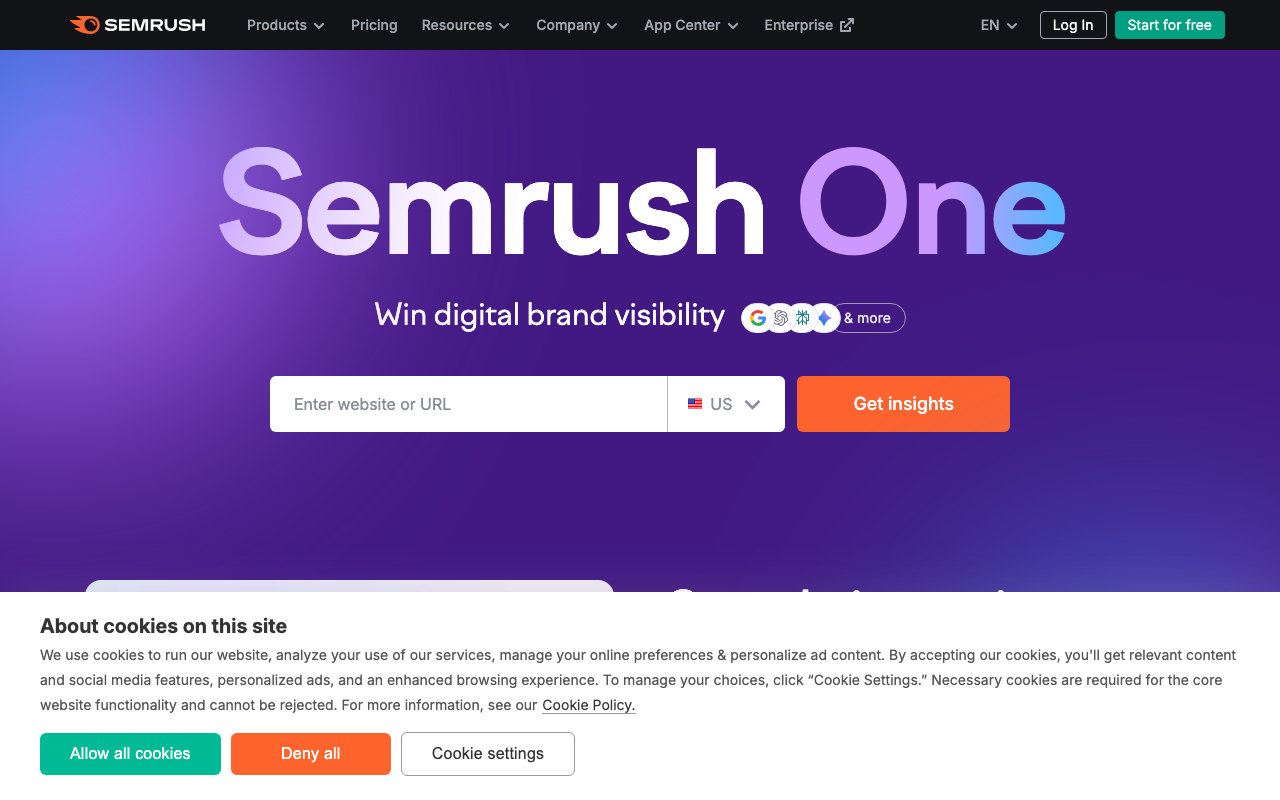
The toolkit tracks 5 AI platforms (ChatGPT, Google AI Overviews, AI Mode, Perplexity, Gemini) and benchmarks your AI Visibility Score against up to 9 competitors. Traditional SEO and AI visibility data sit side by side—useful for teams that need to show stakeholders a complete picture. For teams evaluating how search marketing intelligence tools fit together, the Semrush integration model is worth understanding.
The trade-off: it’s expensive for dedicated AEO use ($99/mo per domain standalone, scaling quickly with add-ons), uses keyword-based tracking rather than natural language prompt tracking, and there’s no free trial.
Key features
- AI Visibility Score: Brand mentions vs median competitor benchmark across 5 platforms
- Competitor benchmarking: Up to 9 competitors across tracked platforms
- AI SEO audit: Crawlability analysis across devices and LLMs
- Keyword opportunity discovery: AI visibility gaps by keyword
- Traditional SEO + AI visibility: Unified reporting in one platform
Pricing
- AI Visibility Toolkit (standalone): $99/mo per domain — 25 custom prompts, no free trial
- Additional domain: +$99/mo; Additional user: +$99/mo; Additional 50 prompts: +$60/mo
- Semrush One Starter: $199/mo — 5 websites, 50 prompts, 500 keywords
- Semrush One Pro+: $299/mo — 15 websites, 100 prompts, 1,500 keywords
- Annual billing: 17% discount
Pros & cons
Pros:
- Single platform for traditional SEO and AI visibility—reduces tool sprawl
- Leverages Semrush’s established data infrastructure and 10M+ user trust
- Quantified customer results: Sure Oak attributes 40% of new leads to AI visibility
Cons:
- Expensive and scaling quickly: +$99/mo per domain, +$99/mo per user, +$60/mo per 50 prompts
- No free trial for the AI toolkit
- Keyword-based tracking is less aligned with conversational AI query patterns
Website: semrush.com
12. Ahrefs Brand Radar: Best AEO tool for teams already on Ahrefs
Ahrefs Brand Radar is an add-on to the established Ahrefs SEO platform with 253M+ monthly prompts—the largest raw prompt database in the AEO category. For teams already using Ahrefs for keyword research and site audits, Brand Radar keeps AI visibility data in the same workspace. For a practical understanding of competitive analysis using Ahrefs data, see our guide on share of voice analysis in Ahrefs.
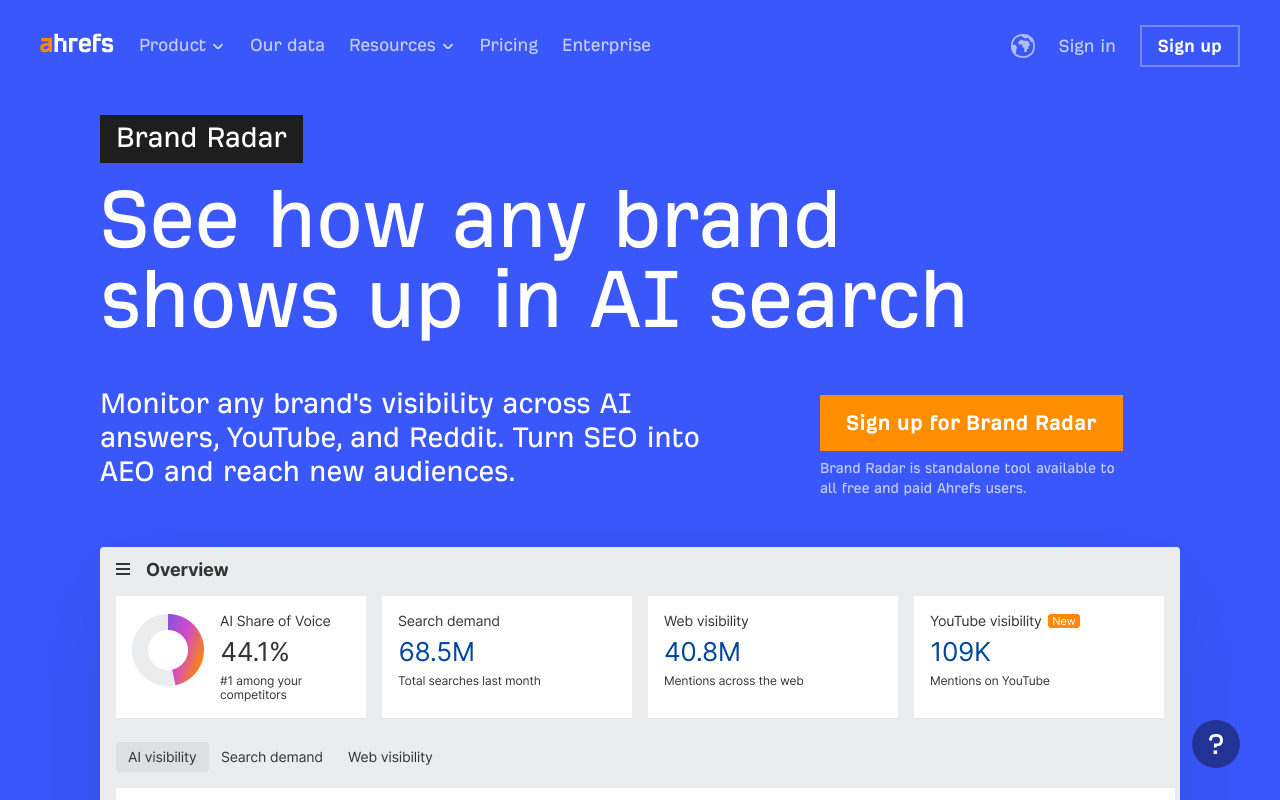
The scale is real: 253M+ monthly prompts from actual search behavior (not synthetic queries). The Industry Segmentation feature—filtering visibility separately for Apple’s fitness vs smartphone presence, for example—is unique. Historical data going further back than most newer competitors provides meaningful trend context.
The trade-offs are real. Independent testing in early 2026 found significant undercounting: one reviewer reported 3 ChatGPT mentions from Ahrefs vs 123 when checked manually—a 97% gap. It uses keyword-based tracking rather than prompt-based tracking, and the minimum cost (~EUR 773/mo) is the highest in this list.
Key features
- AI Share of Voice: Brand impression percentage across AI responses with competitor benchmarking
- 253M+ monthly prompts: Largest prompt database in the AEO category, from real search behavior
- Cited Domains and Pages: Identify sources AI models cite when mentioning your brand
- Web Visibility: Brand mentions across web, YouTube, Reddit, and TikTok
- Industry Segmentation: Separate visibility data by product line or vertical
- Historical data: Longer historical AI visibility trends than most newer tools
- Full Ahrefs integration: Connected to Site Explorer, Keywords Explorer, and Site Audit
Pricing
- Ahrefs base plan required: From EUR 119/mo (Lite)
- Single AI index (per platform): EUR 179/mo
- All 6 indexes bundle: EUR 654/mo
- Custom queries: EUR 1.87/unit
- Minimum cost for full coverage: ~EUR 773/mo
- No free trial for Brand Radar
Pros & cons
Pros:
- Only option integrating AI visibility with a full SEO platform for unified reporting
- Largest prompt database (253M+ monthly) with historical data
- Industry segmentation for multi-product companies
- Web visibility layer (YouTube, Reddit, TikTok) extends beyond AI-only monitoring
Cons:
- Most expensive by far—EUR 773/mo minimum vs alternatives starting at $24/mo
- Independent testing found serious accuracy issues (97% undercounting in ChatGPT)
- Keyword-based tracking is a legacy SEO methodology poorly matched to conversational AI
- No sentiment analysis
- Missing Claude and Grok; only 6 platforms
Customers
Ahrefs serves 10M+ users on its core platform. EWR Digital (February 2026): “Incredibly ambitious and powerful research tool, boasting the largest prompt database available. However, its eye-watering price, questionable accuracy in key areas, and agency-unfriendly model make it a niche solution.”
Website: ahrefs.com
How to choose the right AEO tool
The right AEO tool depends on your budget, team size, and what you need from the tracking.
New to AEO: Otterly AI ($29/mo) and Airefs ($24/mo) are the best entry points. Both have free trials without requiring a credit card. Otterly covers 6 platforms with a GEO audit. Airefs focuses on ChatGPT with Reddit monitoring and a done-for-you path when you’re ready to scale.
Need to prove ROI internally: AthenaHQ has the strongest published case studies in the category (10x citation growth, 50% more demos). Its first-month discount lowers the effective entry cost. For a broader look at competitive analysis approaches, see our guide on how to find competitors of a website.
Platform breadth under $100/mo: Superlines covers 10+ platforms at EUR 74/mo annually—the same breadth Profound charges $399/mo for. Promptwatch covers 10 platforms at $99/mo Starter.
Enterprise teams: Profound is the market benchmark. G2 Winter 2026 Leader status and Sequoia backing make it the safest enterprise choice, with the $399/mo Growth plan being where real functionality lives.
Content creation alongside tracking: Writesonic GEO or Profound Agents. Both combine monitoring with AI-assisted content generation in a single platform.
Already on Semrush or Ahrefs: The respective AI toolkits avoid adding another vendor. Both come with meaningful trade-offs (cost and keyword-based tracking) that are worth evaluating. For context on how these fit into a wider search strategy, see our guide on how to rank in Google AI Overviews.
Frequently asked questions
What is Answer Engine Optimization (AEO)?
Answer Engine Optimization (AEO) is the process of optimizing your content and brand presence to appear as a cited source in AI-generated answers across ChatGPT, Perplexity, Google AI Overviews, Claude, Gemini, and other AI platforms. Unlike SEO, which targets a ranked list of links, AEO focuses on becoming the brand AI models recommend when users ask questions in your category.
How is AEO different from SEO?
SEO focuses on ranking in traditional search results to drive clicks. AEO focuses on being cited within AI-generated answers. AEO requires building brand authority across multiple platforms, creating content that AI models trust as a source, and monitoring which sources AI relies on in your category. Strong SEO foundations—quality content, authority—support AEO performance, so the two are complementary.
Why do I need a dedicated AEO tool?
Traditional SEO tools track keyword rankings and backlinks. AEO tools track brand mentions across AI models, identify which specific sources those models cite, monitor competitor AI visibility, and surface opportunities to improve your own citations. Without a dedicated tool, you have no visibility into this channel and no way to measure whether your efforts are working.
What’s the most affordable AEO tool in 2026?
Airefs starts at $24/mo (yearly pricing), making it the most affordable full-featured AEO platform in this list. Otterly AI starts at $29/mo. Both have free trials with no credit card required on their entry or trial plans.
Do these tools track Google AI Overviews, ChatGPT, and Perplexity?
Coverage varies by platform and plan. Profound covers all three from its Growth plan ($399/mo). Peec AI covers ChatGPT, Perplexity, and AI Overviews from its base plan ($89/mo). Otterly AI covers ChatGPT, AI Overviews, AI Mode, Perplexity, and Gemini from $29/mo. Airefs tracks ChatGPT by default with other platforms available on request.
Should I start with a free trial?
Yes. Most platforms offer trials: Airefs (7 days on Pro plan), Otterly AI (14 days, no credit card), AthenaHQ (first month 67% off), Superlines (7 days), Knowatoa (7 days, no credit card), Scrunch AI (7 days), Promptwatch (7 days). During your trial, run 20–30 prompts relevant to your category, check your mention rate against competitors, and identify which sources AI is citing. That analysis will tell you whether the investment is justified.
Can AEO tools help with content strategy?
The best ones can. Airefs surfaces specific articles, Reddit threads, and discussions that AI models rely on in your category—giving you a prioritized content plan based on what AI actually uses as sources. Writesonic GEO and Profound both include AI-powered content generation. AthenaHQ’s Enterprise tier adds a content optimization AI agent with Deep Research for strategic recommendations.
Track AI visibility across ChatGPT and beyond. Start your free trial with Airefs and see where your brand stands in AI search today—for less than the cost of a Profound Starter plan.