

Yes, it’s official. Advertising has landed in ChatGPT. This transforms the AI chatbot from a question-and-answer tool into a new marketing channel.
Forget banner ads. ChatGPT ads are contextual, sponsored suggestions woven directly into the conversation. It’s a fundamental shift for marketers, brands, and everyone using the platform.
The New Era of Advertising Inside ChatGPT
This was an inevitable move by OpenAI. Running massive AI models is expensive, and subscription fees alone are not enough. Advertising provides a necessary second revenue stream to build a sustainable business.
The approach is to use native placements that feel like a natural part of the chat. Think helpful links or product suggestions that are directly relevant to your query.
Understanding the Financial Motivation
The financial pressure on OpenAI is immense, making ChatGPT ads a matter of when, not if. The company’s revenue is growing fast, but so are its losses. To understand the strategy, it’s worth reviewing what brands need to know about ChatGPT ads.
OpenAI’s revenue is projected to jump from $0.73 million a month in mid-2023 to over $108 million by March 2025. Despite this growth, early 2025 losses were estimated at $7.8 billion against $4.3 billion in revenue. Advertising is designed to close that gap. A great video breakdown covers the financials in more detail.
This strategy puts OpenAI on a collision course with advertising giants like Google, which pulls in over $220 billion a year from ads. The mission is to keep AI accessible while making sure the lights stay on long-term.
What This Means for Brands
This is a direct line to millions of users at the exact moment they are looking for solutions. It’s a chance to reach a highly engaged audience actively seeking information. This channel is becoming a key part of modern search marketing intelligence.
Here are the key takeaways for your brand:
- New Customer Touchpoints: Ads let you appear while users are researching what to buy, right inside the chat.
- Contextual Targeting: Ads are triggered by conversational context and user intent, making them highly relevant.
- First-Mover Advantage: Brands that start early can learn what works before the platform becomes saturated.
Success on this platform is less about outbidding competitors and more about adding real value. It requires a mix of helpful content and strategic placement.
How ChatGPT Ads Work and What They Look Like
Forget disruptive banner ads and pop-ups. Ads in ChatGPT are designed to be conversational and contextual. They appear only when a user’s prompt signals a specific need or interest.
The system analyzes the intent behind the entire conversation, not just keywords. This means an ad is triggered by the natural flow of a dialogue. For example, asking for project management tips might trigger a link to a relevant SaaS tool.
The goal is to feel less like an ad and more like a useful suggestion from the AI. This approach moves away from simple keyword bidding toward understanding conversational nuance. It pinpoints moments where a product is the logical next step for the user.
Ad Formats You Can Expect
The main format being tested is sponsored links and mentions embedded directly into ChatGPT’s answers. These are clearly labeled as sponsored to maintain transparency without disrupting the flow. They are designed to look native, blending with the surrounding text.
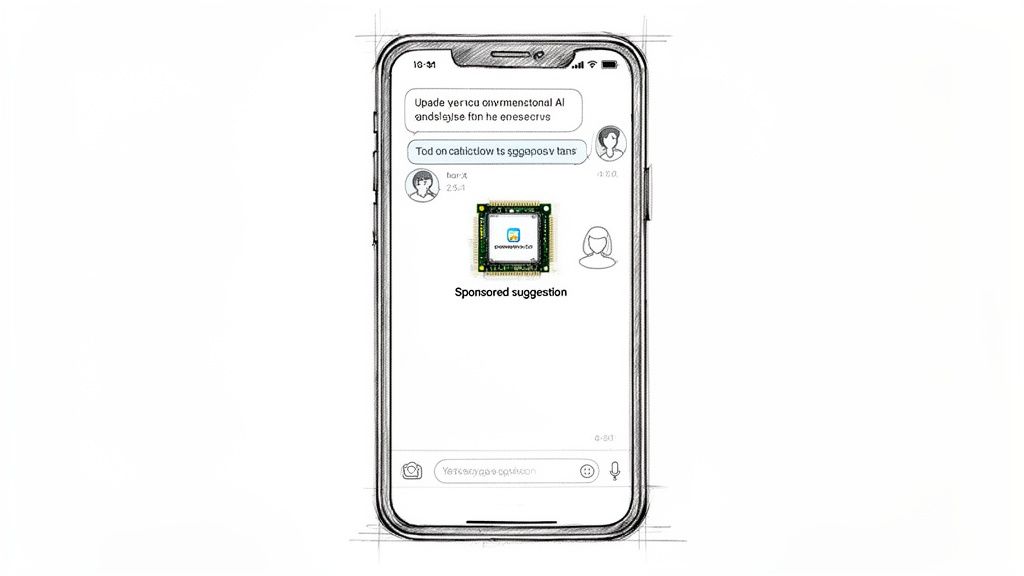
Here is an example from OpenAI showing how an ad can appear within a conversation.
In this example, a user asks for recipes. The AI responds with suggestions but also includes a sponsored link to a grocery brand. It feels like a natural part of the answer, not an out-of-place ad block.
Other formats are likely to appear as the platform evolves:
- Interactive Brand Prompts: Prompts that guide users toward your solution, such as “Would you like to see how [Brand X] can help you budget for that?”
- Sponsored Product Carousels: For queries with commercial intent, like “best trail running shoes,” ChatGPT could show a swipeable carousel of sponsored products.
- Enhanced Rich Media: Future ads might feature video previews or interactive demos. Exploring text to video generator tools shows how ad copy can become engaging visuals.
The Underlying Mechanics of Ad Delivery
This isn’t a typical search ad system based on keyword bidding. ChatGPT ads run on a more sophisticated model. The AI analyzes the entire conversation to understand a user’s goal.
The core principle is utility over intrusion. OpenAI’s approach is to ensure that any sponsored content directly contributes to helping the user solve their problem or complete their task.
This means advertisers will target conversational scenarios, not just keywords. The system identifies moments of need and matches them with brand solutions.
Privacy is a critical component. OpenAI has stated it will not share user conversations or personal data with advertisers. Targeting is handled by the model based on the immediate conversation, without building persistent user profiles.
The Competitive AI Advertising Landscape
OpenAI is not building its ad model in a vacuum. Its biggest rivals are already running experiments to monetize AI-driven conversations. Understanding this broader field is key to allocating your budget effectively.
The two giants to watch are Microsoft and Google. Microsoft is integrating ads into its Copilot platform. Google’s approach involves placing ads in its AI Overviews.
Microsoft Copilot and Bing Chat
As a major investor in OpenAI, Microsoft has a significant head start. Its Copilot platform is already connected to the Bing ad network, serving sponsored content in chat answers. This provides a ready-made ad machine with a large pool of advertisers.
Because Copilot is integrated into Windows and Microsoft 365, it can place ads based on wider context. Marketers can reach people not just when they search, but while they are working in Word or Excel. The targeting focuses on user activity across the entire Microsoft ecosystem.
Google AI Overviews and Search Ads
Google’s approach extends its existing search advertising empire. Ads are already appearing inside its AI Overviews, which are the AI-generated summaries at the top of many search results. They look almost identical to traditional paid search ads.
The main shift is in placement and context. Google’s system can now determine the deeper intent behind a query and place a relevant ad within the AI summary. This blends the familiar Google Ads experience with the new conversational format, creating an easy transition for current advertisers. Before starting, it is useful to learn how to find competitors of a website that may already be active here.
This diagram shows how a user prompt can trigger an ad within an AI chat.
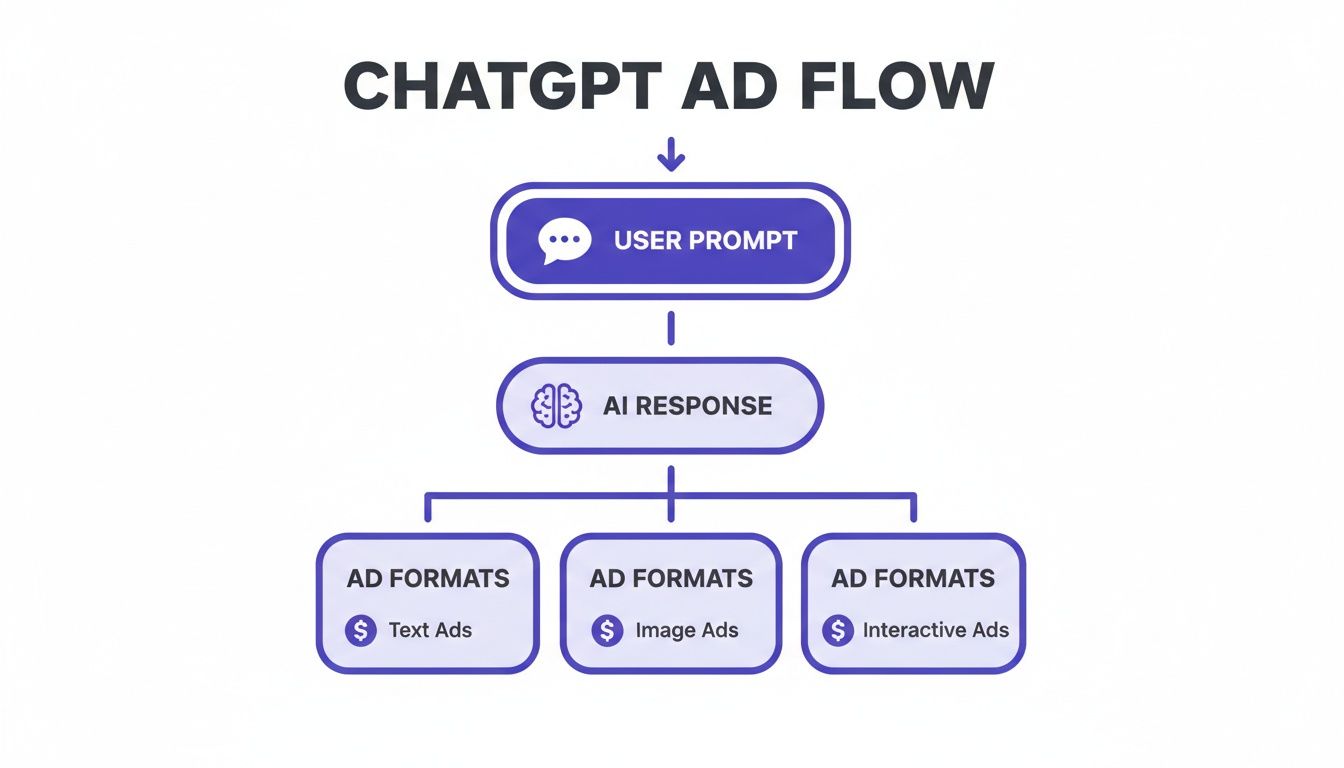
The user’s prompt initiates both the AI-generated answer and potential ad formats.
Comparing Strategic Approaches
Although all three platforms are pushing commercial content, their strategies differ. OpenAI is aiming for native, conversational ads that feel like a natural part of the dialogue. Google is extending its search ad model into its AI summaries. Microsoft is using its software ecosystem for broader contextual targeting.
The real contest is between creating a truly native ad experience (OpenAI) versus scaling a massive, existing ad platform (Google and Microsoft).
This difference creates opportunity but means there is no single playbook. The numbers highlight the scale of each platform. For more insights on ChatGPT’s usage stats, see detailed market position reports.
The table below breaks down how the major players compare.
AI Advertising Platform Comparison
This provides a quick look at the ad integration, user base, and strategic focus of the main AI search platforms.
| Platform | Ad Integration Model | Primary User Base | Best For |
|---|---|---|---|
| OpenAI ChatGPT | Native, in-conversation placements (experimental) | Tech-savvy professionals, researchers, creators | High-value, context-rich B2B and B2C engagement. |
| Microsoft Copilot | Integrated with Bing Ads, contextual placements | Windows & Microsoft 365 users, business professionals | Brands targeting users based on productivity tasks and work-related queries. |
| Google AI Overviews | Extension of Google Ads within search summaries | General global search users | Brands with existing Google Ads strategies looking for incremental reach. |
A multi-platform strategy is the best way forward. While Google and Microsoft offer scale, OpenAI’s user base is deeply engaged and seeking detailed answers. This creates a unique environment for brands to deliver targeted, high-value messages.
Combining Paid Ads and Organic AEO for AI Visibility
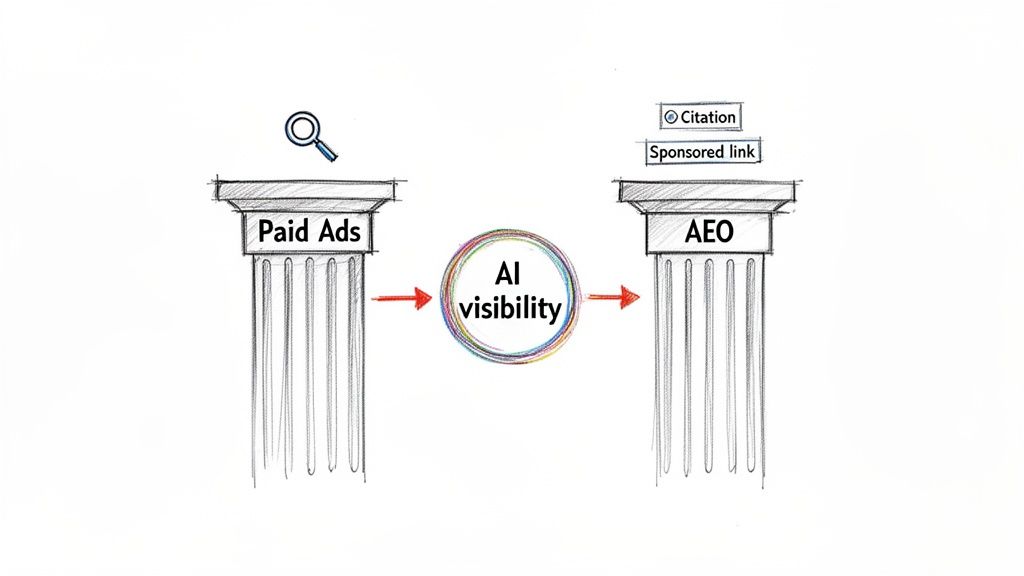
To succeed, you cannot just buy your way in. An effective strategy combines paid ad placements with a solid organic foundation. This is where Answer Engine Optimization (AEO) is crucial.
Think of AEO as the other side of the coin to paid ChatGPT ads. Ads provide a direct, paid shortcut into the conversation. AEO is the long-term effort of making your brand so credible that the AI chooses to cite you organically.
The SEM and SEO Analogy for AI
The relationship between ChatGPT ads and AEO mirrors the classic dynamic between Search Engine Marketing (SEM) and Search Engine Optimization (SEO). In Google’s world, SEM delivers immediate traffic via paid ads, while SEO builds sustainable, organic visibility. The best brands master both.
The same principle applies to answer engines.
- ChatGPT Ads (like SEM): These are paid spots that provide instant, targeted visibility for specific questions.
- AEO (like SEO): This is your organic effort to create factual content and build authority so AI models naturally select your brand as the answer.
Relying only on ads leaves you vulnerable when you stop spending. Focusing only on organic AEO means missing immediate opportunities. The real magic happens when they work together.
Use paid ads to capture immediate demand and test messaging. Use your AEO efforts to build the foundational trust that makes your brand the default answer.
Defining Answer Engine Optimization
What exactly is AEO? It is the process of optimizing your digital presence to become a go-to source for AI tools like ChatGPT. Unlike SEO, which ranks web pages for keywords, AEO makes your information the definitive answer to a question.
This means the AI doesn’t just link to your site; it absorbs your content to construct its own response, often citing you. This requires specific tactics that go beyond traditional SEO. To learn more, read our complete guide on how to rank in ChatGPT.
Why Both Paid and Organic Matter
Running paid ads and organic AEO in parallel creates a powerful feedback loop. Data from your ChatGPT ads reveals which questions and prompts are most valuable. You can then use those insights to inform your AEO content strategy.
For instance, if an ad targeting “how to automate B2B lead scoring” performs well, that is a strong signal. You should create the most definitive guide on that topic. Over time, that guide can become a primary source for ChatGPT’s organic answers, reducing your need to pay for that prompt.
An Actionable Playbook to Influence AI Answers
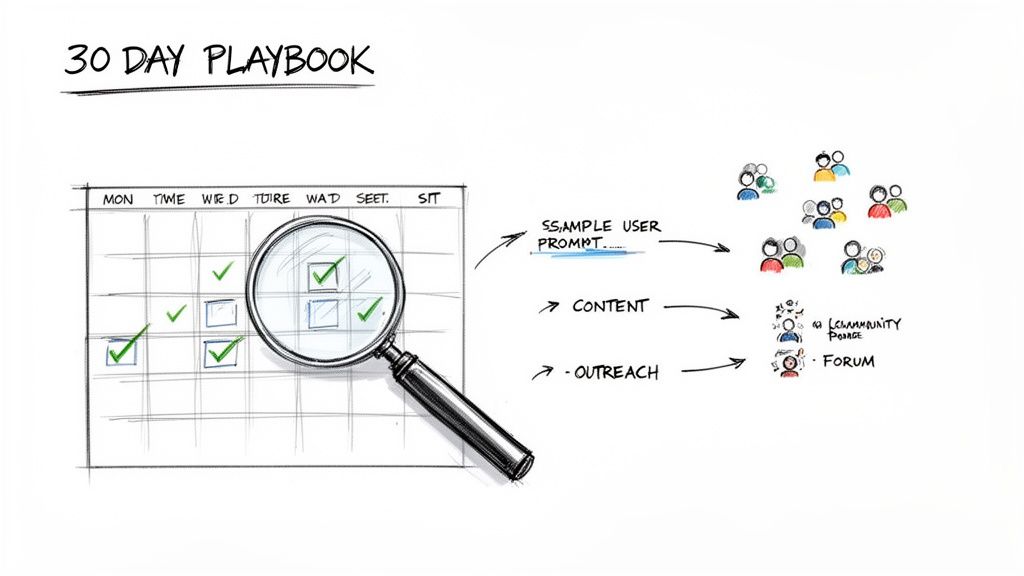
Let’s move from theory to action. While paid ChatGPT ads offer a direct route to visibility, long-term success depends on influencing organic, unpaid answers. This playbook is a step-by-step guide for marketing teams to shape how their brand appears in AI conversations.
The goal is to actively guide what AI says about you. This means understanding customer questions, creating content that directly answers them, and publishing it on platforms AI models trust.
Identify High-Value Customer Prompts
First, you need to understand your customers’ minds. Think in full questions and conversational prompts, not just keywords. These are the queries your ideal buyers use when they need to solve a problem your product addresses.
Brainstorm a list of questions from sales calls, support tickets, and community forums. You are looking for prompts that indicate buying intent, comparison shopping, or solution seeking.
Sort these prompts into a few categories:
- Problem-Awareness Prompts: Questions like, “How do I reduce customer churn for my SaaS?”
- Solution-Comparison Prompts: Queries such as, “What are the best alternatives to [Competitor X]?”
- Product-Specific Prompts: Direct questions like, “Is [Your Brand] a good fit for a small marketing team?”
By focusing on the exact language your customers use, you can align your content strategy with their conversational journey.
Create Content That Answers Questions Directly
With your list of prompts, your next mission is to create content that provides clear, factual, and direct answers. AI models prefer information that is well-structured and easy to digest. Your content needs to be optimized for machine readability.
Structure your articles with clean headings that mirror the target questions. Use bullet points, numbered lists, and data tables to break down information. This formatting makes it simple for an AI to extract key facts and cite your content. For a great example, see how Interact became number one in its category in ChatGPT.
Leverage Influential Third-Party Platforms
AI models learn from a wide range of trusted sources, not just your website. Community-driven platforms like Reddit are highly influential. A single, well-regarded comment can become the source for an AI-generated answer.
Being active in the right subreddits is a core AEO tactic. Find the communities where your customers discuss their problems and provide real value. Answering questions and sharing insights builds credibility and creates the source material AI models look for.
Your 30-Day AEO Action Checklist
Here’s a simple checklist to get your Answer Engine Optimization efforts started. This plan will help you build momentum and gather the data needed to refine your strategy for both organic visibility and future ChatGPT ads.
| Week | Action Item | Key Objective | Tool to Use |
|---|---|---|---|
| Week 1 | Prompt & Competitor Research | Identify your top 10 customer prompts and 3 main AI competitors. | Airefs, Customer Surveys |
| Week 2 | Content Audit & Prioritization | Review existing content and map it to your target prompts. Identify gaps. | Google Analytics, Your CMS |
| Week 3 | Create First AEO-Focused Asset | Develop one piece of content that directly answers a high-value prompt. | Your Blog, Content Editor |
| Week 4 | Community Engagement Kickoff | Identify 3 relevant subreddits. Begin monitoring and engaging in conversations. | Reddit, Airefs Alerts |
This checklist provides a structured path to start influencing AI answers. By tracking prompts and engaging where your customers are, you can build a strong, authoritative presence.
Measuring Success and Preparing for the Future
To succeed in AI search, you must track what works. Traditional web metrics like page views are insufficient when your audience is interacting with an AI. Success with ChatGPT ads and organic AEO requires a new playbook focused on conversational visibility.
The goal is no longer about ranking pages; it’s about winning prompts. You need to know how often your brand is mentioned for important questions and whether those mentions lead to valuable outcomes.
Key Metrics for AI Search Visibility
Measuring your impact means looking beyond standard analytics. The metrics that matter most now are about your presence within the conversation itself.
Here are the core metrics to start tracking:
- Share of Voice (SoV) for Prompts: This is your north star KPI. It measures how often your brand is mentioned for key prompts compared to competitors.
- Citation Frequency: Track how often AI models cite your website as a source. This directly measures your content’s authority.
- Click-Through Rate (CTR) from Sponsored Links: For paid ads, CTR indicates if your placements are compelling enough to drive users to your site.
- AI-Sourced Traffic: Segment traffic coming directly from AI platforms in your analytics to connect visibility efforts to website visits.
You can get a clearer picture of what to track with our overview of top AI search visibility tools.
Future-Proofing Your AI Ad Strategy
The world of AI advertising is just beginning. What we see today is only version 1.0. To stay ahead, you need to anticipate where this is all going.
Ad formats will become more interactive. Think beyond simple sponsored links to dynamic, in-chat experiences like product configurators. The goal will be to solve a problem without the user ever leaving the chat.
The next evolution of ChatGPT ads will focus on creating value within the conversation, not just driving clicks out of it.
Personalization will also become more sophisticated. AI models will tailor ad content based on immediate conversational context, making each ad hyper-relevant. This will put a spotlight on data privacy, requiring platforms to balance relevance with user trust.
FAQs: ChatGPT Ads Explained
Here are answers to some of the most common questions about advertising in ChatGPT.
1. Are ads really in ChatGPT now?
Yes, OpenAI has begun testing sponsored content within ChatGPT conversations. It’s a gradual rollout, but ads are appearing as contextual links and brand mentions for some users.
2. How are ChatGPT ads different from Google Ads?
Google Ads are triggered by keywords in a search query. ChatGPT ads are triggered by the context and intent of an entire conversation. They are designed to feel like a natural part of the AI’s response, not a separate ad block.
3. What is the best first step for my brand?
Focus on Answer Engine Optimization (AEO) before you consider paid ads. Create high-quality content that directly answers your customers’ most common questions. Building this organic authority will make any future ad spend more effective.
4. Can a small business compete with large brands?
Yes. Success in this new environment is not just about budget; it’s about relevance. A small business with deep niche expertise can create highly targeted content that outperforms generic content from a larger competitor. Quality and specificity can win.
5. How can I track the success of my AI visibility efforts?
Use tools designed for AEO to track metrics like Share of Voice for specific prompts and citation frequency. In your web analytics, segment traffic from AI platforms to connect visibility to website visits and conversions.
Ready to stop guessing and start influencing how AI talks about your brand? Airefs is the platform that turns AI search into a measurable, actionable marketing channel. Track your brand’s visibility, analyze competitors, and get the exact content opportunities you need to win key customer prompts.
See how it works at https://getairefs.com.