
Traditional SEO focused on ranking number one. The new goal is becoming the number one recommendation inside AI answers. This requires a new strategy: Generative Engine Optimization (GEO).
GEO is about showing up in AI search, such as ChatGPT, Perplexity, and Google AI Overviews. As users get direct answers from AI, clicks on traditional blue links decline. Visibility inside the AI-generated answer itself is the new primary channel for organic growth.
This shift means marketers need generative engine optimization tools. These platforms monitor visibility within AI chats and overviews and analyze the sources AI models prefer. They show how to measure and influence your presence in AI-generated responses.
This guide reviews the best GEO tools available. We provide an honest assessment of each platform’s strengths, weaknesses, and ideal use cases. You will find actionable analysis and screenshots to help you select the right tool.
1. Airefs
Airefs is a data-driven platform for brands aiming to secure visibility within AI-generated answers. It shifts focus from traditional rankings to a more relevant KPI: share of voice inside LLMs. This delivers a clear benchmark of how often your brand is recommended compared to competitors.
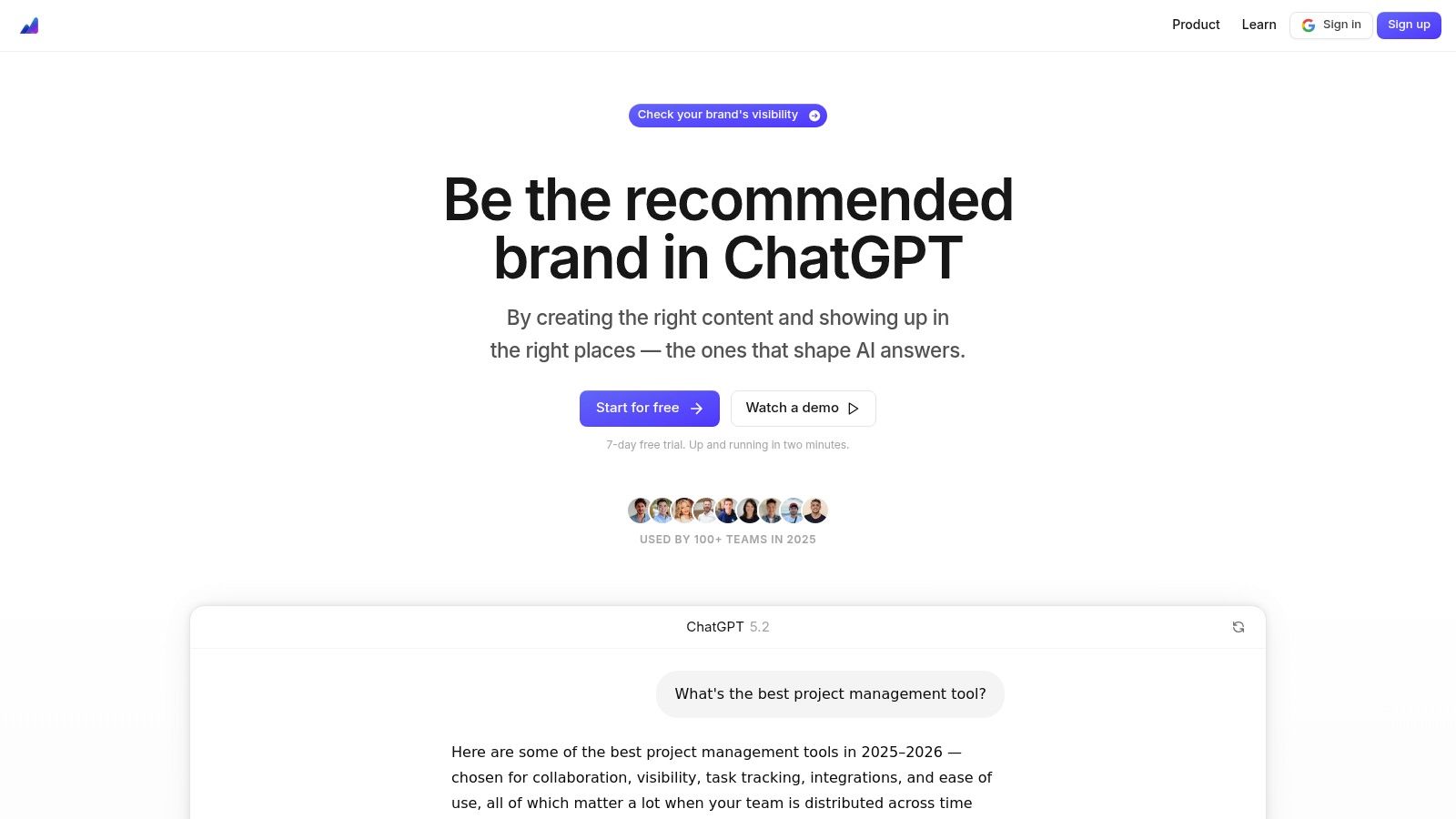
The platform’s core strength is its source-level transparency. For any tracked prompt, Airefs maps the exact articles and reviews that the AI model used. This insight demystifies the AI “black box” and creates a direct, actionable playbook.
Key Features & Use Cases
Airefs surfaces two primary opportunity types. Content Plays identify high-leverage pages you can create or improve. Discussion Plays pinpoint influential Reddit or forum threads where your brand can participate.
- Multi-Model Tracking: Monitor your presence across ChatGPT, Perplexity, and others in multiple countries.
- Competitor Benchmarking: Quantify your share of voice and track how it changes against key rivals.
- Proactive Alerts: Receive notifications on keyword mentions and emerging discussion opportunities.
- Flexible Execution: Use the platform’s insights for your in-house team or opt for the “done-for-you” (DFY) agency add-on.
Evaluation
Airefs is a powerful tool for teams ready to move beyond theory and into execution. The true value is unlocked when teams commit to acting on the insights. With an accessible starting price and a 7-day free trial, it offers a low-risk path to building a repeatable AI acquisition channel.
- Pricing: Lite from $24/mo, Pro $49/mo, Expert $83/mo. DFY agency package starts at $299/mo.
- Pros: Measures AI share of voice, provides source-level transparency, offers a clear DIY or DFY workflow.
- Cons: Full LLM coverage may require a higher-tier plan; requires execution resources to see results.
- Website: https://getairefs.com
2. seoClarity
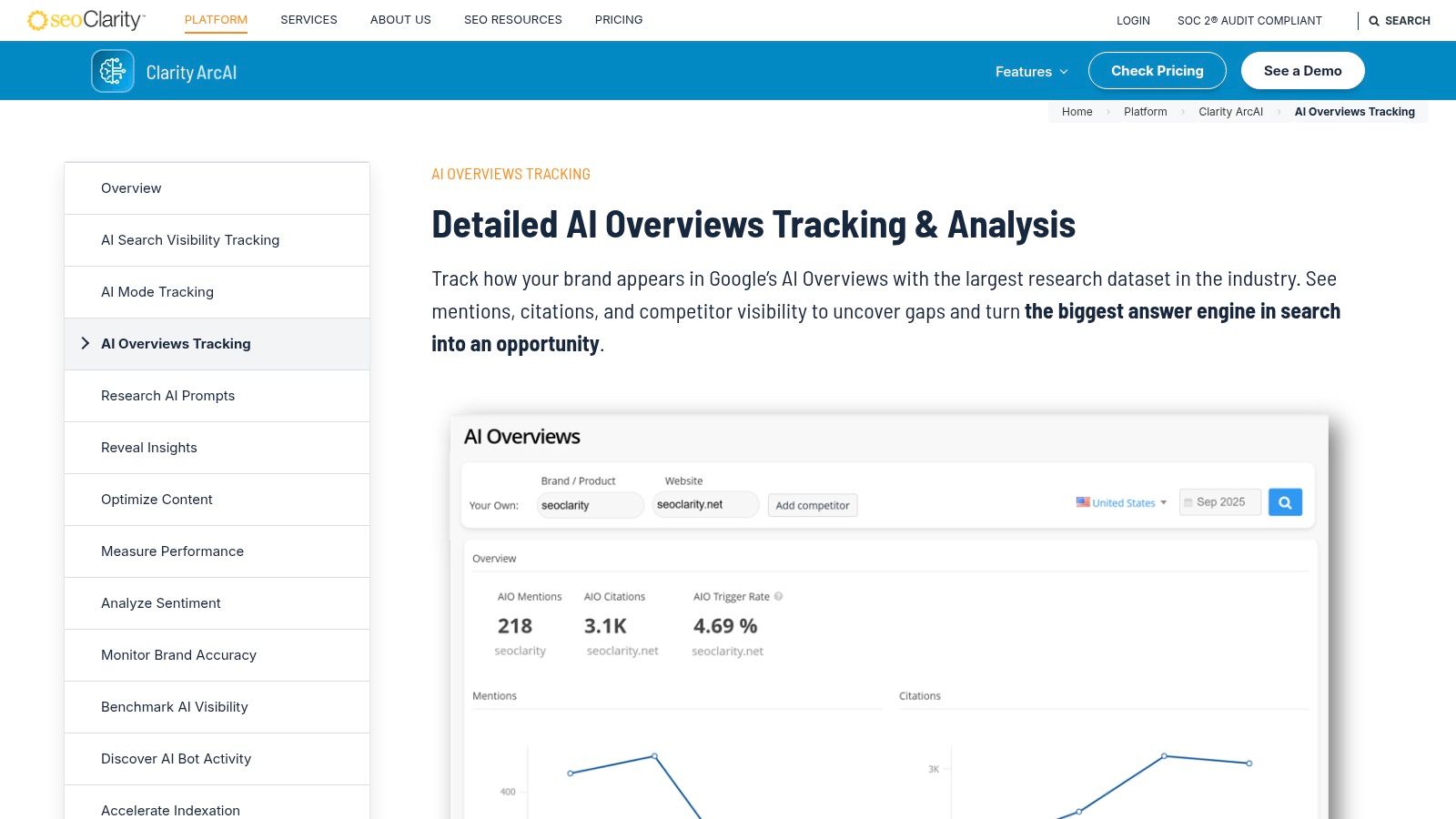
seoClarity is an enterprise-grade SEO platform for analyzing Google’s AI Overviews (AIOs). It’s designed for large organizations needing to monitor AIO triggers across massive keyword sets. The platform excels at providing deep, historical baselines to audit changes over time.
This platform stands out for its scale and integration. It tracks whether your domain was cited, captures the exact text used, and compares your citation frequency against competitors. This makes it a comprehensive tool for brands focused on Google’s ecosystem.
Core Features & Use Case
- AIO Presence Monitoring: Automatically detects which of your tracked keywords trigger an AI Overview.
- Source & Competitor Tracking: Monitors when your domain is cited or linked within an AIO and provides competitor comparisons.
- Historical Auditing: Captures historical snapshots of AIO content, enabling you to analyze trends over months.
- Performance Impact Analysis: Integrates AIO data with your traffic and CTR metrics to quantify impact.
Evaluation
seoClarity is a powerful solution, but it’s built for a specific user. Its strengths lie in its massive dataset and deep integration with traditional SEO workflows. However, access is sales-led, and pricing reflects its enterprise focus, making it less suitable for smaller businesses.
Website: https://www.seoclarity.net/ai-overviews-tracking
3. BrightEdge
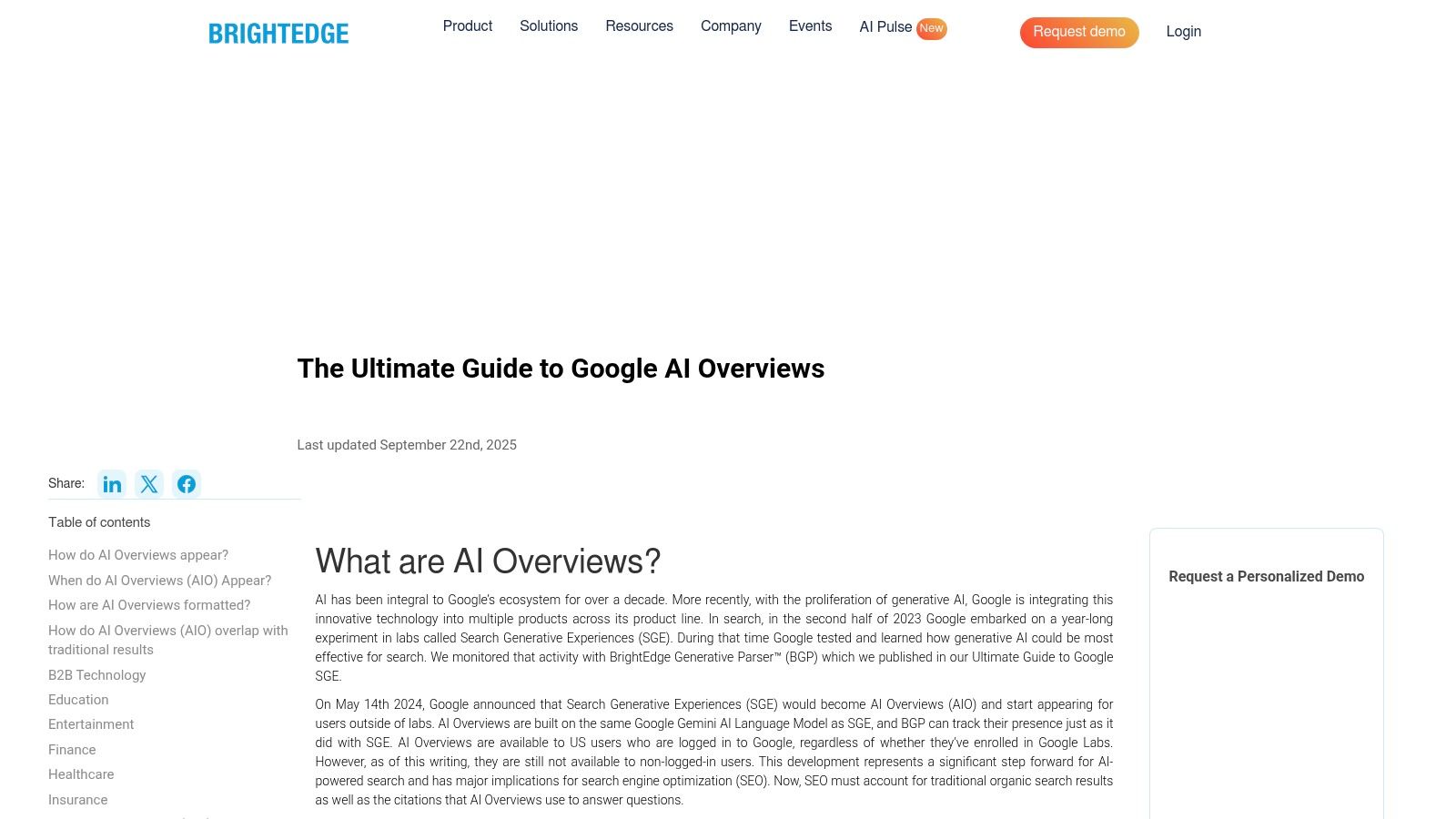
BrightEdge is an established enterprise SEO platform that has invested heavily in tracking AI Overviews. It uses its proprietary BrightEdge Generative Parser (BGP) to provide strategic guidance. The platform is built for large teams who need data and research-backed playbooks for execution.
This platform’s value lies in its combination of macro-level research and account-specific tracking. BrightEdge provides ongoing analysis of AIO behavior by category, helping teams prioritize their efforts. This makes it a strategically-focused tool for enterprises building a long-term AIO plan.
Core Features & Use Case
- AIO Prevalence Data: Delivers reporting on which industries and query types are most affected by AI Overviews.
- BrightEdge Generative Parser (BGP): A dedicated technology for tracking AIO appearances and identifying content opportunities.
- Strategic Playbooks: Provides actionable guidance and content frameworks designed to help teams adapt their SEO practices.
- Enterprise Integration: Integrates AIO insights directly into the broader BrightEdge SEO suite.
Evaluation
BrightEdge is a strong contender for large organizations that want a comprehensive SEO suite with dedicated AIO research. Its focus on strategic playbooks and industry-level data is a key differentiator. However, it operates on a sales-led model with non-public pricing and has a steeper learning curve.
Website: https://www.brightedge.com/ai-overviews
4. SISTRIX
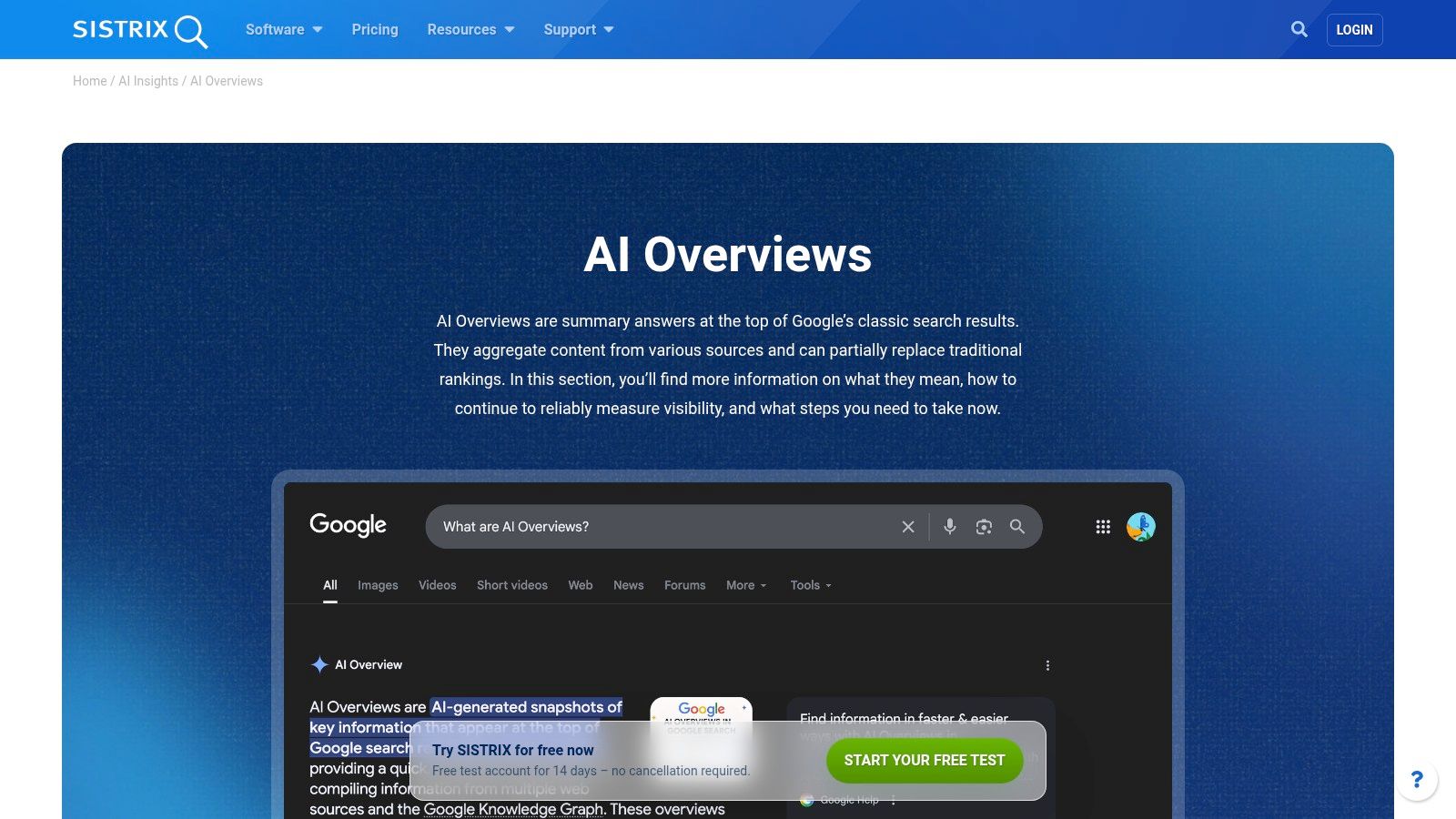
SISTRIX is an SEO platform that provides turnkey detection and SERP archive capabilities for Google’s AI Overviews. Its strength is presenting AIO data in clean, analyst-friendly tables. This makes it an excellent choice for teams needing reliable AIO monitoring with strong historical context.
The platform excels at tracking the AIO rollout across different countries, providing clear documentation. This focus on actionable data makes it accessible for integrating AIO awareness into existing SEO workflows. SISTRIX also offers a beta AI Prompt Tracker, signaling a future focus on broader LLM visibility.
Core Features & Use Case
- AIO Feature Flag & Archive: Identifies keywords that generate an AI Overview and archives the AIO content and sources.
- International Rollout Tracking: Provides specific data on AIO availability and behavior across different countries.
- Beta AI Prompt Tracker: An emerging feature designed to monitor brand visibility within LLM chat environments.
- Integrated SEO Toolkit: AIO data is part of a broader suite of tools, including keyword research and competitor analysis.
Evaluation
SISTRIX shines with its clear interface and strong historical SERP data. The platform is well-suited for marketing teams and agencies that value straightforward, reliable data integration. However, its deeper LLM prompt analytics are still in beta, offering less insight into models like ChatGPT or Perplexity.
Website: https://www.sistrix.com/ai-overviews/
5. Semrush
Semrush has integrated AI search tracking directly into its core platform. Its Position Tracking tool now logs Google AI Overview citations as a standard SERP feature. This makes it a pragmatic choice for organizations already embedded in the Semrush ecosystem.
The platform extends its capabilities with the AI Visibility Toolkit add-on, which broadens monitoring to include ChatGPT, Perplexity, and Gemini. Semrush effectively bridges traditional SEO practices with the new demands of AI search visibility.
Core Features & Use Case
- AIO Citation Tracking: Automatically identifies when your domain is cited in a Google AI Overview for your tracked keywords.
- AI Visibility Toolkit: An optional add-on that provides visibility metrics and source tracking across multiple AI engines.
- Integrated SERP Analysis: A toggle allows users to include or exclude AIO-influenced rankings from their performance analysis.
- Ecosystem Integration: Connects seamlessly with Google Search Console, Google Analytics, and Looker Studio.
Evaluation
Semrush provides an excellent on-ramp to GEO for its massive user base. The ability to see AIO citations alongside traditional rankings is a major workflow advantage. However, the most advanced cross-engine features are part of an add-on, and per-domain pricing can become costly.
Website: https://www.semrush.com/kb/1435-ai-overview
6. Ahrefs
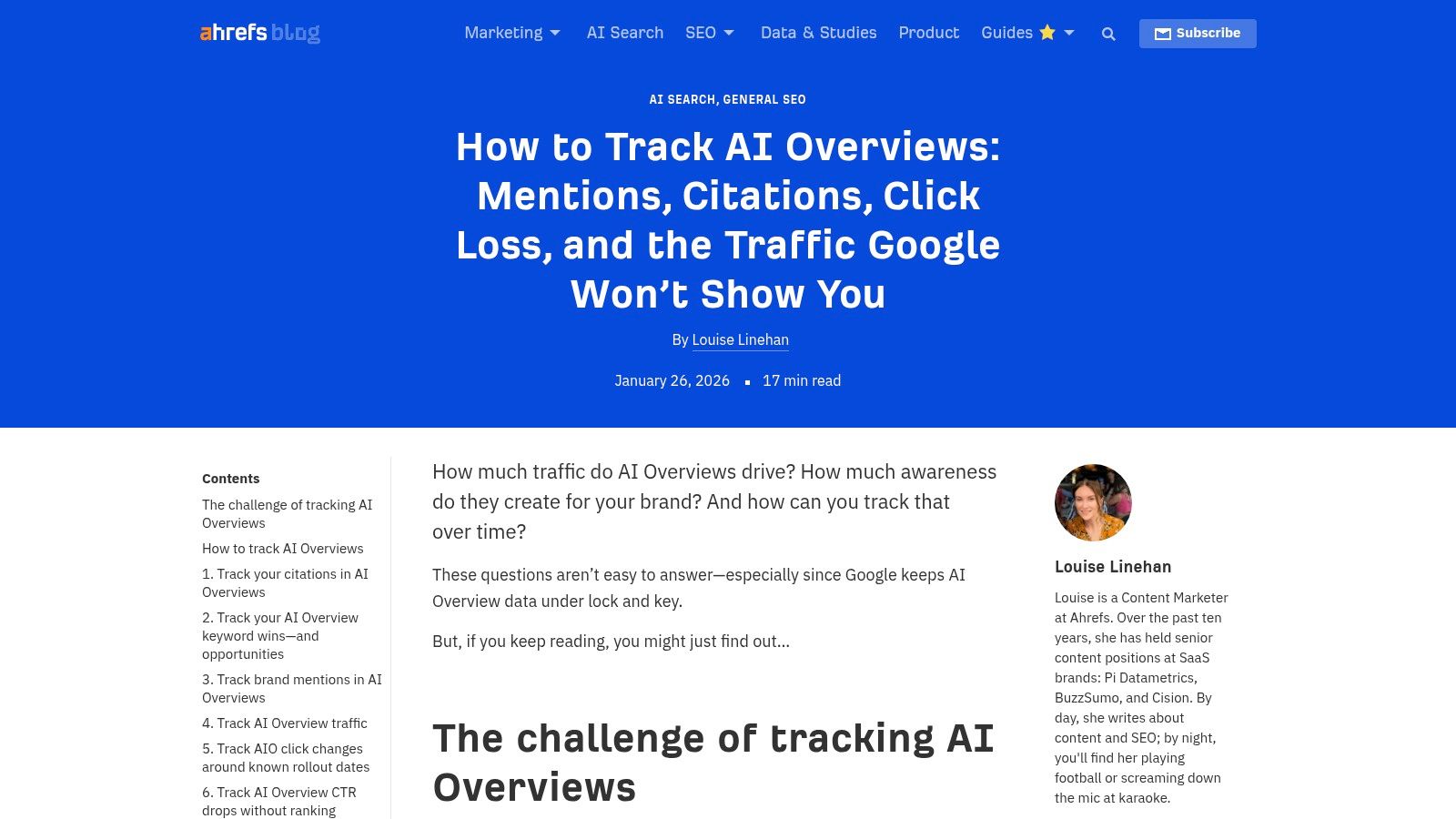
Ahrefs integrates AI Overview (AIO) tracking directly into its renowned SEO toolset. Instead of a standalone product, Ahrefs treats AIO citations as a core part of competitive analysis. This allows users to connect AI visibility with foundational SEO metrics like domain authority.
The platform excels at contextualizing AIO data. By leveraging tools like Site Explorer, you can identify which of your pages are being cited and see how your citation frequency compares to competitors. This makes it an effective tool for teams who need to blend AIO strategy with existing SEO operations.
Core Features & Use Case
- AI Citations Module: Tracks historical gains and losses of your domain’s citations within Google’s AI Overviews.
- Competitor and Prompt Analysis: Identifies which competitors are earning citations and the specific search queries that trigger them.
- API-Friendly Reporting: Allows for easy export of AIO citation data for integration into custom dashboards.
- Integrated SEO Context: Connects AIO performance data directly with backlink profiles and keyword rankings.
Evaluation
Ahrefs provides a powerful environment for SEOs to begin tracking AI visibility. Its strength lies in adding deep competitive and backlink context to AIO citations. However, its AIO tracking is a feature within a comprehensive, premium-priced platform, not a dedicated tool.
Website: https://ahrefs.com/blog/how-to-track-ai-overviews/
7. Conductor
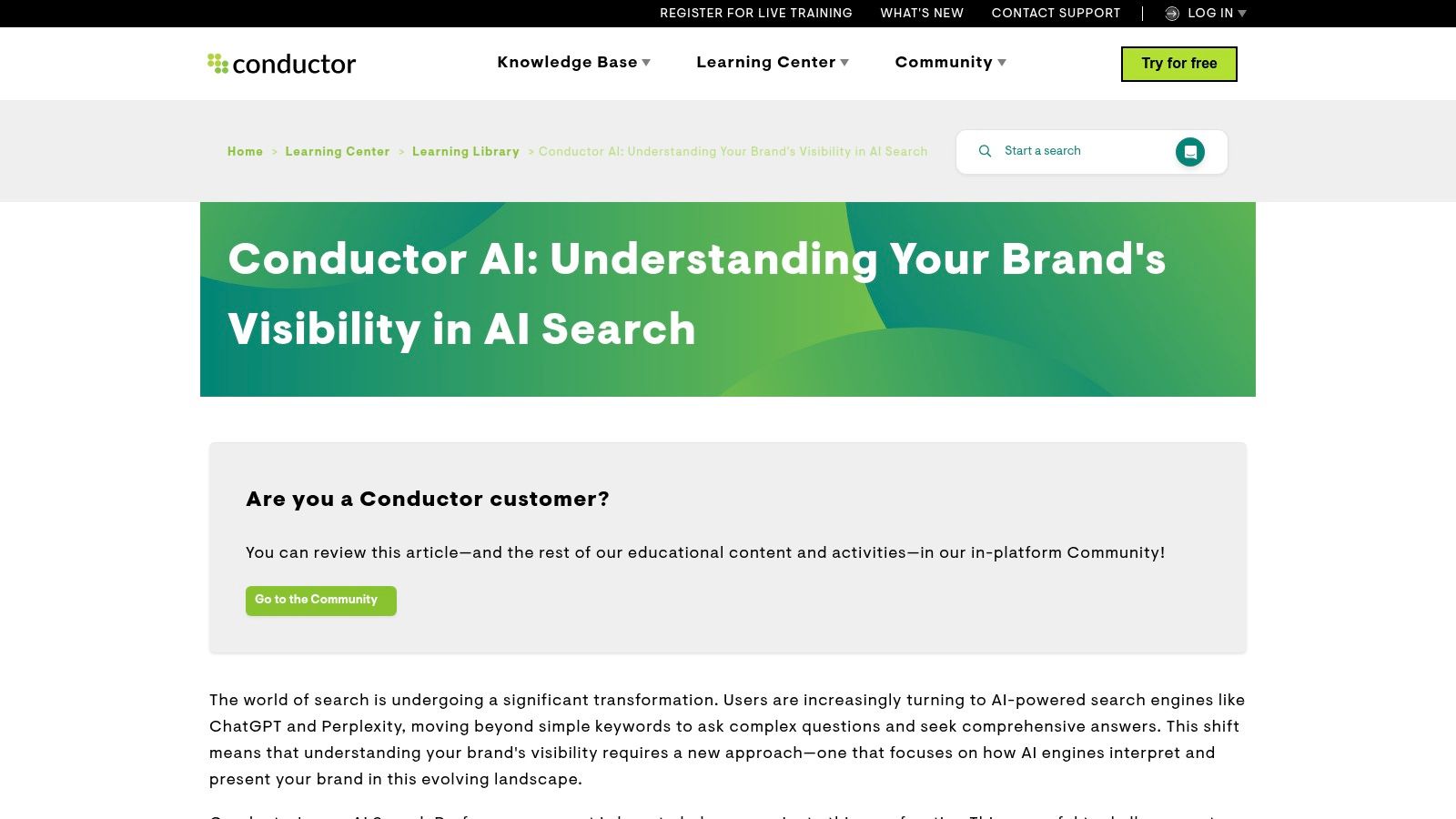
Conductor is an enterprise organic marketing platform that has integrated AI search visibility into its core reporting. It provides an AI Search Performance report that offers insights into brand mentions, website citations, and sentiment. This makes it ideal for large organizations needing to govern their AI visibility.
The platform’s strength lies in its dual-tracking approach. It offers quick flags for AI Overview presence within standard keyword reports, alongside a more detailed, full-capture analysis. This makes Conductor a robust tool for businesses that require both high-level monitoring and deep-dive analysis.
Core Features & Use Case
- AI Search Performance Report: Measures brand mentions, citations, and sentiment across AI-generated results.
- Dual AIO Tracking: Provides both high-level presence flags and deep content capture for detailed analysis of Google AIOs.
- Persona & Intent Slicing: Segments AI visibility data by audience persona and search intent.
- Educational Resources: Offers ongoing industry studies and data to help teams build a business case for GEO.
Evaluation
Conductor provides a powerful, end-to-end solution for integrating AI search analytics into a broader marketing strategy. The emphasis on education and enterprise-level support is a significant benefit for large companies. However, its enterprise focus means access is gated behind a sales process with non-public pricing.
Frequently Asked Questions about Generative Engine Optimization (GEO) Tools
What is Generative Engine Optimization (GEO)?
GEO is the practice of optimizing your content and brand presence to be visible and cited within AI-generated answers. This includes platforms like Google’s AI Overviews, ChatGPT, and Perplexity. The goal is to become a trusted source that AI engines recommend to users.
How do GEO tools work?
GEO tools monitor your brand’s visibility across different AI platforms for specific keywords or prompts. They track when your content is cited, analyze which sources the AI prefers, and provide insights to improve your chances of being featured. Some tools also analyze on-page factors to make content more “AI-friendly.”
Why is GEO important now?
User behavior is shifting from searching through lists of links to asking questions and getting direct answers from AI. If your brand isn’t cited within these AI-generated responses, you lose visibility to a growing audience. GEO is the strategy for staying relevant in this new search landscape.
Can I do GEO without a specialized tool?
You can manually check prompts in different AI engines, but it’s inefficient and impossible to scale. Specialized GEO tools automate the tracking process, provide competitor data, and offer historical insights. They turn a manual, time-consuming task into a repeatable, data-driven strategy.
Is GEO just for Google’s AI Overviews?
No, a comprehensive GEO strategy covers all major generative engines where your audience seeks information. This includes not only Google’s AI Overviews but also conversational AI like ChatGPT, Perplexity, and others. The best tools monitor your presence across multiple platforms.