

To show up in AI Overviews, your content must be the definitive, citable source that nails a user’s question. This requires a blend of high-quality, expert-driven content, clean structured data, and real authority. It’s about being the most reliable answer for the AI.
The New SEO Frontier: Winning in an AI-First World
AI Overviews are the new front page of search. They change how people find information, making visibility in these summaries as critical as a traditional top-ten ranking. This forces a shift in SEO strategy, rewarding clarity, authority, and machine-readable content.

This guide is a playbook for positioning your brand as a trusted resource for AI. You’ll learn the tactics that make your content indispensable to language models. This is how you capture attention in the new search world.
This Is a Fundamental Shift in Search
The scale of this change is huge. AI Overviews are already reshaping search, with roughly 50 percent of Google searches including AI-generated summaries. Projections show that number jumping to over 75 percent by 2028.
Currently, about 30 percent of keywords trigger these overviews. This isn’t a minor algorithm update. It’s a total rethink of how we create and structure information for an AI-filtered world.
The core challenge has shifted from “how do I rank my link?” to “how do I become the answer?” This demands a deliberate strategy focused on becoming a primary source of truth in your niche.
Navigating this new world requires understanding what is SERP tracking and how it shapes your SEO strategy. That context is crucial for measuring what matters now.
The Core Pillars for AI Overview Visibility
Success in this new era comes down to three core pillars. Each one sends a different signal to AI systems. Together, they build a powerful case for why your content deserves to be featured.
Getting these right is non-negotiable if you want to influence and rank within AI Overviews.
| Pillar | Objective | Key Tactics |
|---|---|---|
| Answer-Focused Content | Become the clearest, most direct source for user queries. | Create concise, expert-driven content that directly addresses specific questions. Use simple language and clear formatting. |
| Structured Data | Eliminate ambiguity for AI crawlers. | Implement schema markup (like FAQPage, HowTo) to explicitly tell AI models what your content is about. |
| Strategic Citations | Build genuine authority on trusted platforms. | Earn mentions on high-authority sites and engage in conversations on platforms like Reddit and industry forums that AI models already trust. |
These elements combine to create a strong signal of trustworthiness that AI systems are designed to look for. You can learn more about how these signals fit into a broader strategy by reading our guide on search marketing intelligence.
Creating Content That AI Models Trust and Cite
AI models learn from clear, authoritative, and easily digestible content. To show up in AI Overviews, you need to create content specifically designed to be cited.
This means writing in a natural, conversational style that directly answers questions. Get straight to the point in short, concise paragraphs. Your goal is to be the most reliable and straightforward answer on the web.
Write for Clarity and Simplicity
AI systems pull from clear and unambiguous text. If your writing is full of jargon or complex sentences, it’s less likely to be used in an overview. Make your content accessible to a broad audience.
Use the active voice and get to the point quickly. Ask yourself: could this sentence be shorter without losing its meaning? This directness signals to an AI that your content is easy to understand.
Tools like the Hemingway App can help simplify your language. The easier your content is for a human to read, the easier it is for an AI to process.
Structure Your Content Logically
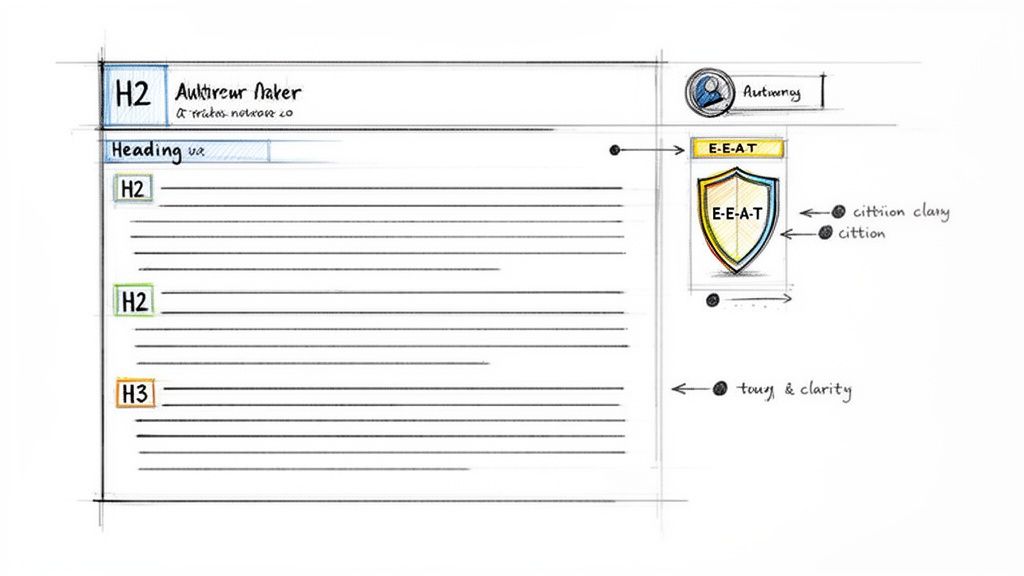
Structure is everything for both users and AI. A well-organized article with logical headings (H2s, H3s) acts like a clear roadmap. Each heading should map to a specific search intent or sub-topic.
Think of your article’s structure as an outline that an AI can easily follow. This helps it understand the information hierarchy and pinpoint the exact snippet needed for a query.
Here are three formatting elements to use consistently:
- Short Paragraphs: Stick to 1-3 sentences to keep things scannable.
- Bulleted and Numbered Lists: Break down steps, features, or key points into lists. This format is incredibly easy for AI models to digest.
- Bold Text: Use bolding to highlight key takeaways, definitions, or important stats. This draws attention to the most citable parts of your text.
Demonstrate E-E-A-T Signals Clearly
Google’s E-E-A-T framework is a massive factor for AI Overviews. AI systems look for signals that your content comes from a credible source with real-world experience. You must make those signals obvious.
To be cited by an AI, you can’t just be correct; you have to be verifiably credible. This means showing your work and proving your expertise in a way that a machine can understand.
A detailed author bio, for instance, is a machine-readable signal of expertise. Linking to the author’s social profiles or other publications builds a network of proof.
To learn more about optimizing your site for these signals, explore our guide on AI search engine optimization.
Practical Ways to Showcase E-E-A-T
Building trust comes from specific, tangible elements on your page. Here’s a checklist of practical signals to include:
- Detailed Author Bios: Include credentials, relevant experience, and links to social profiles or other authoritative publications.
- Cite Credible Sources: Link out to authoritative studies, reports, and industry websites to back up your claims.
- Maintain a Content Update Log: Add a “Last Updated” date to articles. Note significant changes to show your content is fresh and accurate.
- Include First-Hand Experience: Use phrases like “in my experience,” “when we tested,” or “our data shows.” Real-world examples prove your advice is based on practice.
Implementing these elements helps AI models identify your content as a trustworthy source. This significantly increases your chances of getting cited.
Using Structured Data to Speak AI’s Language
Think of structured data as a translator in your conversation with a search engine. It ensures the AI model understands every word, nuance, and detail.
Schema markup cuts through the noise. It tells AI models exactly what your content is about. This clarity is a massive signal that helps your content get picked for AI Overviews.
Key Schema Types for AI Overview Visibility
Not all schema is created equal for this new world. Focus your energy on these three for the biggest impact:
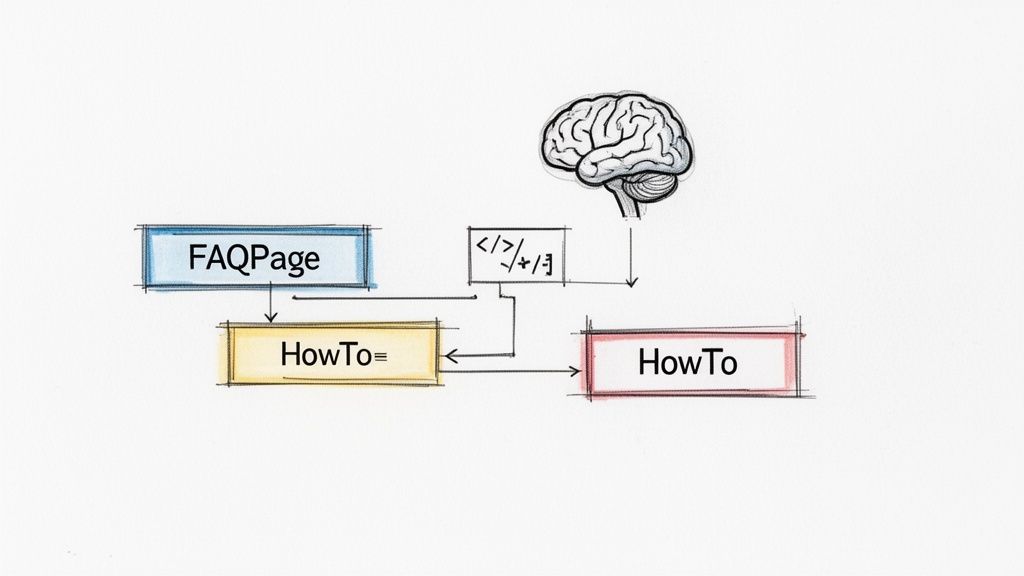
FAQPageSchema: Explicitly wraps a question and its answer together, creating a perfect snippet for an AI to pull directly.HowToSchema: Breaks down a process into a clear sequence, a format that AI Overviews love for instructional queries.ProductSchema: Defines key attributes like price, availability, and review ratings, feeding structured information directly to AI.
Implementing FAQPage Schema for Direct Answers
FAQPage schema is your best friend for getting featured. It’s built for the question-and-answer format that underpins most AI Overviews. By marking up your FAQ sections, you pre-package answers for the AI.
For example, a page could have a question marked up like, “What is the most important factor for AI Overviews?” The schema would then contain the direct, concise answer.
With
FAQPageschema, you stop hoping the AI understands your content and start telling it, “Here is a question, and here is the definitive answer.” This one move massively increases your chances of being cited.
Making How-To Guides Machine-Readable
Step-by-step guides are a goldmine for AI Overviews, and HowTo schema makes them sparkle. This markup outlines every single step in a process, including tools or materials. AI models love this structured format for procedural queries.
A post on setting up software could use HowTo schema to list each step. The AI can then easily extract those steps and present them as a numbered list in its overview.
If you want to get into the weeds on the technical side, these 10 technical SEO tips for AI search are a great next step.
Practical Implementation Without Coding
You don’t need to be a developer to add structured data. Modern SEO tools have made this simple.
Here are two of the easiest ways to add schema:
- WordPress SEO Plugins: Tools like Yoast SEO or Rank Math have schema generators built right in. Just select the schema type and fill in the fields inside your post editor.
- Google Tag Manager (GTM): For more control, you can use Google Tag Manager to inject JSON-LD schema onto specific pages without touching your site’s code.
Using these tools gives your content a serious competitive edge.
Test Your Structured Data
How do you know if your implementation is working? Use Google’s Rich Results Test tool. Just enter your URL, and it will tell you if your schema is valid and readable by Google.
Building Authority on Platforms AI Already Trusts
AI doesn’t just learn from your website; it learns from what the rest of the internet says about you. To show up in AI Overviews, you need a positive footprint on platforms AI models already use.
Third-party validation is a massive trust signal. When AI models see your brand mentioned positively on forums and community sites, it reinforces your credibility. Off-site authority is a critical piece of the AI visibility puzzle.
This isn’t about spamming links. It’s about earning positive brand mentions through authentic participation.
Why Community Platforms Are Goldmines for AI Visibility
AI models lean heavily on platforms like Reddit and Quora to understand human sentiment and expertise. These conversations provide the nuanced, experience-based context a corporate website often can’t.
Visibility within AI systems is the new currency of organic growth. According to data, Reddit is one of the most cited websites across major AI models. You can discover more insights about AI’s top sources on firstpagesage.com.
This data proves that AI systems weigh community-driven content heavily. These platforms are a direct channel to influence AI.
Identifying Your Brand’s Digital Town Squares
You need to find where your target audience hangs out online. Identify the specific subreddits, forums, or social groups where they ask questions and share experiences.
Use these methods to find these hubs:
- Smart Searching: Use operators like
site:reddit.com "your keyword"or"your industry" + forum. - Competitor Spying: See where your competitors are being mentioned with brand monitoring tools.
- Audience Intel: Ask your customers what communities they belong to.
Once you have a list, prioritize the most active and relevant communities. Don’t spread yourself too thin.
Learning how to rank in ChatGPT really comes down to mastering this kind of off-site influence.
A Repeatable Method for Authentic Participation
Your goal is to become a helpful, respected member of the community. Provide genuine value consistently. Opportunities to mention your brand will arise naturally.
The most effective way to get cited by AI is to first get cited by people. Become the go-to expert in a relevant online community, and AI models will eventually take notice of the trust you’ve built.
Focus on answering questions where you have real expertise. Share insights, data, or personal experiences that solve another user’s problem.
This dashboard shows how Airefs tracks brand mentions and visibility within AI answers, helping you measure the impact of your efforts.
When and How to Position Your Content
After you’ve established yourself as a valuable contributor, look for organic opportunities to introduce your content. This is not about dropping links in every comment. Wait for the perfect moment when your article is the genuinely best answer.
Applying programmatic SEO techniques and reviewing YouTube SEO best practices can offer valuable lessons for making content discoverable by AI algorithms.
Frame it helpfully: “I actually wrote a detailed guide on this exact topic, you might find it helpful here…” This approach adds value instead of feeling like a hard sell.
How to Measure and Optimize for AI Visibility
You can’t improve what you don’t measure. You need a repeatable way to track your brand’s presence in AI overviews and make data-driven adjustments.
This isn’t about traditional rank tracking. It’s about monitoring your share of voice inside the AI-generated answers themselves. This creates a feedback loop: track, analyze, execute, and measure.
Establishing Your Baseline for AI Visibility
Before you can optimize, you need to know where you stand. First, figure out which of your target keywords trigger AI Overviews. Checking a few keywords by hand is a start, but it doesn’t scale.
Specialized tools like Airefs track your visibility across thousands of prompts. They show you exactly where you appear and where you don’t. This gives you a clear snapshot of your current performance.
The core metric has shifted. It’s no longer about a simple ranking. The new KPI is your “Share of Voice” within AI answers—the percentage of times your brand is cited for relevant queries compared to everyone else.
Analyzing the Sources AI Models Trust
The next question is why. Identify exactly which articles, forum threads, and documentation pages are shaping the answers in your niche.
This analysis highlights which of your own content assets are hitting the mark. It also uncovers the third-party content and community discussions influencing the AI. This gives you a clear roadmap of where to build authority.
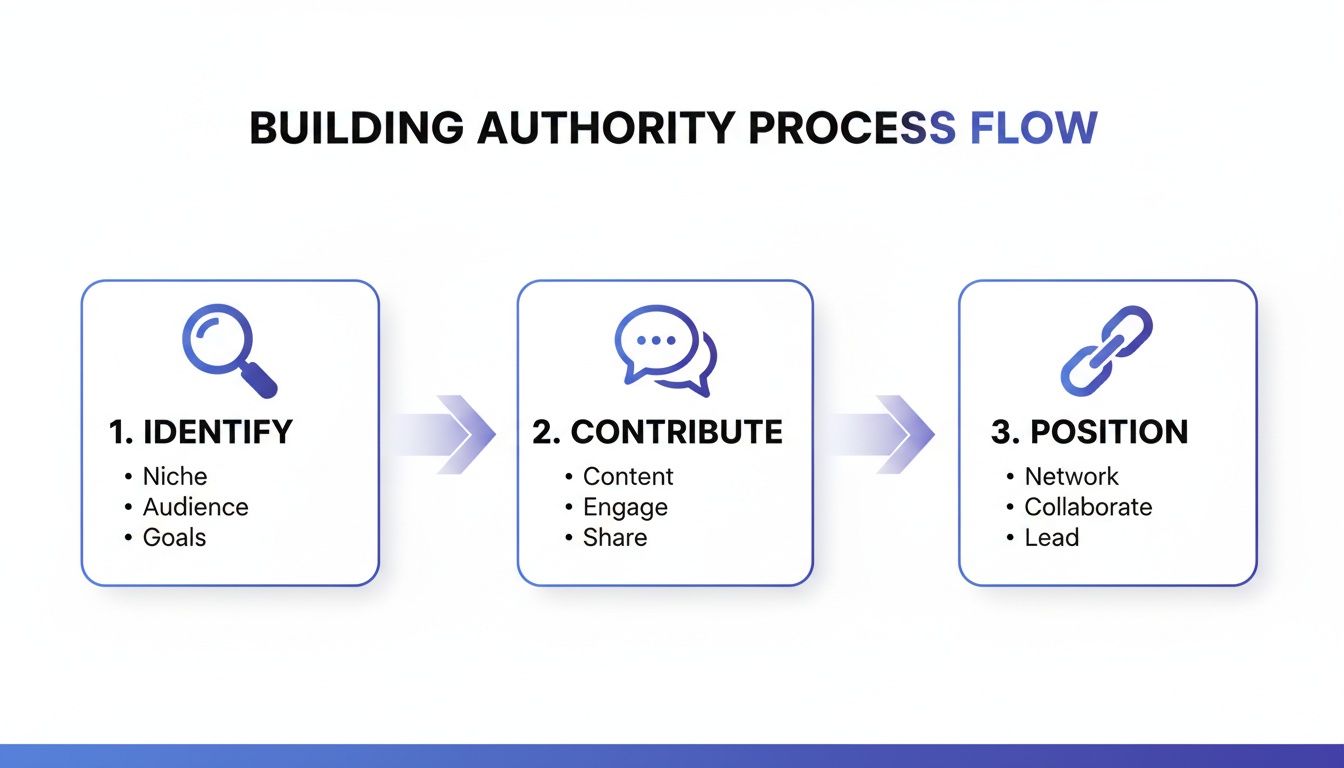
Visibility starts by finding influential sources, then genuinely contributing to those platforms. Finally, position your brand as a helpful resource within those key conversations.
A Data-Driven Optimization Workflow
With your baseline established, you can build an optimization cycle. This is about making ongoing tweaks based on data, not one-and-done fixes.
The AI market is not static. The competitive landscape for AI chatbot market share changed dramatically throughout 2025. You can see a full breakdown of LLM traffic and market share on wallaroomedia.com.
This means your strategy must be multi-platform. A repeatable workflow allows you to adapt as AI models and user habits evolve.
AI Visibility Monitoring Workflow
| Phase | Action | Tool/Method | Success Metric |
|---|---|---|---|
| 1. Track | Monitor your brand’s share of voice for target prompts across key AI models (Google, ChatGPT, etc.). | AI visibility tools (e.g., Airefs) | Increase in brand mentions and citations over time. |
| 2. Analyze | Identify the top-cited URLs and domains influencing the AI answers where you want to appear. | Source analysis features in tracking tools; manual review. | A clear list of high-influence content and platforms. |
| 3. Identify | Pinpoint content gaps on your site or find opportunities to contribute to third-party platforms (Reddit, Quora). | Competitor analysis; community monitoring. | Actionable list of new content ideas and engagement targets. |
| 4. Execute | Create the necessary content on your own properties or engage authentically in relevant online discussions. | Content creation workflows; community engagement guidelines. | New content published; valuable contributions made. |
| 5. Measure | Circle back to your tracking tools to see how your actions impacted your AI share of voice over time. | AI visibility tools (e.g., Airefs) | Measurable lift in your share of voice for targeted prompts. |
By following this loop, you move from guessing to a measurable, data-driven strategy. For a deeper dive into the tools that can help, check out our guide on the top AI search visibility tools available today.
Ready to stop guessing and start measuring your visibility inside AI answers? Airefs gives you the data you need to see where you stand, analyze the sources AI trusts, and find actionable opportunities to become the go-to source in your niche. Get started with Airefs and control your AI visibility today.
FAQ: Ranking in AI Overviews
How is optimizing for AI Overviews different from traditional SEO?
Traditional SEO focuses on ranking your link in the top ten results to get clicks. AI Overview optimization focuses on becoming the citable source within the AI-generated answer itself. This requires more emphasis on direct answers, structured data, and off-site authority signals.
What is the most important factor for ranking in AI Overviews?
There isn’t one single factor, but a combination of three pillars is key. You need answer-focused content, clear structured data (FAQPage, HowTo schema), and genuine authority built on platforms that AI models already trust, like Reddit and industry forums.
How long does it take to see results?
On-page changes, like implementing schema markup, can show results within a few weeks after your site is re-crawled. Building off-site authority and earning brand mentions is a long-term strategy that builds trust over months of consistent, valuable contributions.
Do I need to be a developer to add structured data?
No. Modern SEO plugins like Yoast and Rank Math have built-in schema generators that don’t require any coding. For non-WordPress sites, you can use Google Tag Manager to inject schema code without editing your website’s files directly.
What is the best metric to track for AI Overview visibility?
The most important metric is your “Share of Voice” within AI answers for your target keywords. This measures how often your brand is cited compared to your competitors. Tools like Airefs are specifically designed to track this new KPI.