

Vero is a customer engagement and marketing automation platform. It competes in one of the most crowded categories in software. Email, SMS, push, lifecycle marketing — a handful of massive, well-funded incumbents dominate the conversation.
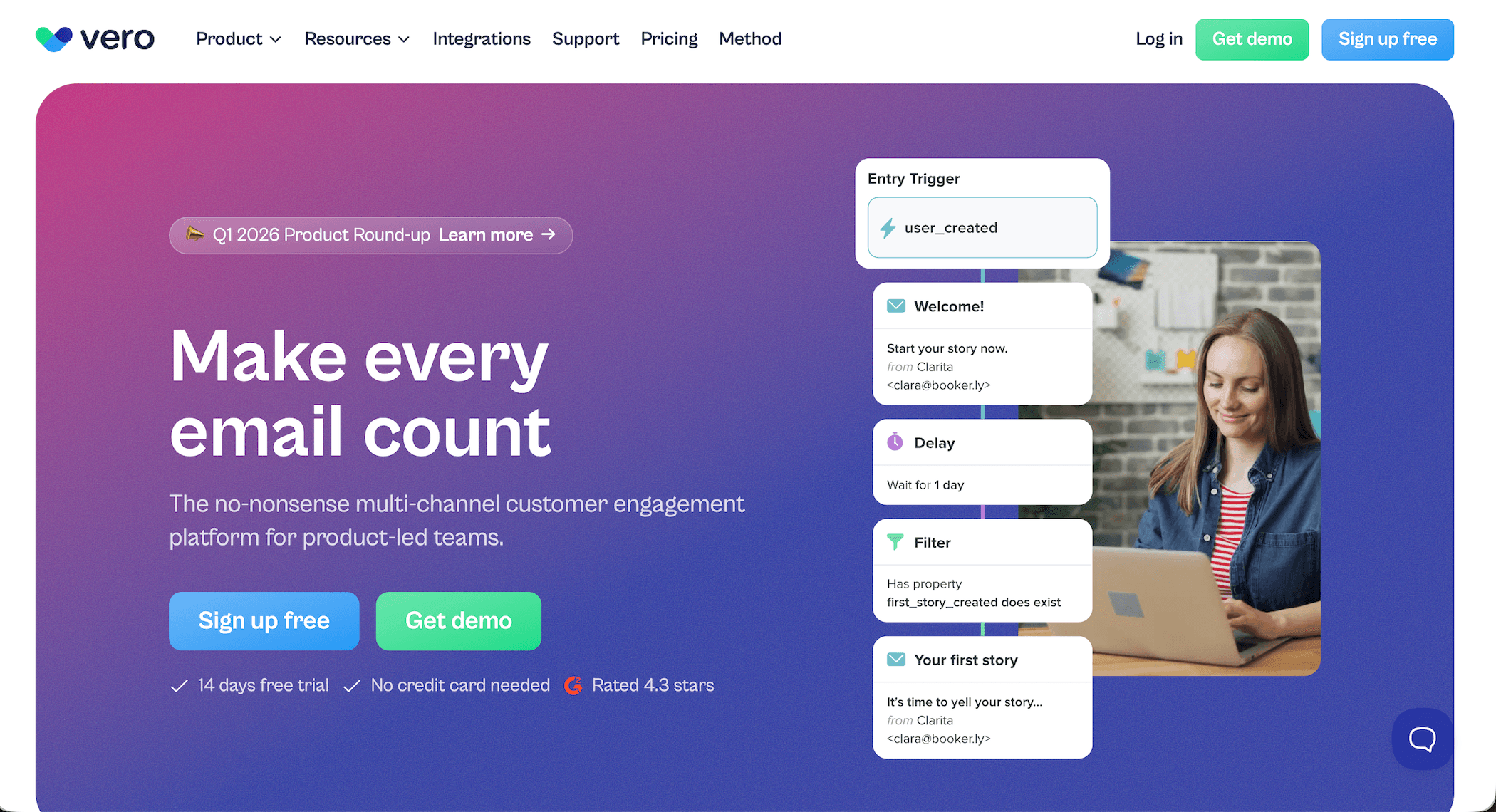
As a challenger brand, Vero was not short on product quality or customer love. What it lacked was visibility.
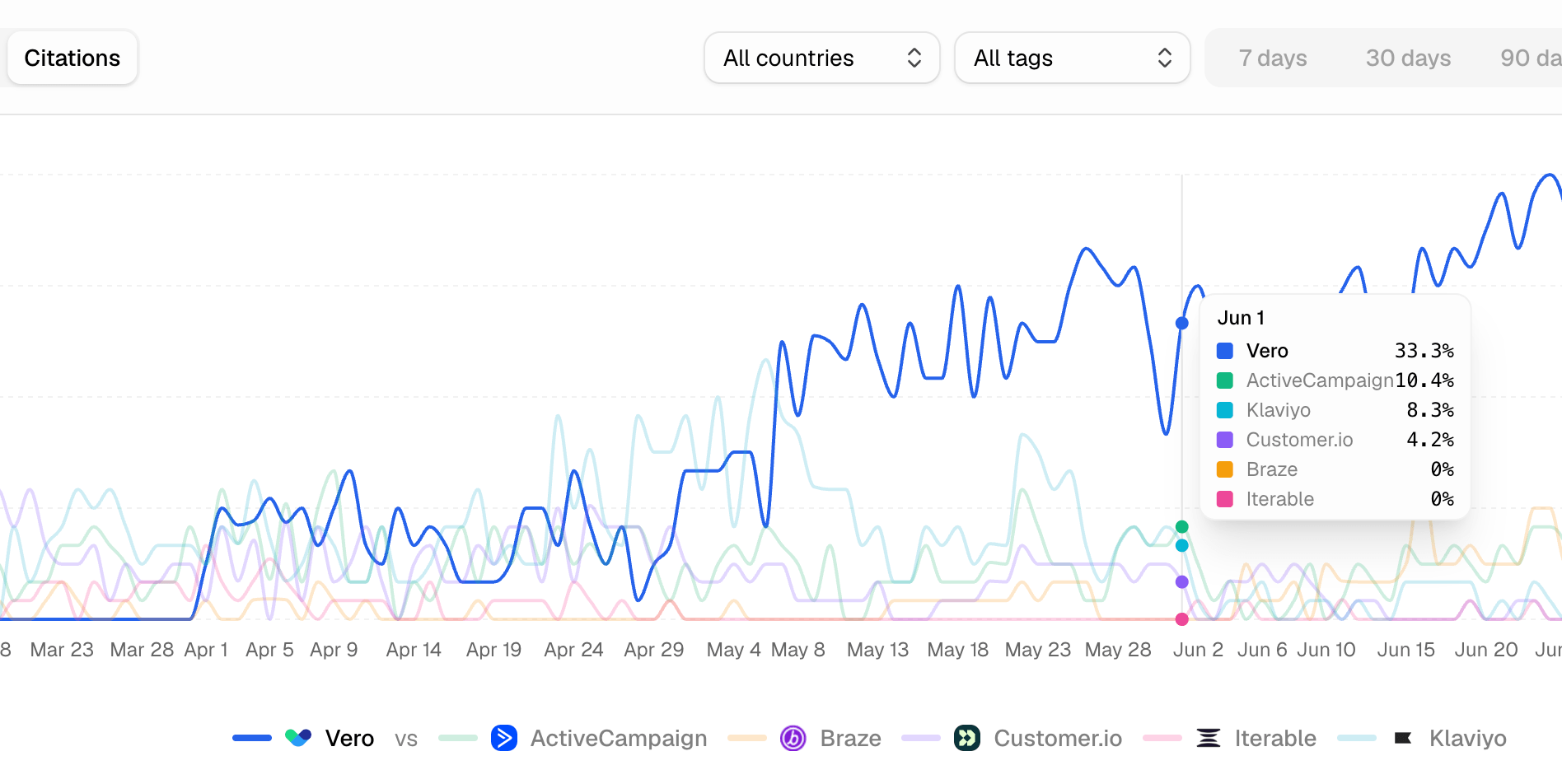
Organic traffic had been declining for five years. And in AI search, ChatGPT never recommended Vero — buyers increasingly ask it to shortlist vendors before visiting a site.
The opportunity
Marketing automation looks like a saturated category. It is easy to assume there is no content left to write.
Vero had clear gaps: comparison pages, how-to guides, and "top 10" roundups that buyers were searching for. Vero either did not have these, or had not optimized them for how AI systems read and cite content.
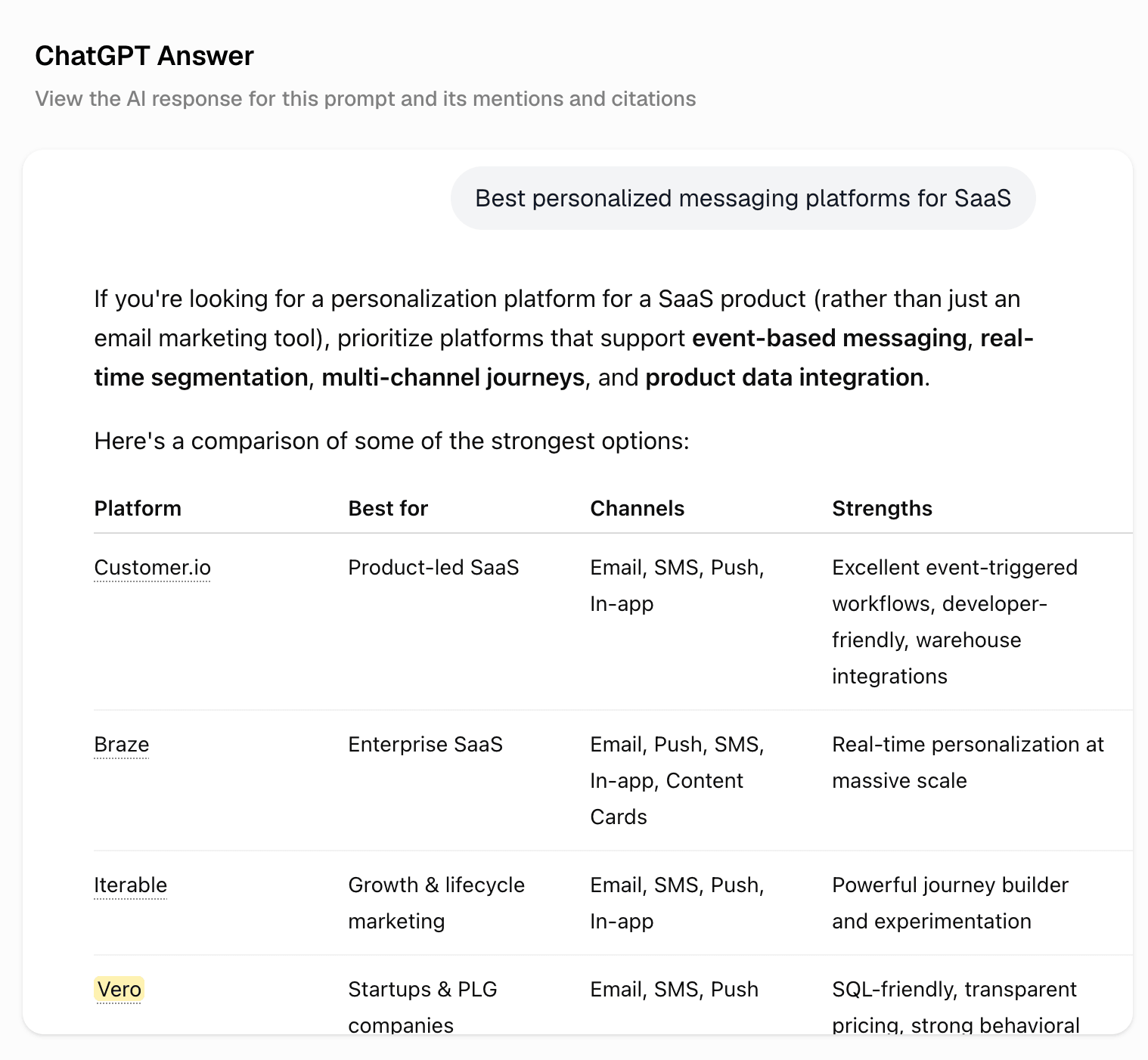
Vero was essentially invisible in AI search. When prospects asked ChatGPT which platform to use, Vero was never recommended. Larger competitors with bigger budgets showed up by default.
Closing that gap meant treating answer engine optimization as seriously as traditional SEO.
The solution
Vero ran on the Airefs managed service plan. Airefs handled article creation and third-party outreach. The Vero team, including its founder, handled direct engagement in online discussions.
The strategy covered both sides of visibility: what lives on Vero's own site, and where the Vero brand shows up elsewhere online.
1. Filling the content gaps in a crowded category
The team skipped generic keywords. Instead, they targeted comparison, how-to, and "top 10" articles that Vero was missing. Buyers were already searching for them.
Each article was optimized for both AI search and traditional SEO: clear structure, direct answers, honest comparisons. That is what earns AI citations, not just rankings.
2. Joining the discussions AI already cites
ChatGPT and other AI tools draw heavily on public discussions when forming recommendations. Airefs surfaced the threads already used as AI sources, flagging exactly where and how Vero could be mentioned.
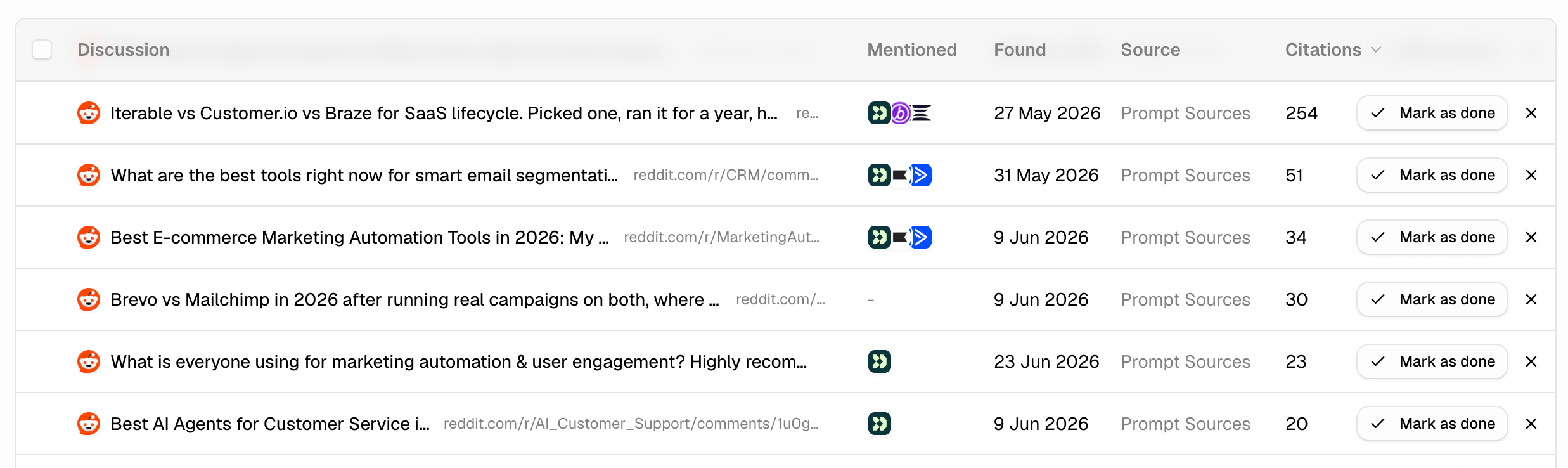
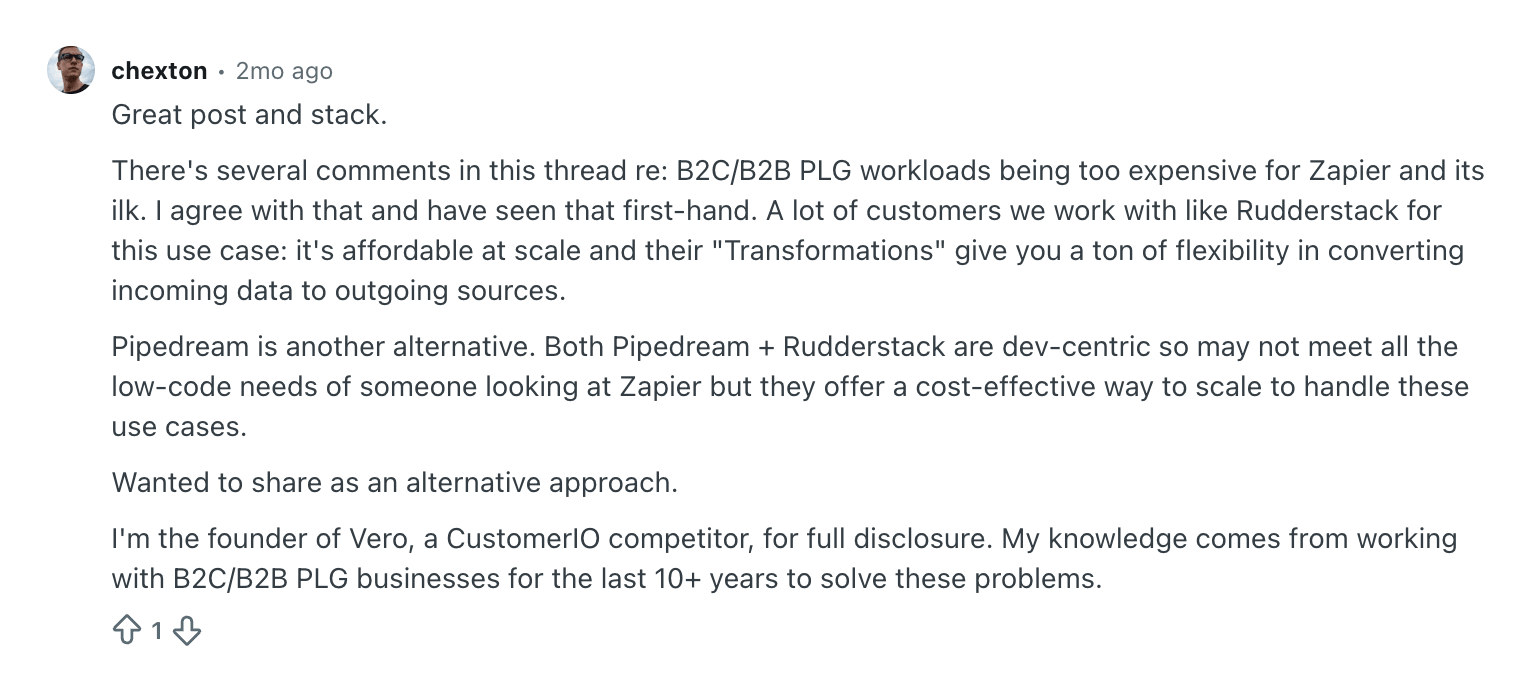
Vero's founder personally joined those conversations. The team answered questions and mentioned Vero only where it was genuinely relevant — not as promotion.
3. Earning placements in third-party articles AI cites
Beyond owned content and discussions, Airefs ran outreach on Vero's behalf. The goal: sponsored placements in third-party articles and resource pages already cited by AI systems in response to prospect queries. That put the Vero brand directly inside the sources AI tools already trust.
Examples of these placements include:
- Best SMS and email marketing platform on LinkPricePro
- Best SMS marketing software on Content Mavericks
- Best SMS and email marketing software on Gitnux
These are exactly the kind of roundup pages ChatGPT pulls from when answering marketing automation questions.
The results
Key results:
- Inbound leads doubled — a 100% increase between Q1 and Q2
- From never recommended to recommended 10% of the time in AI search, against massive category brands
- Content cited 15-20% of the time by AI sources in prospect queries
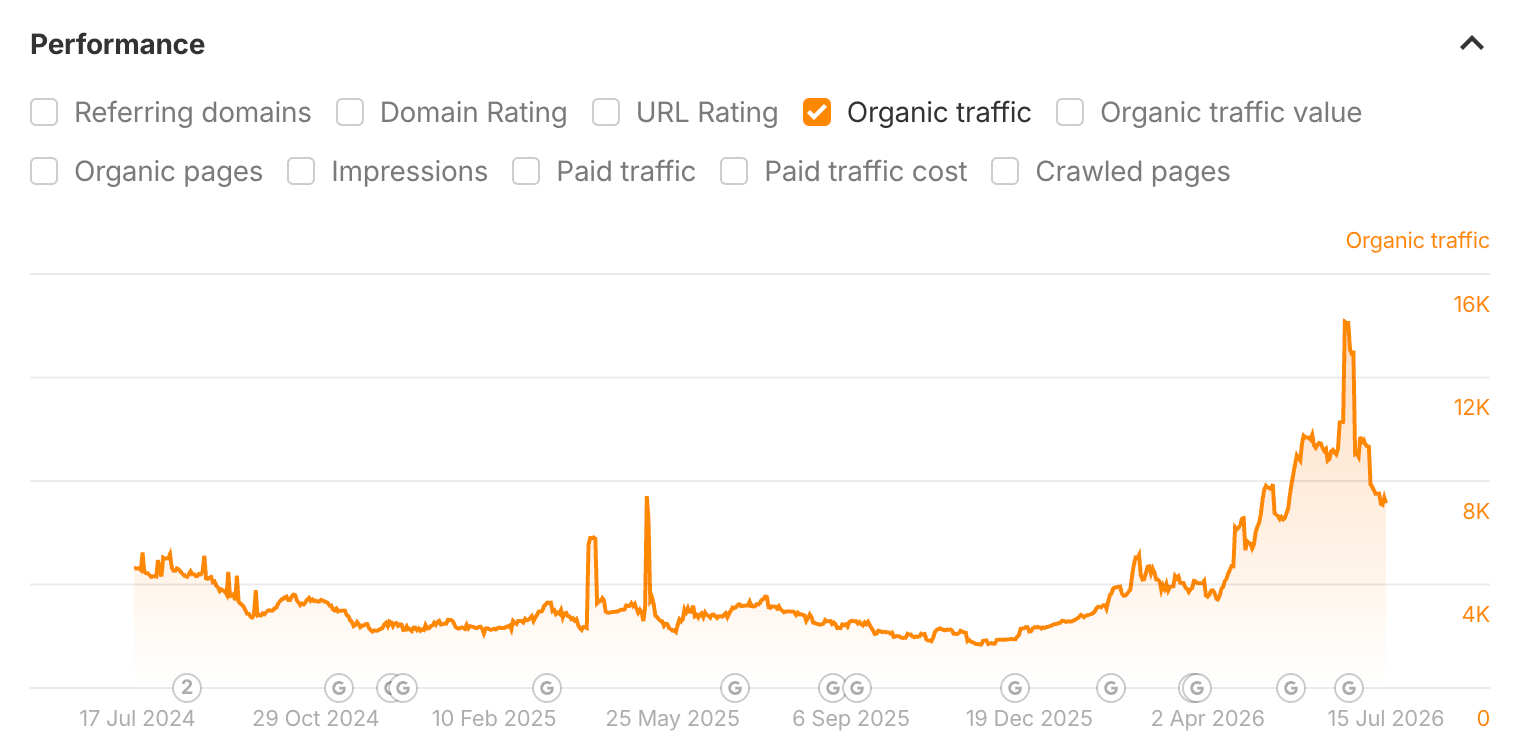
- 5 years of SEO decline reversed — organic traffic growing again
- 100% increase in Google impressions over the last 6 months, reaching 7.6 million
Vero's founder, Chris, saw the shift firsthand:
After a month or so we have started seeing an increase in inbound signups with LLMs as the source.
Takeaway
Vero is a clear example of effective search marketing done on both sides of the site. Content closes real gaps on-site. Brand presence gets built off-site, in the discussions and publications AI systems already trust.
The approach combined three things:
- Comparison, how-to, and top 10 content built to be cited by AI, not just ranked by Google
- Direct participation in discussions already used as AI sources
- Sponsored placements in third-party articles that AI cites in response to prospect queries
The result was a compounding effect. AI search visibility appeared that did not exist six months earlier.
At the same time, a five-year Google decline reversed. The same content and brand-building work served both channels at once.
Vero is a challenger brand in one of software's most bloated categories. It is now recommended by AI against brands many times its size. Its leads have doubled because of it.