Most generative engine optimization tools target enterprise teams with $250-$500/month budgets. But GEO isn’t just for Fortune 500 companies — startups, SMBs, and individual marketers need to track their AI search visibility too.
The good news: you don’t need to spend $250/month to get real, actionable GEO data. Three platforms deliver genuine AI monitoring under $50 per month, each with a different approach and target user.
The 3 best GEO tools under $50
| Tool | Lowest Plan | Price | AI Platforms | Free Trial |
|---|---|---|---|---|
| Airefs | Lite | $24/mo | ChatGPT + others on request | 7 days |
| Otterly AI | Starter | $29/mo | ChatGPT, AI Overviews, AI Mode, Perplexity, Gemini, Copilot | 14 days |
| RankScale | Essentials | EUR 20/mo (~$22) | ChatGPT, Claude, Perplexity, Gemini, Mistral, Grok, AI Overviews | None listed |
1. Airefs — $24/mo
Airefs is the most affordable dedicated GEO platform with full source-level citation tracking. The Lite plan at $24/mo covers the core workflow: track your brand across AI search engines, see which sources the AI cites when mentioning you or your competitors, and identify content and community opportunities to improve your visibility.
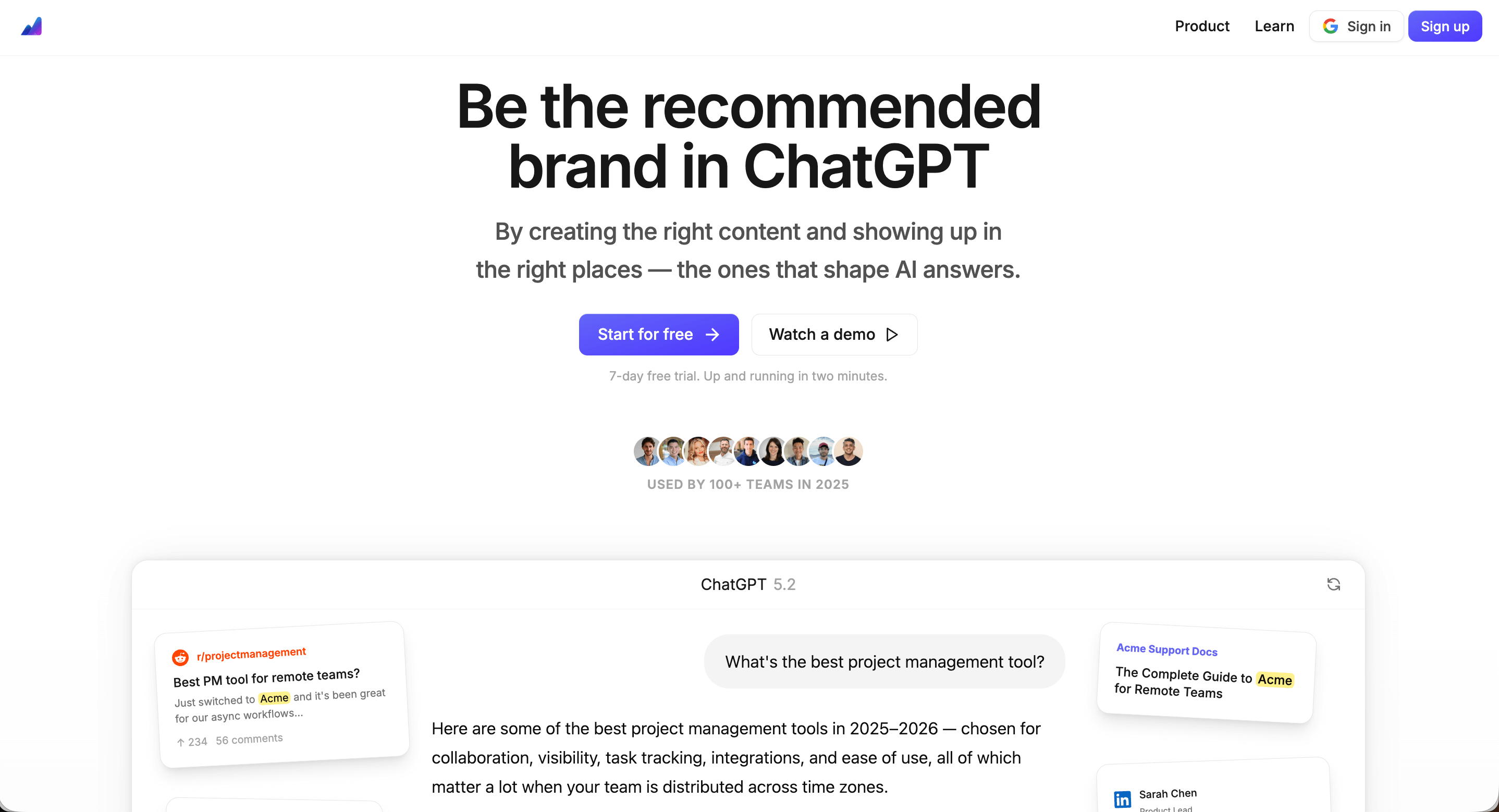
The platform’s key differentiator at any price point is source transparency. When ChatGPT recommends your competitor, Airefs shows you exactly which blog posts, review pages, and Reddit threads it relied on. This turns vague AI recommendations into a specific action plan.
What you get at $24/mo
- AI brand monitoring across ChatGPT and other LLMs
- Source-level citation tracking (see the exact URLs AI models reference)
- Competitor share-of-voice benchmarking
- Reddit and discussion thread monitoring
- Content and community opportunity identification
- Prompt alerts and weekly digests
Pricing
| Plan | Price |
|---|---|
| Lite | $24/mo |
| Pro | $49/mo |
| Expert | $83/mo |
7-day free trial. No credit card required.
Best for
Startups and B2B SaaS companies that want to understand why they’re being cited (or not) in AI answers, and want a clear action plan for improvement. The done-for-you (DFY) agency upgrade ($249/mo) is available for teams that want execution rather than just data.
Website: getairefs.com
2. Otterly AI — $29/mo
Otterly AI is a Gartner Cool Vendor 2026 with 4.9/5 on G2 (250+ reviews) and 20,000+ marketing professionals using it across 40+ countries. For $29/mo, the Starter plan delivers more AI platform coverage than most competitors charge $100+/mo for.
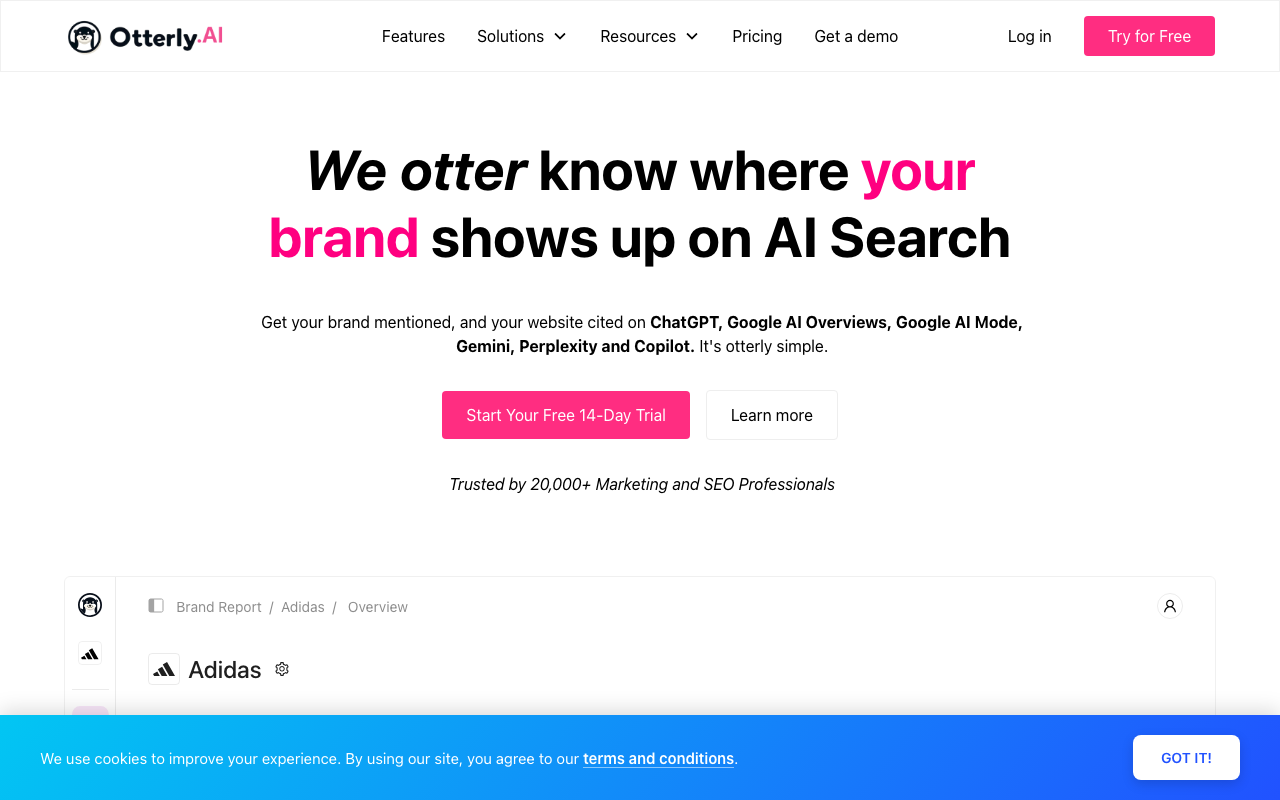
The platform tracks six AI engines on paid plans and includes a GEO Audit that scores your site on 25+ on-page factors that influence whether AI models cite you. Automated weekly reports mean you don’t have to log in every day to stay on top of your AI visibility.
What you get at $29/mo
- Monitoring across ChatGPT, AI Overviews, AI Mode, Perplexity, Gemini, and Copilot
- Brand position and sentiment tracking
- Competitor benchmarking and share of voice
- GEO Audit (25+ on-page factors for AI readiness)
- Prompt library and keyword clustering
- LLM intent detection
- Automated weekly reports
Pricing
| Plan | Price |
|---|---|
| Starter | $29/mo |
| Growth | $189/mo |
| Business | $489/mo |
Add-ons: AI Mode & Gemini tracking $9-149/mo depending on plan tier. 14-day free trial.
Best for
SMBs, agencies, and individual SEOs who want maximum platform coverage at minimum price. The Gartner recognition and strong G2 rating signal enterprise-grade reliability at SMB pricing. Note: AI Mode and Gemini tracking require add-ons even on higher plans.
Website: otterly.ai
3. RankScale — EUR 20/mo (~$22)
RankScale is the lowest-priced GEO tool on the market at EUR 20/mo (roughly $22 USD), making it the go-to choice for data-savvy marketers on tight budgets. The credit-based Essentials plan gives you 120 credits per month (equivalent to 480 AI responses across tracked platforms) and covers seven AI engines including Claude, Mistral, and Grok — platforms that many pricier tools don’t offer.
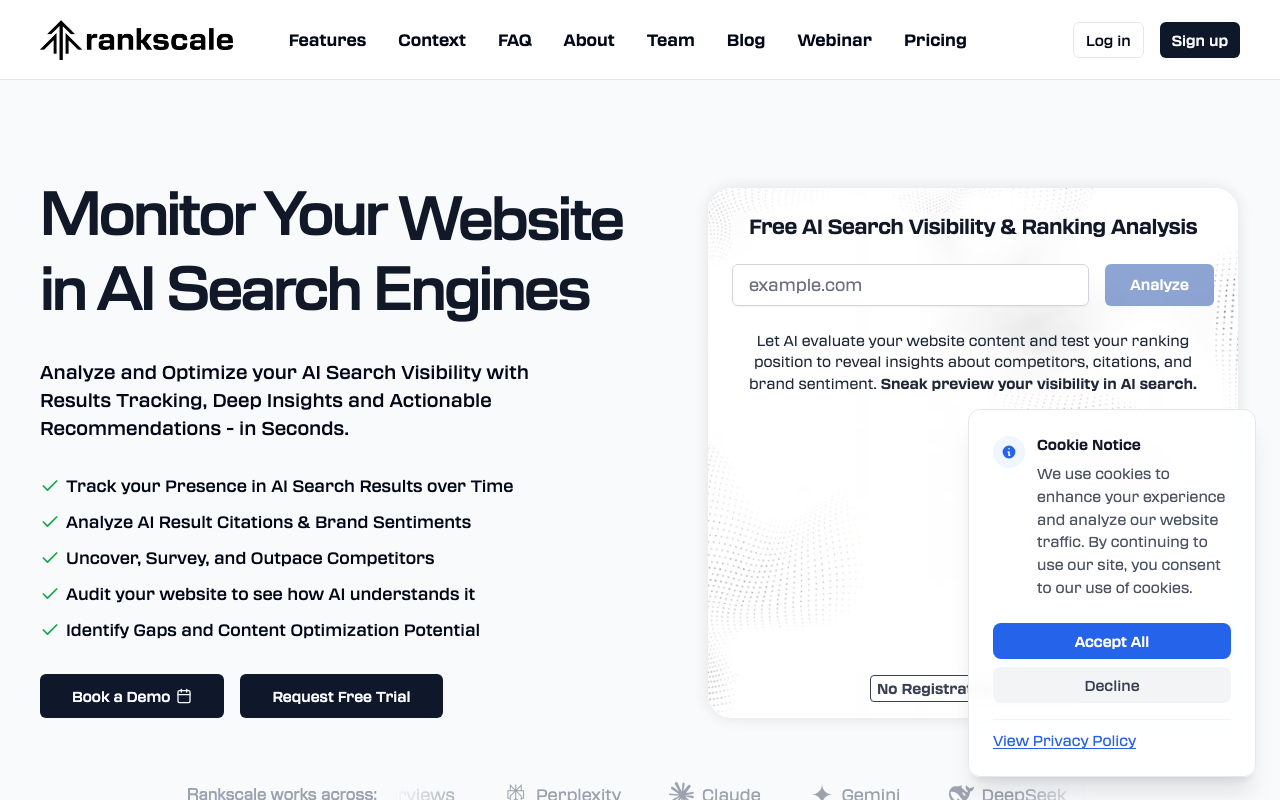
The platform is explicitly described as a “DIYer’s dream” — it’s more technical than Airefs or Otterly AI, with a learning curve, but rewards data-savvy users with granular control over exactly which prompts they track and on which platforms.
What you get at EUR 20/mo
- Credit-based tracking across ChatGPT, Claude, Perplexity, Gemini, Mistral, Grok, and AI Overviews
- Website audits with AI readiness scoring
- Sentiment tracking
- Competitor benchmarking (visibility, sentiment, citation frequency)
- Brand dashboard
- Additional credits available in 100-credit increments
Pricing
| Plan | Price | Credits | AI Responses |
|---|---|---|---|
| Essentials | EUR 20/mo | 120 | 480 |
| Pro | EUR 99/mo | 1,200 | 4,800 |
| Enterprise | EUR 780/mo | 12,000 | 48,000 |
No free trial listed; custom plans available.
Best for
Technical marketers and SEO professionals who want maximum platform breadth (7 AI engines) at the lowest price, and don’t mind a steeper learning curve. The credit-based model provides flexibility but requires careful management to avoid running out mid-month.
Website: rankscale.ai
Under $50 GEO: what you give up
Affordable GEO tools make real monitoring accessible, but there are trade-offs:
| Feature | Under $50 options | Premium tools ($250+) |
|---|---|---|
| AI platforms | 4-7 | 8-11+ |
| Content generation | No | Often yes |
| White-glove support | No | Sometimes |
| GA4 / GSC integration | Rarely | Often |
| Looker Studio export | No | Growth+ tiers |
| Daily automated reports | Varies | Usually yes |
For most teams starting out in GEO, the under-$50 tier is the right starting point. You get enough data to understand your baseline visibility, identify your top content gaps, and build a repeatable monitoring workflow — before deciding whether a $250-500/mo platform is worth the upgrade.
Related reading:
- Top 5 Generative Engine Optimization Tools in 2026
- 3 AEO Tools for AI Search Visibility Under $50
- 3 AI Search Rank Tracking Tools Under $50
Airefs tracks your brand’s presence in AI search engines starting at $24/mo. Start your free 7-day trial — no credit card required.