

Monday starts with a familiar mess. At 9 a.m., a marketing lead opens Slack and finds two new one-star Google reviews, a complaint spreading on Reddit, and no record of who replied to either customer. The team searches inboxes, asks three people for context, and starts drafting responses while potential customers compare alternatives.
That scramble creates a silent tax. Unmanaged feedback costs conversions, slows support cycles, and lets reputational drift become the public version of your brand. Review management software gives teams an operating layer across the places where buyers research, from Google and Yelp to G2, Trustpilot, Reddit, and industry directories. The point isn’t to collect another stream of alerts. The point is to turn scattered customer signals into coordinated, trackable growth work, alongside the fundamentals in this local SEO checklist.
Table of Contents
- Why Reviews Quietly Run Your Growth
- What Review Management Software Does
- Core Features That Move the Needle
- Review Software vs Reputation and AI Visibility Tools
- How Synup Can Help
- Metrics and Use Cases by Buyer Type
- Pricing Models and What They Reward
- Buying Checklist and Implementation Playbook
- Where Reviews Are Headed and Your Next Steps
Why Reviews Quietly Run Your Growth
Reviews influence decisions long before a prospect reaches your website. A B2B buyer may compare G2 feedback, a local customer may inspect Google Maps, and a product shopper may look for detailed comments before trusting a product page. The review is often the last piece of outside validation standing between interest and action.
HubSpot’s review management overview cites research that 94% of B2B purchasers use online reviews when making decisions and 84% of consumers trust online reviews as much as personal recommendations. The same source reports that retailers can see conversion rates rise by 270% when reviews are displayed, with performance peaking near a 4.9 out of 5-star rating. Those figures don’t mean every business should chase a perfect score. They show why reviews belong in the growth system, not in an unowned marketing folder.
The cost of a missing response
A negative review creates two jobs. Someone must understand what happened, and someone must respond in public without making the situation worse. If the review sits unnoticed, the business loses the opportunity to show prospective customers that it listens and acts.
Response visibility matters because buyers evaluate the response itself. One survey cited by the Inquirer’s review management software coverage found that 45.1% of consumers check whether brands respond to reviews, while 33% trust a brand more when businesses publicly answer negative feedback.
The same pattern appears in consideration. OECD research found that around 70% of consumers across 23 countries consider ratings and reviews essential or very important, and that 65% of U.S. consumers in one study chose a product outside their initial consideration set after reading reviews. The OECD report on online consumer ratings and reviews makes the strategic implication clear: feedback doesn’t just validate an existing preference. It can create a new one.
The operational answer
A review program needs ownership, routing, context, and measurement. Without those, the team reacts to whichever review happens to appear in front of the loudest person.
Review management software centralizes the work. It helps teams request feedback after a meaningful customer interaction, identify urgent issues, assign responses, analyze recurring topics, and connect public sentiment to operational decisions. That structure is what turns reviews from reputation maintenance into a repeatable acquisition and retention input.
What Review Management Software Does
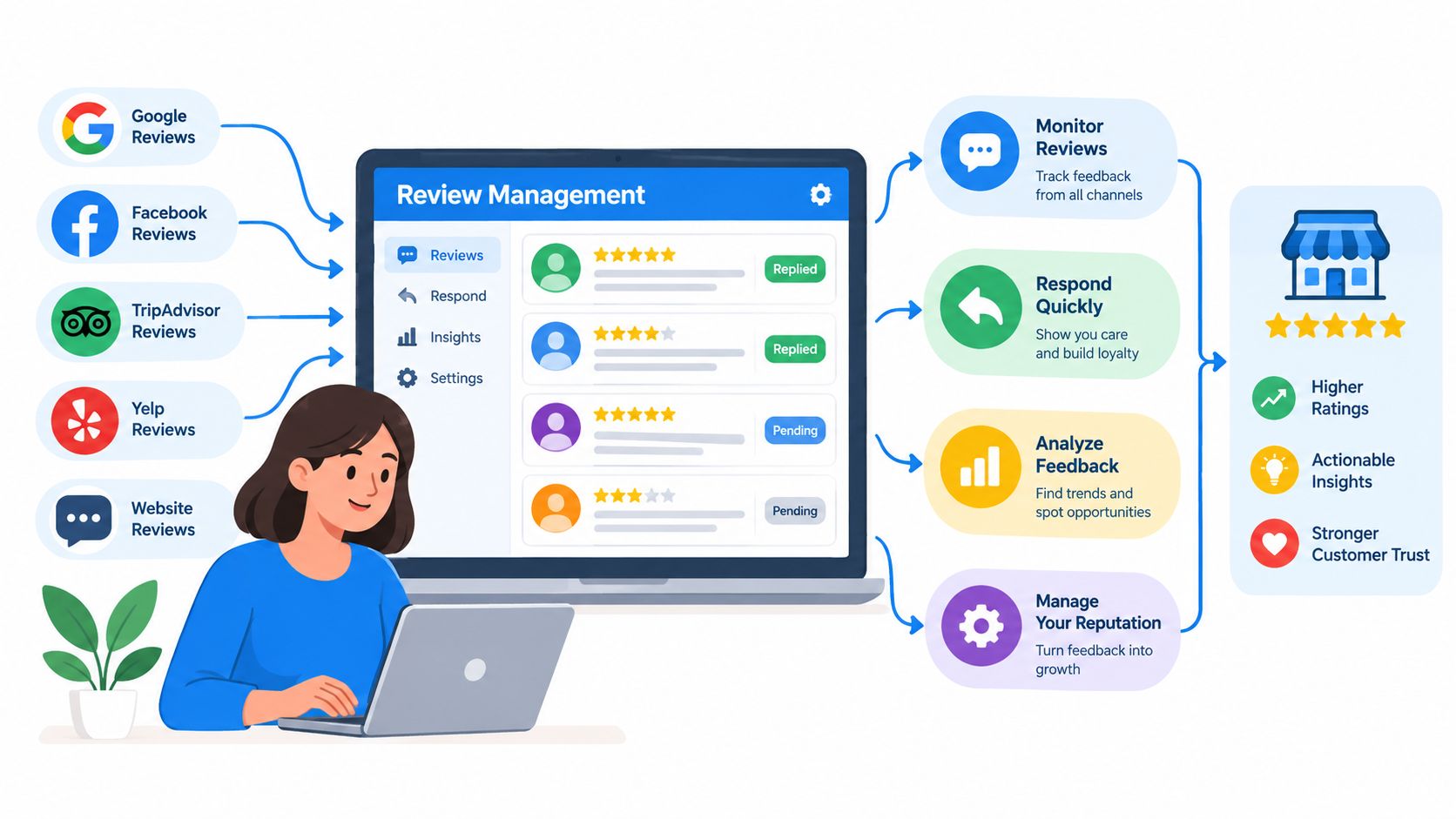
Review management software is a centralized system for collecting, monitoring, analyzing, and responding to customer reviews across multiple platforms. Those platforms usually include Google, Yelp, G2, Trustpilot, Facebook, app stores, and specialist directories.
It works like a control layer for customer feedback. Reviews come in from different places, staff need a way to route them, and leaders need a single view of what needs attention now versus what points to a deeper issue.
Four jobs define the category
1. Generate and solicit reviews.
The platform triggers review requests through email, SMS, QR codes, short links, or CRM events. Good systems let you control timing, audience, location, and destination without making staff copy customer details between tools.
2. Aggregate reviews across locations and sources.
A multi-location brand needs one view of every location, not a stack of browser tabs. Aggregation normalizes ratings, text, dates, authorship signals, and source information so managers can compare like with like.
3. Route and manage responses.
A unified inbox shows new reviews, assigns ownership, supports approvals, and records what was published. AI-assisted drafts can speed up routine replies, but a human should control sensitive cases, legal issues, and service recovery.
4. Analyze feedback and report action.
Good reporting goes beyond average rating. It identifies themes such as delivery delays, staff praise, onboarding friction, or recurring product complaints. It should also show response rates, review recency, source mix, location differences, and the operational owner for each issue.
The category is crowded. As summarized in Semrush’s cited category research, G2 lists 285 products in its review management category, averaging 4.61 out of 5. That breadth makes feature comparison less useful than workflow testing.
Practical rule: If the platform only tells you that a new review arrived, it is not managing the process. It is forwarding notifications.
A real system should answer three questions fast. What happened, who owns the next action, and did the action change the customer or business outcome? If it cannot answer those questions, the dashboard is decoration.
For teams evaluating adjacent capabilities, brand monitoring tools can extend coverage beyond structured reviews into broader mentions. Review management stays focused on the review workflow. Brand monitoring covers the wider conversation.
Core Features That Move the Needle
The useful features fall into four buckets. Collection creates a steady feedback stream, response turns visibility into trust, insight reveals the reasons behind ratings, and distribution puts credible customer language in front of more buyers.
Collection
Review requests should trigger from a real business event, such as a completed appointment, delivered order, resolved ticket, or successful onboarding milestone. Email and SMS triggers, QR codes, short links, API feeds, and CRM integrations all matter when they remove manual handoffs.
The differentiator is control. You should be able to set source priorities, suppress duplicate requests, route dissatisfied customers to an internal service workflow where appropriate, and preserve compliance with each review platform’s rules. Never buy a tool because it promises to manufacture praise. Buy one that makes a legitimate request easy and consistent.
Response
A unified inbox and basic alerts are table stakes. Google integration is table stakes. Templates are useful, but generic templates quickly become obvious to readers.
Look for approval routing, multilingual support, role-based permissions, escalation rules, and AI drafts that follow your brand voice. The draft should use details from the review without inventing facts or making promises the business can’t keep. The strongest platforms also connect a review to a customer record or support ticket, so the reply reflects what happened.
Insight
Sentiment analysis is useful only when it leads to a decision. A single score that says sentiment is “positive” doesn’t tell a product manager whether customers love the speed but dislike the billing process.
Topic tagging, recurring-theme detection, competitor benchmarking, trend alerts, and cross-location comparisons are more valuable. Tie those themes to owners and outcomes. A location manager should see service issues, a product team should see feature friction, and a marketing team should see language worth reusing.
Distribution
Positive reviews can support social sharing, embeddable widgets, testimonial libraries, and structured content on relevant pages. But distribution must preserve context and performance.
A review widget that slows a page or displays stale comments is vendor noise. A review library that lets sales and content teams find feedback by use case, customer type, product, or location is useful. Schema markup can support search presentation when implemented correctly, but it isn’t a substitute for fresh, specific review content.
| Feature Category | Table Stakes | Real Differentiators |
|---|---|---|
| Collection | Email or SMS requests, basic templates, source links | Event-based triggers, API feeds, suppression rules, source routing |
| Response | Unified inbox, alerts, Google integration | Voice-trained drafts, approvals, escalation, multilingual workflows |
| Insight | Average rating, volume, basic sentiment | Topic-level analysis, competitor comparisons, revenue-linked location views |
| Distribution | Review widgets and sharing | Permission-aware libraries, contextual syndication, fast page performance |
| Governance | User accounts and exports | Audit trails, role controls, response SLAs, historical change tracking |
GetApp’s buyer-signal data reinforces the practical priority. Its research reports that review monitoring, negative feedback management, response management, review notifications, and dashboards are considered important or highly important by 84% to 95% of reviewers, as summarized by AirOps’ review software analysis. Start with those workflow fundamentals before paying for theatrical AI features.
Review Software vs Reputation and AI Visibility Tools
These categories overlap, but they don’t do the same job.
Review management software is the narrow, deep layer. It manages the review lifecycle, from request and collection through routing, response, analysis, and reporting.
Reputation management platforms sit above that layer. They usually add social listening, brand mentions, forums, news, executive monitoring, and crisis workflows. They answer a wider question: what is the internet saying about the brand?
AI visibility tools focus on answer generation. They track how brands appear in ChatGPT, Perplexity, Google AI Overviews, and other answer engines, including which sources those systems cite and which prompts produce visibility. Tools in this category, such as those covered in this guide to AI search visibility tools, measure recommendation and citation performance rather than only review operations.
| Dimension | Review Management Software | Reputation Management Platform | AI Visibility Tool |
|---|---|---|---|
| Primary scope | Reviews and customer feedback | Reviews, mentions, news, forums, and crises | AI answers, prompts, citations, and sources |
| Primary KPI | Review velocity, response rate, themes, rating trends | Share of conversation, risk, sentiment, response coverage | Brand mentions, citations, share of voice, prompt performance |
| Typical buyer | Local marketer, CX leader, franchise operator | Communications, reputation, or executive team | SEO, growth, content, or demand generation team |
| Main action | Request, route, answer, learn | Monitor, investigate, escalate, protect | Diagnose, create, update, and influence sources |
| Relationship | Supplies structured customer evidence | Adds context around the wider public conversation | Uses reviews and other sources in answer visibility |
The right purchase is rarely either/or. Review software supplies the fresh, structured customer evidence that reputation and AI visibility teams need.
AI systems increasingly summarize public opinion before a user reads individual reviews. If buyers ask an AI assistant what customers think of your business, review volume, recency, detail, and topic coverage can influence the sources that shape the answer. That makes review operations part of answer-engine visibility, not a separate reputation task.
How Synup Can Help
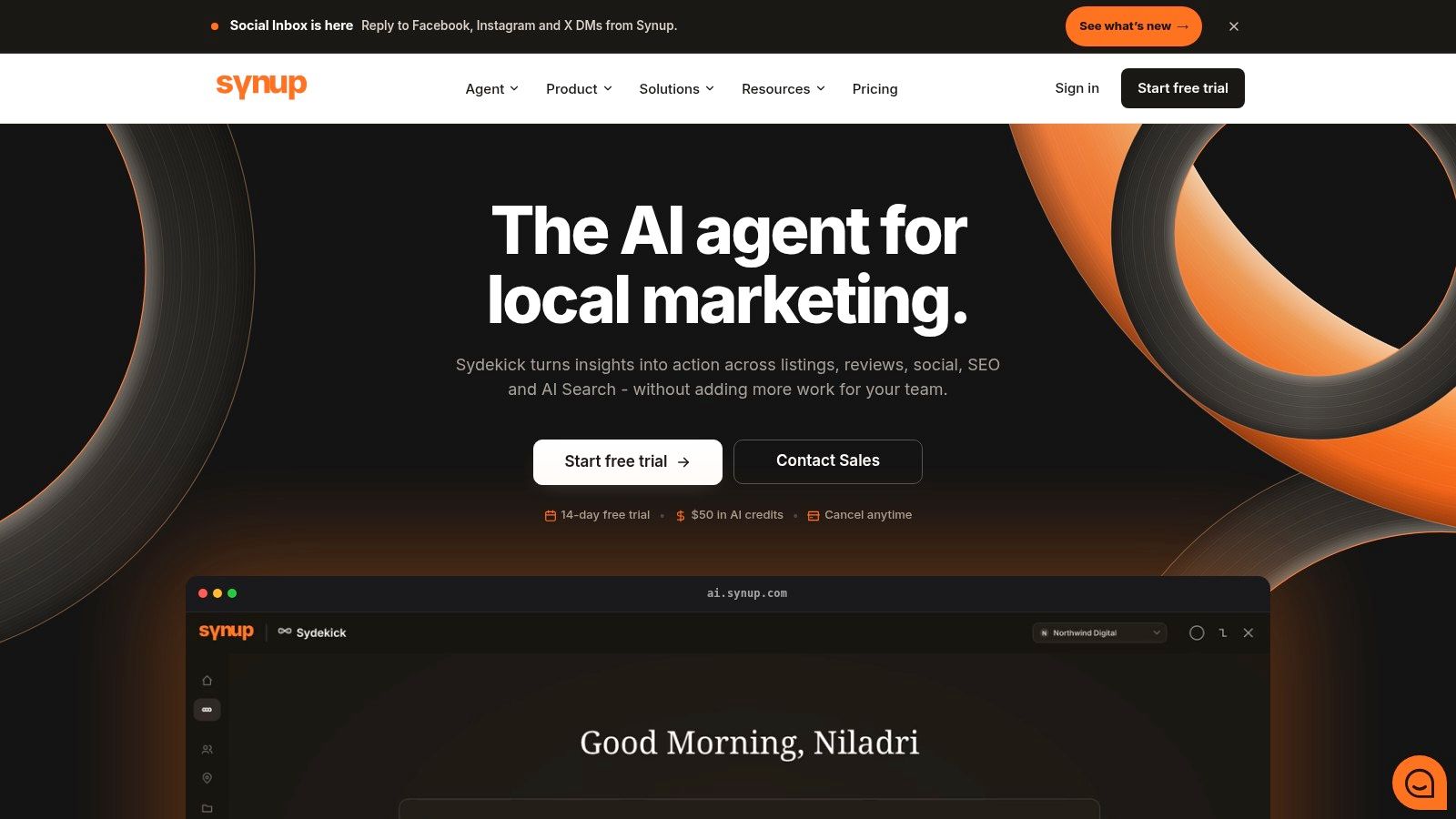
Synup is a local marketing, listings, and reputation management platform built for agencies, software providers, multi-location brands, franchises, and small businesses. Its scope is broader than review monitoring alone, which makes it relevant when listings, local content, reputation, and AI visibility currently sit in separate tools.
The platform combines an AI agent called Sydekick with workflows for listings, reviews, social publishing, local SEO, location pages, reporting, and Answer Engine Optimization. Sydekick supports chat, memory, skills, playbooks, inference, approval workflows, and a full audit trail. That last capability matters for teams that want automation without losing control over what the system proposed or published.
Where the platform fits
Synup’s listings tools sync profiles across Google Business Profile, Apple Business Connect, Bing, Facebook, and 100+ publishers, with audits and autonomous corrections. Its reputation tools monitor reviews, draft replies, request approval, and publish responses. Review generation campaigns use short links and message flows to make requests part of the customer workflow.
The platform also includes location-level social publishing, local-pack rank tracking, store locators, location landing pages on custom domains, and analytics with scheduled branded reports. For teams investigating answer engines, its AEO features evaluate presence in ChatGPT, Gemini, and Perplexity and identify citation gaps.
Agencies get a multi-client command center, branded portals, white-labeling, scoped permissions, APIs, first-party MCP support, model connectors, and BYOK or BYOM options. Pricing includes all features on every plan, while tiers vary by location count and agent throughput.
A practical way to evaluate Synup’s review management software is to test whether its broader command center replaces enough fragmented work to justify consolidation. It’s a strong fit when teams manage many locations, need an audit trail, or want review, listings, content, and AI visibility workflows in one operating environment.
Metrics and Use Cases by Buyer Type
A review program fails when every team reports the same number. The founder needs accountability, the marketer needs acquisition signals, the agency needs defensible reporting, and the ecommerce team needs evidence that reviews support product discovery.
In-house marketers
Track review velocity and response rate as leading indicators. Review velocity shows whether the request workflow is active, while response rate shows whether the team is protecting public trust.
Use conversion on pages that display relevant review content as the lagging indicator. Segment the result by location, service, or product rather than presenting one blended company average. Your job is to connect customer language to the places where prospects make decisions.
Multi-location founders and operators
Track review recency and star-rating movement by location as leading indicators. These expose local execution differences that a company-wide average can hide.
Use location-level revenue, bookings, or foot traffic as the lagging indicator where your analytics can connect those outcomes responsibly. The software should make franchise accountability easier, not create another corporate scorecard that local managers can’t act on.
Agencies
Track source diversity and sentiment themes across accounts as leading indicators. Source diversity shows whether the program depends on one platform, while theme trends help an agency identify operational issues that can support a wider client strategy.
Use retention or expansion of managed accounts as the lagging indicator. White-label reporting, permissions, branded portals, and audit-ready exports matter because the agency must prove work performed and value created without burying the client in platform detail.
Ecommerce operators
Track review coverage on priority product pages and verified-buyer participation as leading indicators. Coverage tells you where shoppers lack confidence, while verified-buyer feedback helps teams judge whether the collection process is reaching real purchasers.
Use organic click-through or product conversion on pages with relevant review content as the lagging indicator. Connect review themes to returns, product messaging, merchandising, and support. A review that explains a product’s use case may be more valuable than a shorter review with a higher star rating.
Don’t optimize for a large total that says nothing about freshness or quality. A smaller, recent, detailed review base can be more persuasive than a much larger archive that no longer reflects the customer experience.
Teams working across many locations should pair review reporting with location-level search measurement. An enterprise rank tracking platform can help connect review changes with local visibility, but avoid claiming causation from a simple before-and-after comparison. Use review themes, response performance, search visibility, and commercial outcomes together.
Pricing Models and What They Reward
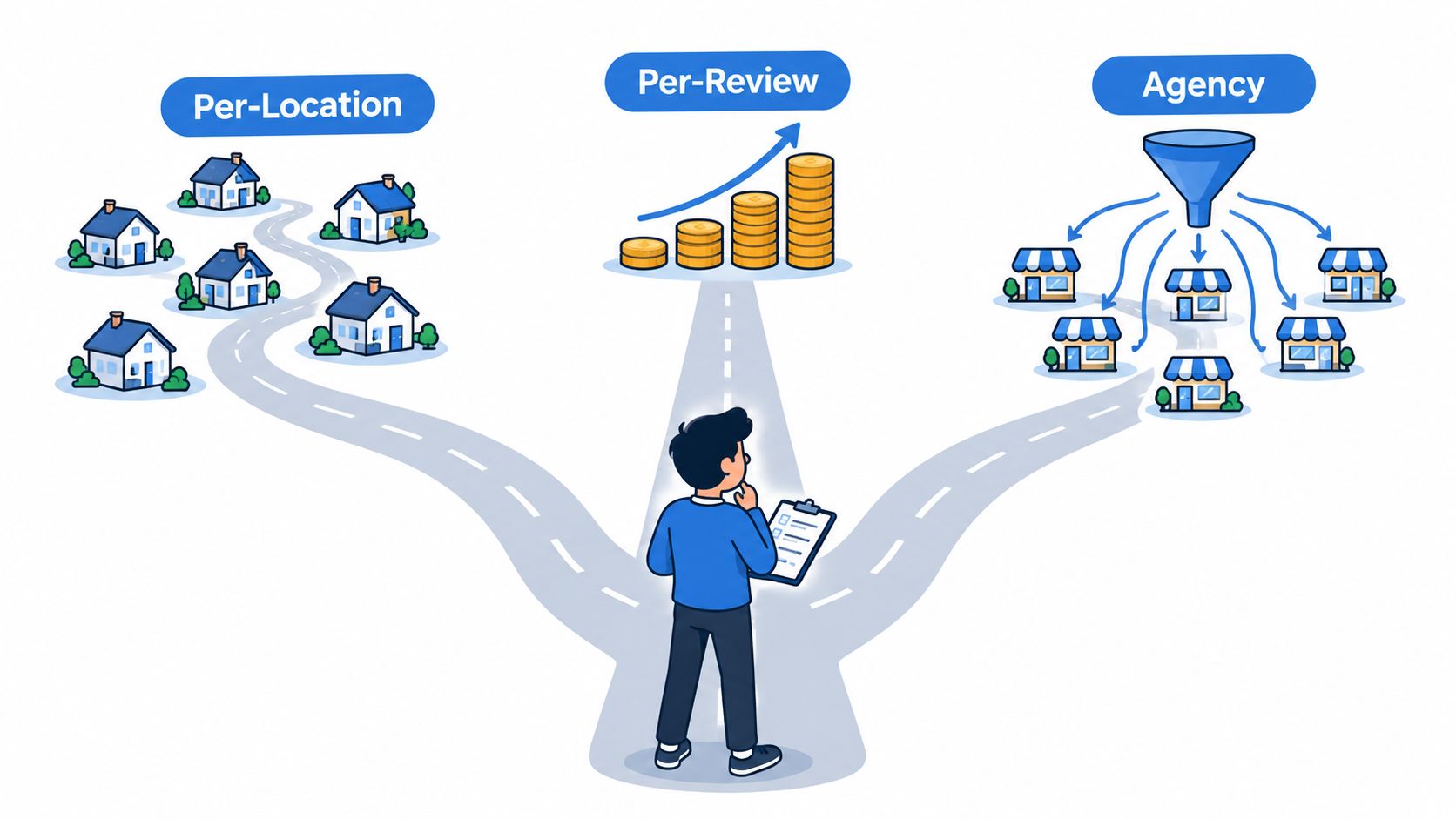
Review software usually follows one of three pricing rails: per location, per review volume, or tiered SaaS access. Each model shapes behavior, so the cheapest headline price isn’t necessarily the cheapest operating model.
Per-location pricing suits a brand with many branches and predictable usage. It can punish an agency that manages many small clients, especially when each client needs separate permissions, reporting, and branding.
Per-review-volume pricing looks attractive for a business with low feedback volume and high-value transactions. It becomes uncomfortable during seasonal peaks, viral attention, or a successful campaign, exactly when the company should be able to collect and analyze more feedback without penalty.
Tiered SaaS pricing rewards scale and feature breadth. It can also hide the capabilities that matter most, such as AI-assisted responses, API access, advanced exports, workflow approvals, or cross-location analytics, behind a higher tier.
Read the full commercial picture
Ask for a 12-month all-in quote. Include implementation, integrations, SMS credits, extra users, response seats, support, data migration, and branded reporting.
Then model a 3x review-volume scenario before signing. Ask what happens if collection improves, if one location receives unusual attention, or if the business adds another source. A plan that looks inexpensive with low activity may become a constraint once the program works.
Buying advice: Don’t compare monthly subscription prices. Compare the cost of running the complete workflow you actually want.
Check data ownership and exit terms as carefully as feature lists. You should be able to export review history, tags, response records, reporting data, and customer workflow data in a usable format. If the vendor makes migration difficult, the low entry price is buying dependency.
Buying Checklist and Implementation Playbook
A good vendor demo should prove operational control, not just display a polished dashboard. Ask the team to show how a review moves from arrival to assignment, approval, publication, escalation, reporting, and export.
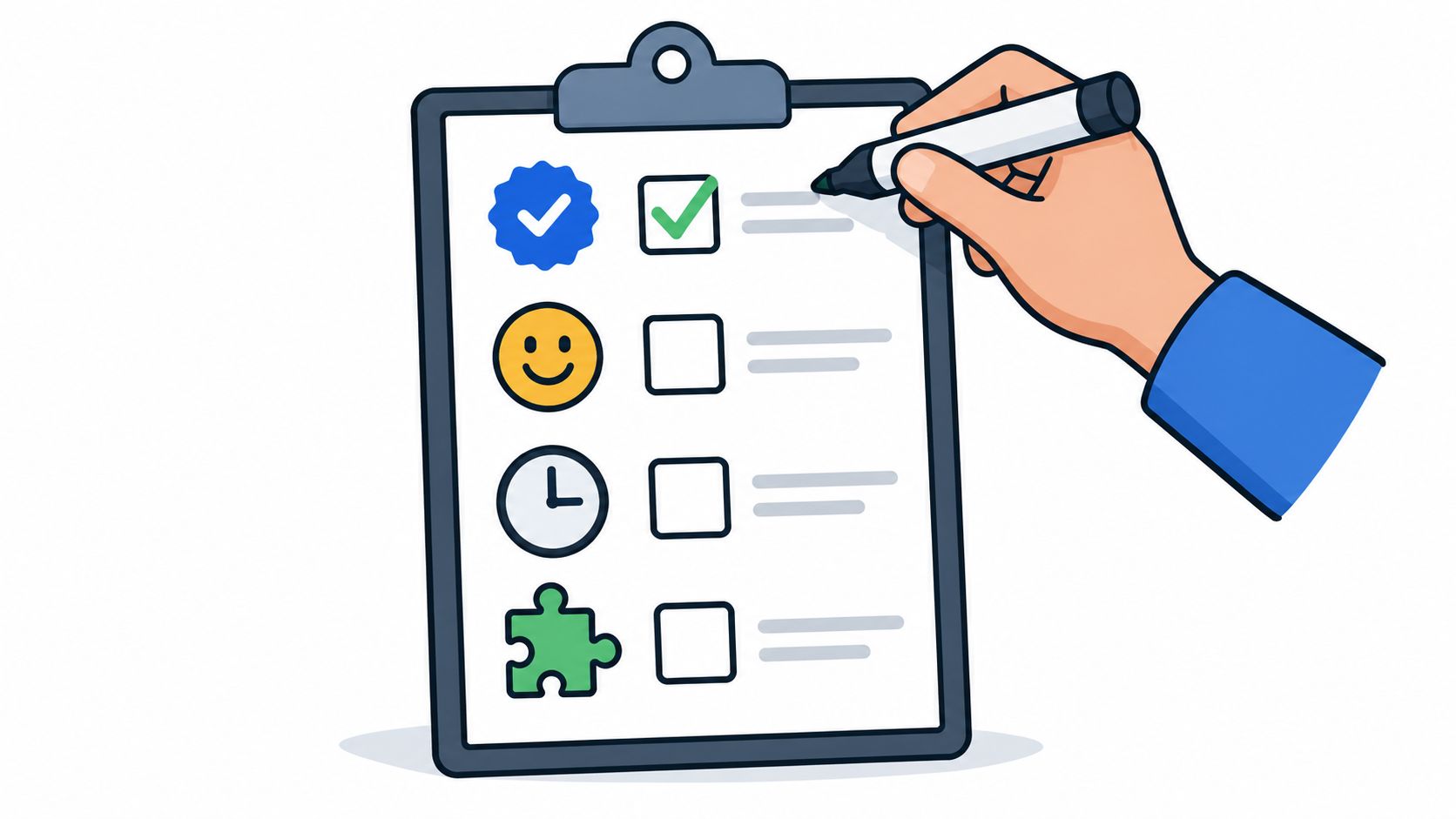
Test these buying criteria
- Collection controls: Can the platform trigger requests from your CRM, helpdesk, ecommerce platform, or appointment system?
- Source coverage: Does it monitor the review sites that influence your buyers, including specialist directories?
- Response governance: Can you set owners, approval rules, escalation paths, language controls, and service-level expectations?
- Analysis quality: Can you inspect the topics behind sentiment instead of accepting an opaque score?
- Integration depth: Does the API support the records and actions your team needs, not just a one-way export?
- Data portability: Can you export historical reviews, tags, responses, audit records, and reports?
- Performance impact: Do widgets load quickly and support a clean experience on important pages?
Red flags include locked response queues, unexplained sentiment scoring, weak historical imports, limited permissions, and AI drafts that sound interchangeable. Ask the vendor to analyze short reviews, mixed sentiment, sarcasm, product-specific language, and multilingual feedback before you trust the output.
Roll out in the right order
- Connect the review sources first. Confirm access, location mapping, source ownership, and historical coverage.
- Import historical reviews. Preserve dates, ratings, locations, authorship signals, existing responses, and tags where possible.
- Configure routing and response rules. Assign owners for positive feedback, routine complaints, urgent issues, legal concerns, and suspected fraud.
- Set alert thresholds. Route low ratings, repeated topics, executive mentions, and location-specific spikes to the right team.
- Connect CRM and ticketing workflows. Give support and operations the context needed to resolve the underlying issue.
- Run a 30-day pilot. Use one location, product line, or customer segment and tie the pilot to a specific KPI.
- Expand reporting after the workflow works. Don’t build executive dashboards around incomplete or inconsistent data.
Train staff before launch. Define what requires a personal reply, what can use an approved draft, and what must move to a private support channel. A review response should sound human even when software helped prepare it.
Teams building a broader program can use an enterprise SEO strategy to connect review insights with location pages, content priorities, internal linking, and search measurement. Reviews should inform the strategy, not sit in a separate reputation silo.
Where Reviews Are Headed and Your Next Steps
Reviews are becoming structured evidence for answer engines. AI systems can summarize customer sentiment, compare brands, and recommend businesses before a buyer opens a traditional search result. That changes the standard for review programs.
Freshness matters. So does detail. A stream of specific feedback about service quality, product fit, location, use case, and outcomes gives machines more useful material than a static star average.
Recent coverage argues that buyers increasingly use AI-generated summaries and ask AI assistants for recommendations. The 2026 review and reputation playbook also reports that many consumers now reject businesses below 4 stars, while freshness and specificity are becoming more important than raw volume. Treat that as a planning signal, not a reason to chase ratings at the expense of customer experience.
Community sources matter too. Semrush research cited by Profound’s Reddit and AI search analysis found Reddit appearing in 12.6% of answers across AI search tools in its study, and identified Reddit as a top cited domain on Perplexity, SearchGPT, and Google AI Mode. Your review program should therefore monitor the structured review platforms and the discussions where customers explain what happened in their own words.
Frequently asked questions
What is review management software?
It’s software that collects, monitors, analyzes, routes, and helps respond to customer reviews across multiple websites. Strong platforms also support review requests, source-level reporting, team approvals, integrations, and operational insights.
Who needs review management software?
Multi-location brands, agencies, ecommerce teams, SaaS companies with review profiles, and any business that receives feedback across several platforms can benefit. A single-location business may only need a lightweight tool if one person can reliably monitor and respond manually.
How is it different from reputation management software?
Review management focuses on the customer-review lifecycle. Reputation management is broader and may include social listening, news, forums, executive monitoring, and crisis response.
How does it differ from an AI visibility tool?
Review software manages the feedback that customers publish. An AI visibility tool measures how brands appear in AI-generated answers, which sources are cited, and which prompts produce recommendations. The two systems complement each other.
What does review management software cost?
Pricing depends on locations, review volume, users, integrations, reporting, and feature tiers. Request a 12-month all-in quote, include implementation and usage costs, and test the commercial impact of higher review volume before choosing a plan.
Start with an audit of your presence on Google, Trustpilot, G2, Reddit, and relevant vertical sites. Pick one platform against the workflow criteria above, then run a 30-day pilot tied to response rate, review recency, topic resolution, or a commercial KPI. If you need to measure which reviews and discussions influence AI answers, use Airefs to track prompts, cited sources, competitors, and visibility changes, then turn the findings into a concrete content and review action plan.