
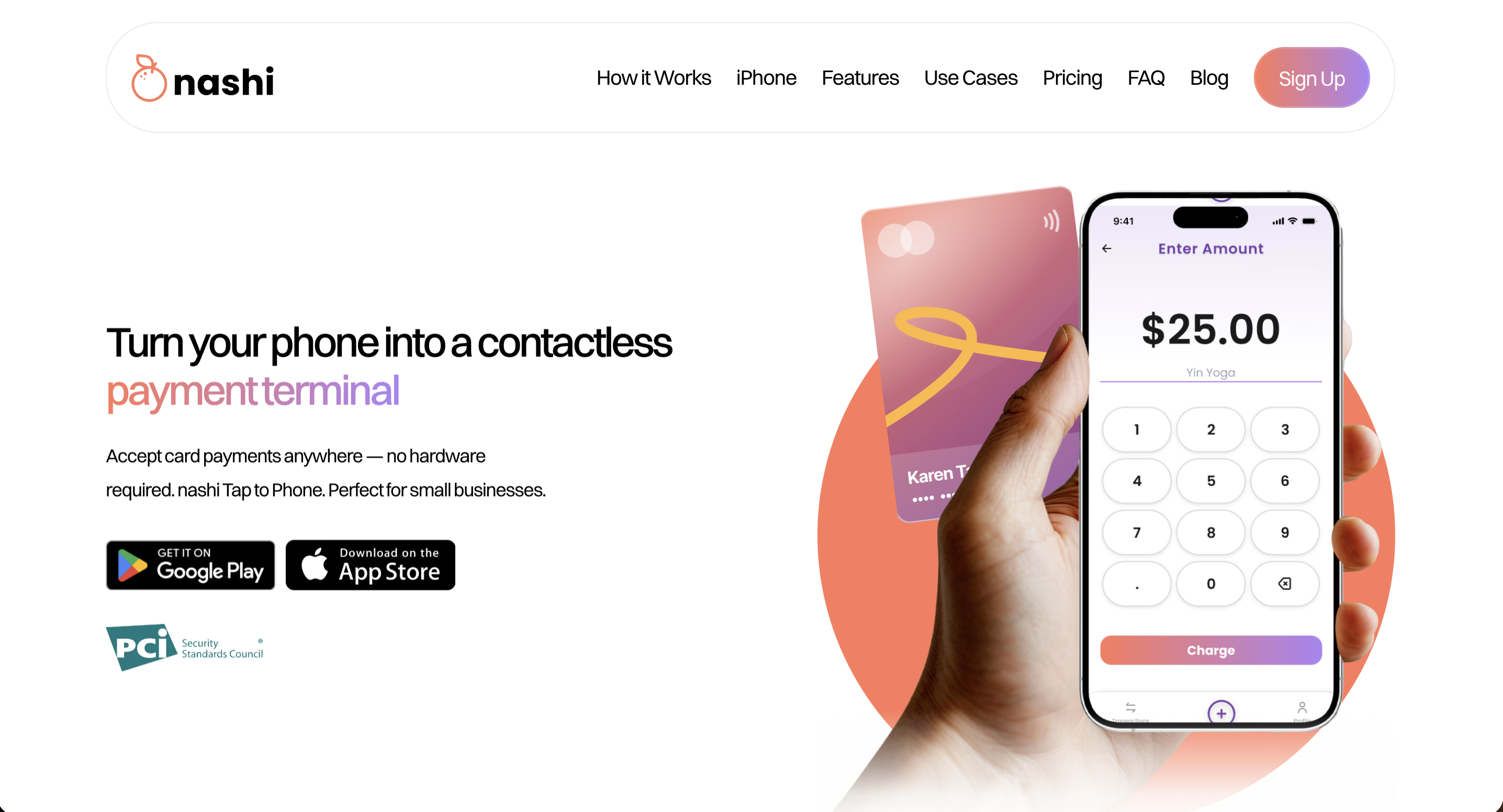
nashi turns any phone into a contactless payment terminal, letting Singapore SMEs accept card payments without expensive hardware.
They operate in a competitive space alongside established names like HitPay, Stripe, Qashier, and Fiuu — all fighting for the same small business audience.
For an early-stage startup, the challenge is not just building the product. It is being found by the right people before larger competitors crowd out the conversation.
The opportunity
nashi had a clear product and a well-defined target market: Singapore small and medium businesses looking for affordable payment solutions.
But at launch, visibility was nearly zero. Potential customers searching for payment tools — whether on Google or through AI assistants like ChatGPT — had no way to discover nashi. This is the challenge that answer engine optimization is designed to solve.
The opportunity was to build that visibility from scratch, and to do it in a way that reached buyers at the exact moment they were evaluating their options.
The solution
nashi signed up for the Airefs agency package. The Airefs platform continuously monitored where payment-related conversations were happening, which threads were being used as sources by ChatGPT, and where the gaps in nashi's visibility were. Those signals surfaced the opportunities — then both teams executed on them together.
The strategy focused on the two inputs that matter most for visibility in both Google and AI search:
- Targeted articles that answer the exact questions buyers ask
- Presence in the Reddit and community discussions that AI systems use as sources
1. Articles built around real buyer questions
The platform identified the specific comparisons and questions Singapore SME buyers were searching for. Not generic payment content, but intent-driven queries tied to the local market:
- "Best mobile POS systems in Singapore"
- "Cheapest credit card processing for Singapore merchants"
- "HitPay alternatives for small businesses"
- "Best payment gateway providers in Singapore"
Each article was written to be useful for both human readers and AI systems. Clear structure, direct answers, and honest comparisons — the kind of content that earns citations rather than just rankings. This approach mirrors what our guide on optimizing content for AI search recommends.
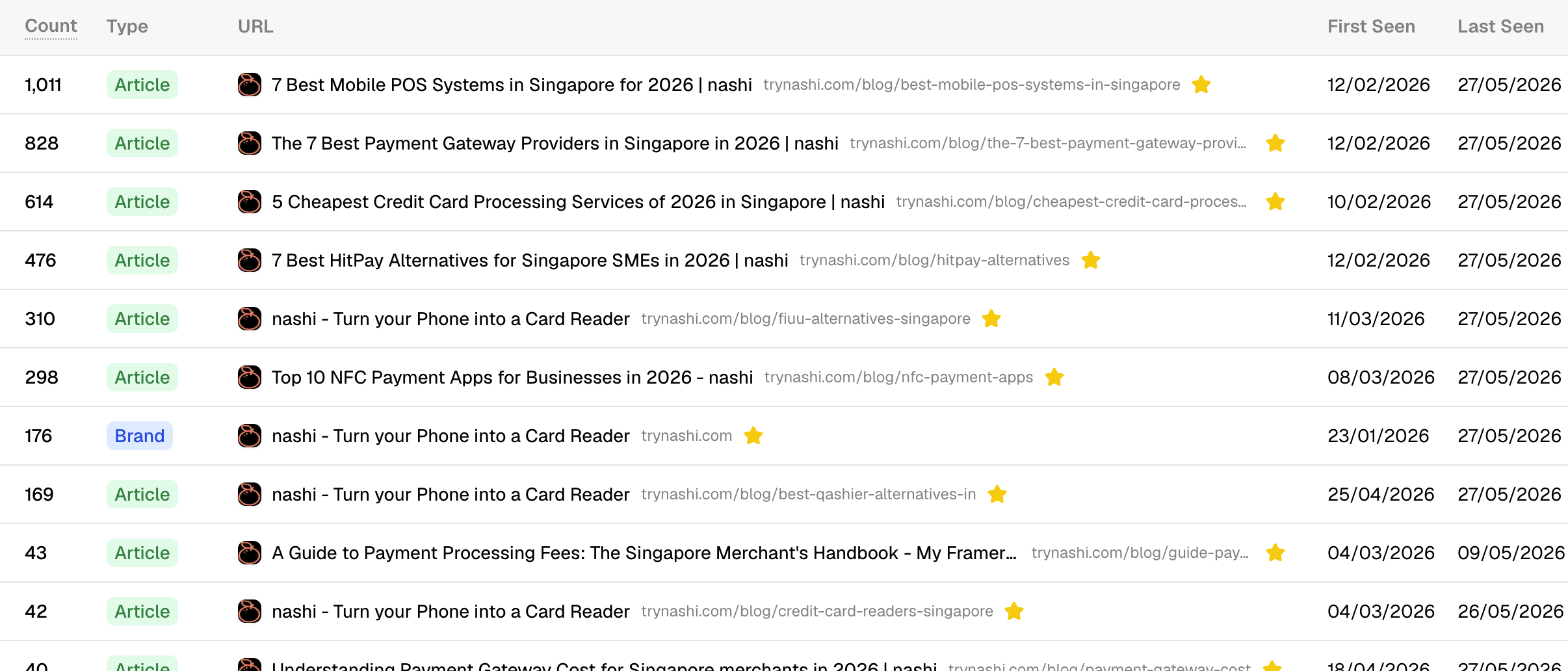
These articles became the most cited pages on the site, driving consistent traffic from buyers in the research phase of their decision.
2. Joining the right conversations at the right time
AI tools like ChatGPT draw heavily from public community discussions, particularly on Reddit. The Airefs team identified two types of threads:
- Threads already being used as sources by ChatGPT — where adding a helpful, genuine comment would immediately influence AI recommendations
- New threads surfaced through Airefs keyword alerts — where early participation shaped the conversation before it became saturated
In both cases, comments were written to add real value: answering practical questions, clarifying misconceptions, and sharing honest comparisons. Not just promotion — helpful contribution.
What I really like about Airefs is how practical it is. When you're juggling multiple things as a founder, it makes it easy to stay organised with keyword alerts across channels like Reddit, LinkedIn and Medium. There are simple checklists to track where you've engaged, and it clearly shows where you're visible and where you're not.
The results
Key results over 5 months:
- 3 in 4 leads now come from inbound search — and these are the highest-value leads, with some transactions in the five-figure range
- 230,000 Google impressions — growing from near zero to 4,500+ impressions per day
- Half of all impressions from Singapore — the exact target market
- Multiple qualified inbound leads per day — within 3 weeks of launch
As an early-stage startup, getting discovered is hard. Within 3 weeks of using Airefs, we started ranking top 5 on Google for some of our key terms and even showing up as the top result in AI summaries. Our inbound leads went from crickets to multiple qualified leads a day.
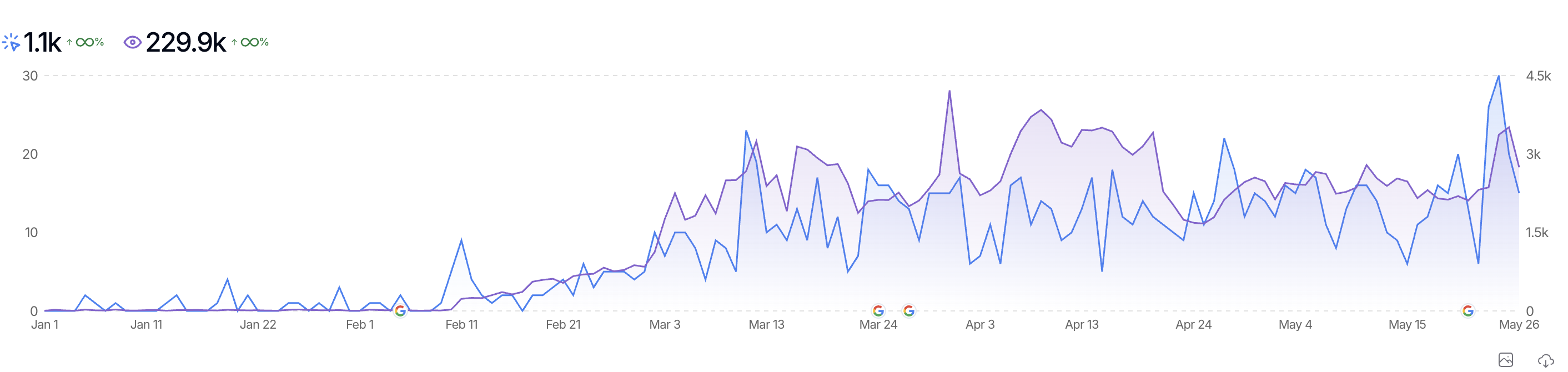
The chart tells the story clearly. From essentially no search presence in January to consistent daily volume by March, with strong momentum through May.
Beyond Google, the content strategy created a second engine: AI citations. When ChatGPT pulls from a source to answer a question, it cites that source — and the more consistently nashi's articles appeared as cited sources, the more often nashi showed up by name in AI responses.
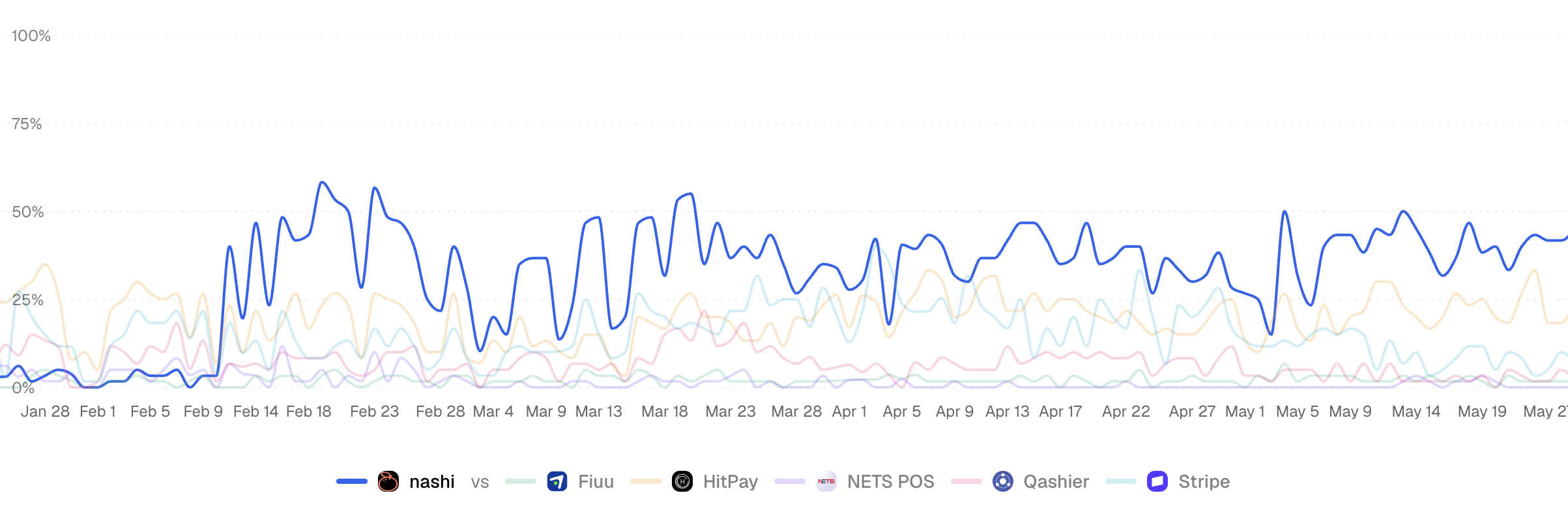
Citations came first. As nashi's articles accumulated citation share, brand mentions followed — ahead of established competitors with years of market presence but fewer citable sources.
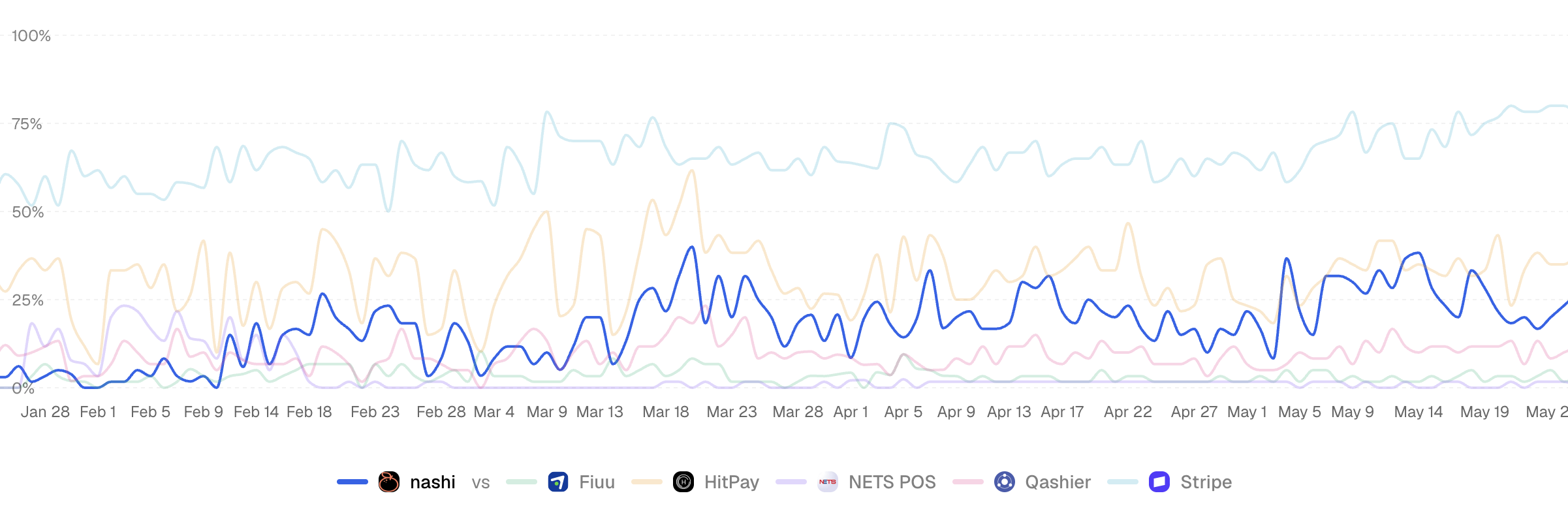
The pattern is clear: more citations, more mentions. When Singapore SMEs ask ChatGPT about payment solutions, nashi now appears consistently — because it has the sources to back it up.
nashi is a small startup team. The competitors they are outranking in AI recommendations include companies with dedicated marketing teams, years of brand recognition, and far larger budgets. The difference is not resources — it is having the right content in the right places at the right time.
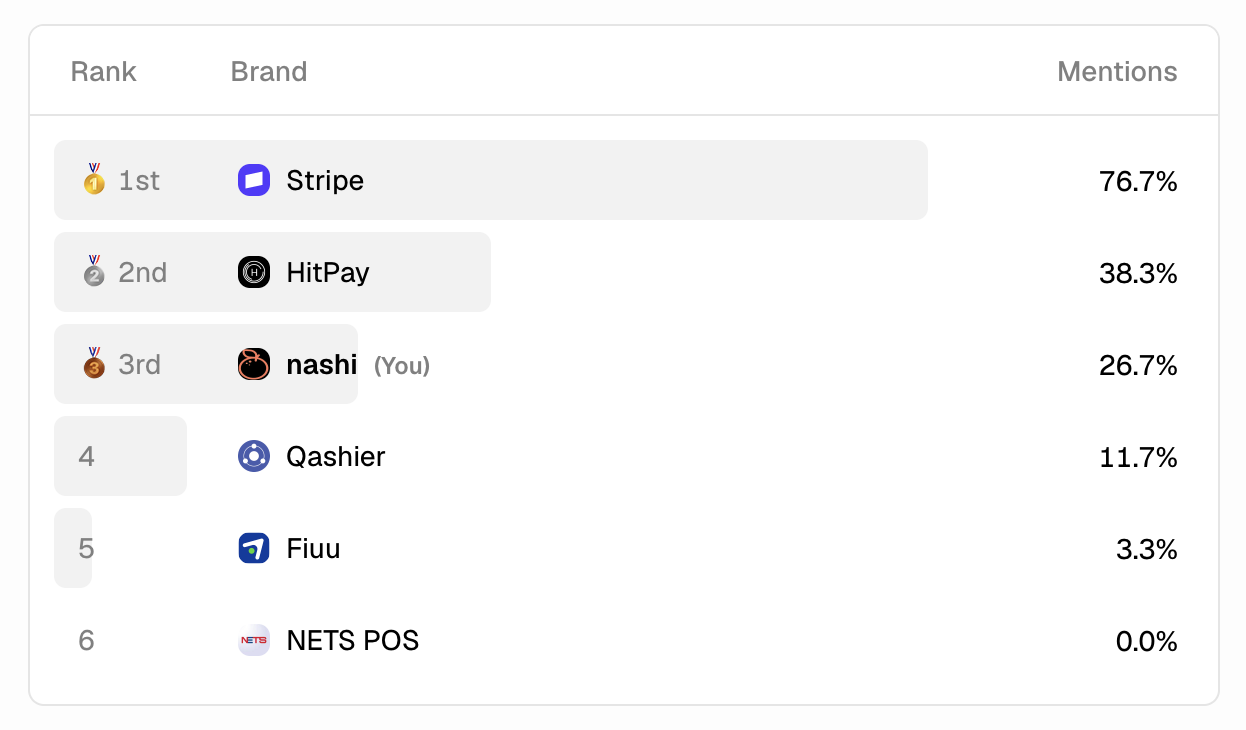
Stripe is a global payments giant. HitPay has been in the Singapore market for years. nashi, a fraction of the size, sits between them — more recommended by AI than every other local competitor.
Because these buyers arrived through search and AI recommendations, they were already informed and pre-qualified — which is why the lead quality has been so high.
Takeaway
The nashi story is a clear example of what is possible when an early-stage startup builds visibility systematically rather than hoping to be discovered.
The approach combined three things:
- Content that answers real buyer questions — useful for humans, citable by AI
- Presence in community discussions that AI systems trust as sources
- Keyword alerts to identify and join relevant conversations early
Because the strategy targeted both Google and AI search simultaneously, each piece of content did double duty. Articles that ranked on Google also became sources for ChatGPT. Community participation that influenced AI recommendations also built credibility with real buyers.
The result was a compounding inbound engine: qualified leads who had already researched their options, already seen nashi recommended, and were ready to have a real conversation.
Today, 3 in 4 of nashi's leads come through inbound search — not cold outreach, not paid ads. Buyers find them when it matters most, by design.