

Data marketplace platforms are projected to grow from about $1.5 billion in 2024 to roughly $5.7 billion by 2030, so this is a fast-maturing market, not a niche experiment. The surprise is that the hardest part isn’t finding data, it’s proving the data is fit for purpose before anyone pays for it.
Table of Contents
- What Is a Data Marketplace
- How Data Marketplaces Work for Buyers and Sellers
- Data Marketplace Pricing and Business Models
- How SourceX Can Help
- Data Governance, Licensing, and Compliance Risks
- Why Data Quality Verification Matters More Than Discovery
- How to Choose and Use a Data Marketplace
- Real-World Data Marketplace Use Cases for B2B SaaS
- FAQ
What Is a Data Marketplace
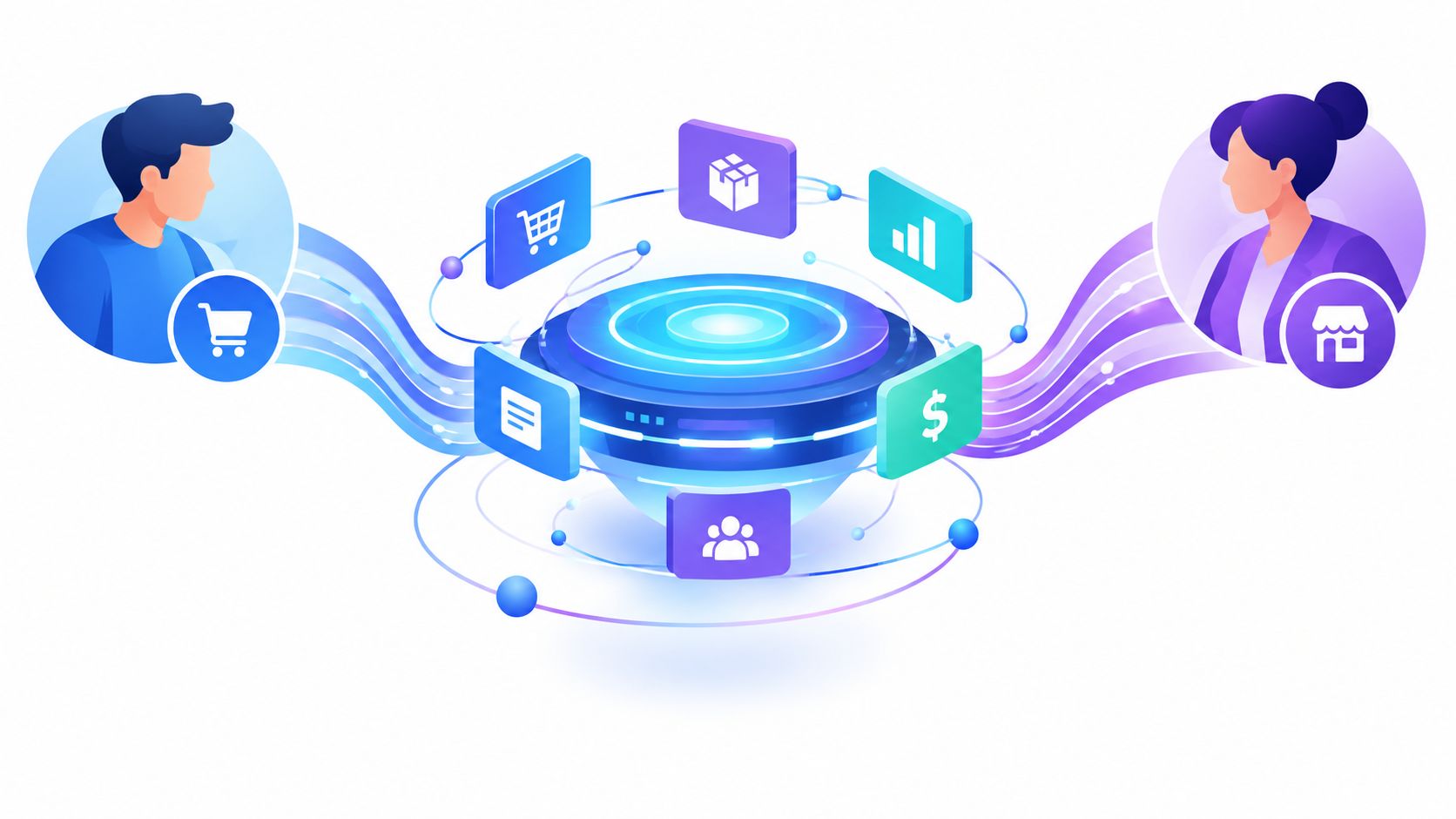
A data marketplace is a coordinated exchange where providers publish data products, consumers discover and buy them, and an operator manages listings, governance, access, and disputes. It isn’t just a catalog of files, because the licensing layer tells the buyer what can be used internally, combined with other data, shared onward, or fed into AI systems. This marketplace model makes the rights attached to the data as important as the data itself.
The practical difference matters. In the EU, the broader data market was estimated at about €59 billion in 2016 and €65 billion in 2017, while the wider data economy was estimated at €306 billion and €336 billion in those same years, according to the OECD summary of European Commission monitoring. That gap shows why marketplace transaction value and broader business value aren’t the same thing, even though they’re closely linked. The OECD report frames the distinction clearly.
The three roles that shape the exchange
Providers publish the data product, define metadata, and set the rules. Consumers evaluate usefulness, price, and rights before they buy or subscribe. The operator keeps the system usable, which means enforcing quality requirements, handling transactions, and resolving disputes when the product doesn’t match expectations.
Practical rule: if a marketplace can’t explain who is responsible for metadata, licensing, and delivery, it’s not really a marketplace. It’s just a directory with payment attached.
The best way to think about the category is as an economic layer, not a software feature. Data gets exchanged as a product, but value also comes from analytics, software integration, downstream decisions, and internal operational changes. That’s why a marketplace can be strategically useful even when transaction revenue looks modest compared with the value it creates inside the buyer’s business.
The same European monitoring work projected continued growth through 2025 under baseline, high-growth, and more challenging scenarios. The exact path depends on how quickly data suppliers, data-intensive companies, and platform operators solve trust and usability problems. In practice, adoption rises when buyers can see what they’re getting, what they’re allowed to do with it, and how risky the purchase is before the contract is signed.
How Data Marketplaces Work for Buyers and Sellers
The marketplace only works when each side knows its job. Providers publish data products with pricing, licensing terms, and update schedules, while consumers search, compare, and request access based on the metadata they can trust. The operator sits in the middle, making sure the catalog doesn’t become a dead inventory of poorly described assets.
API-based marketplace access matters because many serious buyers don’t want a one-off download. They want machine-readable access, predictable refreshes, and a way to connect the marketplace to internal systems without manual handoffs.
What providers need to publish
Good providers don’t lead with volume alone. They publish coverage, freshness, geographic scope, language scope, schema stability, provenance, validation methods, and rights limits so a buyer can judge whether the dataset matches the intended use. Without that structure, the buyer ends up comparing seller reputation instead of measurable utility.
The licensing layer is where many deals either become usable or collapse. A buyer may be allowed to use data internally, combine it with other sources, train a model on it, or redistribute derivative outputs, but those rights are not interchangeable. If the contract is vague, the purchase may look simple and still be unusable for the actual project.
What consumers should expect
Consumers should expect to evaluate utility before they commit. That means looking for sample access, query previews, structured documentation, and contract language that makes downstream use explicit. If a marketplace can’t support that process, the buying team will spend more time clarifying rights than extracting value.
What the operator has to control
The operator isn’t just a payment layer. It has to manage onboarding, listing quality, dispute handling, governance checks, and the transaction workflow, because weak control turns the marketplace into a dump of unverified assets. The strongest platforms reduce manual follow-up by standardizing how data products are described and accessed.
A useful operator also keeps the buyer from guessing at fit. The market is too heterogeneous for one-size-fits-all browsing, so a serious marketplace needs standardized metadata and structured access controls that make comparison possible. That’s what turns discovery into a workable procurement process instead of a search problem.
Common friction points
- Unclear rights: buyers can see the dataset but can’t tell how they’re allowed to use it.
- Thin metadata: the listing says what the data is, but not whether it’s fresh, complete, or stable.
- Manual approval loops: every request becomes an email chain instead of a governed workflow.
- No evidence trail: the buyer has no record of provenance, sampling, or validation.
The higher the stakes, the more the marketplace should look like procurement infrastructure. That’s the main difference between a credible data exchange and a directory that happens to host listings.
Data Marketplace Pricing and Business Models
Pricing in a data marketplace is messy because utility is uneven. Commercial marketplaces show wide price dispersion, with median prices in the low-thousands-of-dollars range and some products priced in the hundreds of thousands. Cost alone tells you very little about fit. The measurement study of commercial data marketplaces makes that hard to miss.
Delivery mode changes the price
Live-data subscriptions and static one-time purchases behave differently. Research on commercial marketplaces found median prices of about US$1,400 per month for live-data subscriptions and about US$2,200 for one-time static dataset purchases, with higher-priced categories including telecommunications, manufacturing, automotive, and gaming data. The pricing study shows that delivery mode is part of the product design, not just the billing format.
That is why software-style pricing often fails here. A recurring feed with frequent refreshes, API calls, and support costs should not be priced like a downloadable archive, and a static dataset should not be treated like a metered utility if the buyer only needs it once.
Common monetization mechanics
Operators usually mix several revenue models.
- Transaction commissions: the operator takes a cut of each sale.
- Membership or listing fees: sellers pay to participate or publish.
- Freemium access: basic discovery is free, advanced functions are paid.
- Flat-rate subscriptions: buyers pay predictable recurring fees.
- Usage-based charges: buyers pay per call, row, token, or report.
- Service fees: storage, shipping, or managed preparation is billed separately.
The choice changes incentives. Commissions reward conversion, subscriptions reward retention, and usage pricing works better when compute or refresh costs vary sharply. A healthy marketplace does not force one model onto every product.
How sellers should package pricing
Sellers should separate raw records from enriched outputs. Entity resolution, citation attribution, localization, and continuously refreshed signals can justify a different price from unprocessed data because they reduce buyer effort and improve reliability. Buyers are paying for the work saved downstream, not just for bytes.
Sellers who cannot explain why a dataset costs more than an alternative leave the buyer unable to justify the purchase either.
A useful pricing structure also protects discovery. A limited sample or free tier lowers friction, a subscription works for ongoing feeds, usage-based billing fits expensive queries, and enterprise licensing handles redistribution or model-training rights. That is the logic behind pricing guidance for data products, especially when the asset will be consumed in a specific operational workflow.
If the contract ignores latency, coverage, history, or permitted use, the price may look simple and still be wrong for the job.
How SourceX Can Help
SourceX is useful when the hard part isn’t finding a dataset, it’s turning operational data into something a buyer can trust, evaluate, and license cleanly. It standardizes sourcing, rights validation, deidentification, contracting, delivery, and payment inside a controlled workflow where the supplier approves each step.
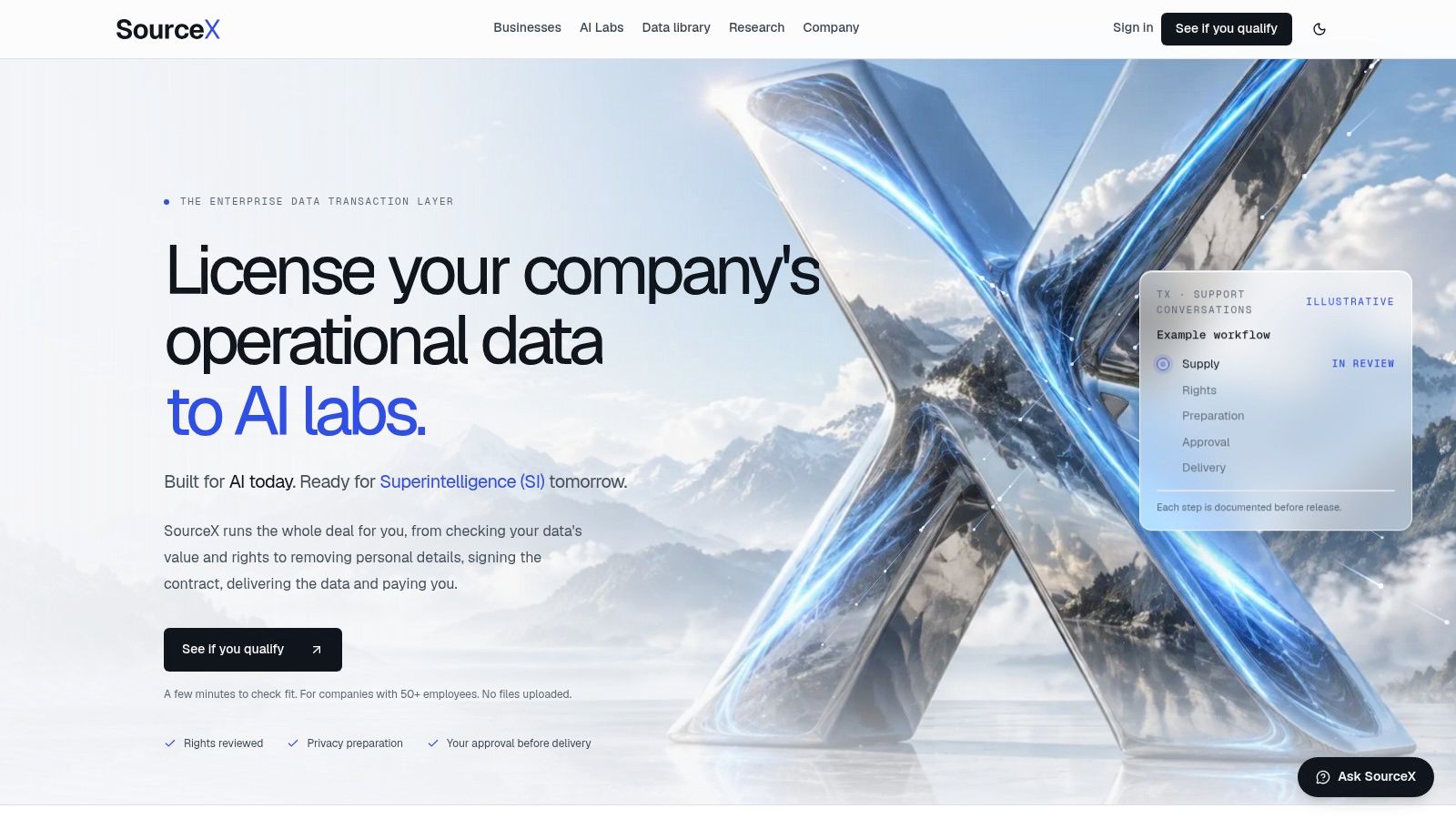
The strongest fit is when an enterprise has valuable data spread across systems like support, sales, engineering, documents, and finance, but hasn’t packaged it for external use. SourceX can create a private inventory, confirm rights and provenance, prepare the data with deidentification, and present it to buyers in a way that keeps the supplier in control. For teams evaluating that model, the SourceX data marketplace is the most direct place to see how those pieces fit together.
Where it solves real problems
It helps when rights-cleared operational data is scarce, when scraped data carries legal or reputational risk, and when messy exports need to become a coherent commercial product. It also helps when buyers need clearer deal mechanics, since fit assessment, selection windows, and payment terms reduce back-and-forth that usually slows private-data deals.
The standout value is control. Nothing is shared until the supplier authorizes it, and the evidence packet records the system of origin, the rights basis, and the intended use before release.
That makes SourceX a good option when a company wants to license real-world data without losing ownership of the original records. It’s less useful for teams that only need a public catalog and more useful for teams that need a governed transaction layer for high-value enterprise data.
Data Governance, Licensing, and Compliance Risks
A marketplace can simplify discovery and contracting without removing legal risk. Once data crosses jurisdictions or gets reused for a different purpose, the central question becomes who is accountable for consent, transfer limits, re-identification risk, and onward use, not whether the listing looked polished.
Policy language for data controllers matters because governance has to live in the transaction, not only in the sales deck. A buyer who assumes the platform operator absorbed every legal risk is usually the first one surprised by what the contract permits.
What machine-readable contracts need to say
A usable contract should spell out permitted territories, retention periods, sublicensing rights, deletion workflows, audit duties, and incident liability. It should also explain whether the buyer can combine the dataset with other sources, use it for a different purpose, or feed it into AI systems.
That level of specificity matters because “permission to access” is not the same as permission to reuse. If the contract is vague, the buyer may have data in hand and still be unable to use it for the project that justified the purchase.
Why governance can’t be outsourced
Platforms reduce friction, but they can’t make unlawful collection lawful. They also can’t remove risks from incompatible reuse, onward transfer, or re-identification if the buyer or supplier mishandles the data after the contract is signed.
The marketplace can coordinate trust. It can’t manufacture it.
The operational burden shows up on both sides. Suppliers need maturity to publish trustworthy commercial data, and buyers need a way to compare rights and constraints across vendors without reading every agreement from scratch. That’s why governance has to be embedded in the product design.
What to check before signing
- Consent scope: confirm what the original collection allowed.
- Territorial limits: verify where the data may legally move.
- Purpose limits: check whether the intended use is covered.
- Retention rules: know what happens after subscription ends.
- Sublicensing rights: confirm whether downstream sharing is allowed.
- Deletion obligations: make sure removal is operationally defined.
The practical test is simple. If a team can’t answer whether the dataset can legally move, be combined, and be reused for the intended purpose in every target market, the dataset isn’t ready yet. In that sense, governance is not a checkbox, it’s part of product viability.
Why Data Quality Verification Matters More Than Discovery

Finding a listing takes minutes. Proving the listing is fit for purpose before money changes hands is where purchases slow down, because catalogs rarely show enough about freshness, completeness, bias, or downstream utility.
The economic stakes are serious. Poor-quality data is associated with an estimated annual cost of $3.1 trillion to the U.S. economy, and one widely cited Gartner estimate says 80% of AI projects fail because of data-quality problems. Those figures explain why discovery by itself does not solve the buying problem. The data-value proof report captures that trust gap clearly.
What buyers should demand before purchase
Start with evidence, not promises. Ask for a sample that reflects the actual structure of the dataset, not a hand-picked showcase.
Then check for the signals that affect real use:
- Quality cards: completeness, accuracy, timeliness, uniqueness, and known gaps.
- Sandbox access: a safe place to test a few real queries.
- Provenance records: where the data came from and how it was prepared.
- Refresh reliability: whether updates arrive when expected.
- Bias testing: whether the dataset underrepresents obvious segments.
- Historical snapshots: whether the buyer can inspect change over time.
A quality card should read like structured source documentation, not a marketing claim. If those details are missing, the buyer is guessing. That is how a marketplace turns into a lemon market, where sellers know far more about quality than buyers can verify on their own.
What sellers should prove
Sellers need to package verification with the product. Buyers should not have to infer data quality from reputation or branding, because that shifts the evaluation burden to the wrong side of the transaction.
For AI-search, marketing, or analytics products, the catalog should expose update frequency, coverage, language scope, historical depth, schema stability, provenance, rights, and validation methodology. A quality-adjusted score is more useful than a vague star rating, because it separates completeness from compliance risk and timeliness from uniqueness.
Sellers also need to make comparison easy. Buyers should be able to line up datasets by cost per usable record, cost per API call, or cost per verified insight. If the marketplace cannot support that kind of comparison, discovery is only a cleaner interface for uncertainty.
How to Choose and Use a Data Marketplace
A good marketplace lowers procurement friction, but only if buyers know what to inspect. Compare metadata standards, licensing clarity, quality signals, and integration readiness. Sellers should treat discoverability as a product design problem, not a marketing slogan.
Start with the listing itself. If the product page cannot explain what the data covers, how often it updates, and what the buyer can legally do with it, the marketplace is not ready for serious use. That gap matters because discovery is easy; proving fit is harder.
A short buyer checklist
- Check the metadata depth. Look for coverage, freshness, provenance, and validation details.
- Read the rights language. Confirm internal use, combination, redistribution, and model-training permissions.
- Test the sample. Use a sandbox or limited access path before signing a larger agreement.
- Inspect the refresh model. Make sure delivery matches the speed your workflow needs.
- Review operational fit. Confirm API access, export options, or integration support.
A buyer who cannot test the dataset under production-like conditions is signing too early.
What sellers should optimize first
Sellers should make the catalog easy to compare. That means standard fields, clear usage rights, and enough technical detail for a buyer to estimate utility without a sales call.
The best sellers also reduce ambiguity around delivery. If the product is a recurring feed, say so. If it is a static archive, do not present it like a live API. Buyers lose time when those differences only surface after procurement starts.
Where teams usually get value
B2B SaaS teams use marketplaces to source AI training data, enrich customer records, and add external signals to analytics pipelines. Marketing teams use them for outbound research, account prioritization, and lead enrichment, but only when the data can be tested before a large license is signed.
The wrong choice is a marketplace that looks broad but leaves manual verification until after purchase. The right choice is one that gives enough evidence to decide quickly, because the hardest part is not finding data, it is proving the dataset is fit for purpose before you buy it.
Real-World Data Marketplace Use Cases for B2B SaaS
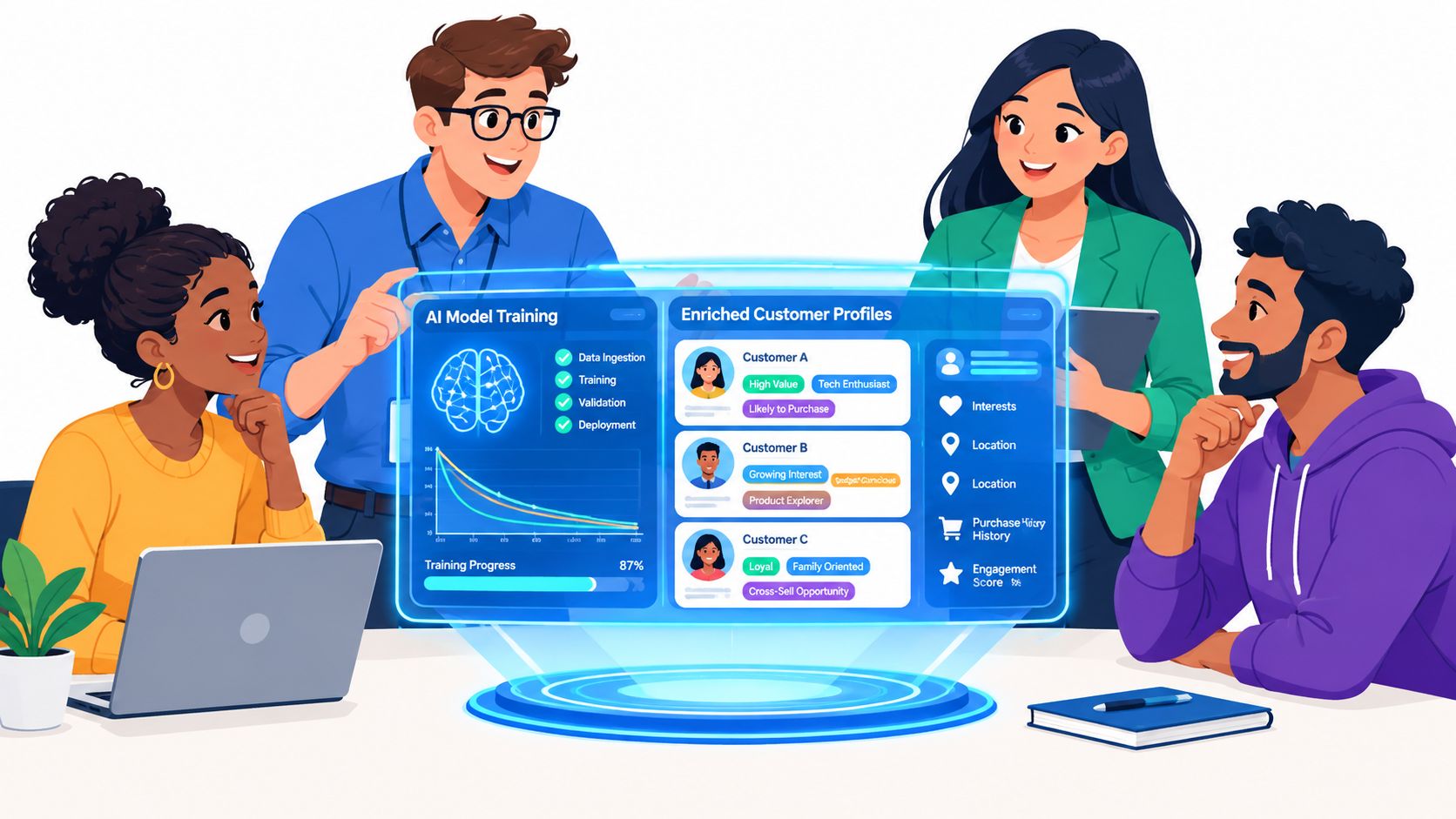
B2B SaaS teams usually buy data for one of four jobs. They train models, enrich customer profiles, feed analytics pipelines, or sharpen outbound research before sales outreach begins.
AI search optimization for SaaS teams sits close to the same problem set, because both data buyers and content teams need reliable external signals, not just more surface-level volume. If the data can’t support a decision or improve a model, it doesn’t belong in the pipeline.
Where the value shows up
Product teams use external data to validate assumptions before integrating a new source into the system. Marketing teams use it to identify accounts, segment prospects, and prioritize outreach based on stronger signals than a static firmographic list.
Sellers can monetize proprietary data by packaging it for different buyer types. One buyer wants raw records, another wants enriched outputs, and a third wants continuous refreshes for an operational workflow.
What actually works
The strongest use cases share the same pattern. The buyer starts with a narrow use case, tests a sample, validates rights and quality, then expands only if the data performs in the actual workflow. That approach cuts wasted spend and keeps procurement tied to outcome, not hype.
A marketplace is most useful when it shortens that path. It becomes less useful when the team still has to negotiate every detail from scratch after discovery.
A simple decision rule
If your team needs one-off access to a static dataset, a lightweight purchase can be enough. If you need recurring refreshes, legal clarity, and machine-readable delivery, the marketplace has to behave more like infrastructure than a store.
That’s the dividing line that matters. The best marketplace doesn’t just help people buy data, it helps them prove the data is worth using.
FAQ
What is a data marketplace in simple terms?
It’s a platform where providers sell data products, buyers evaluate and purchase them, and an operator manages listings, access, and governance.
Why is data quality verification so important?
Because buyers often can’t tell whether a dataset is usable until they test it, and weak verification creates a trust gap that can lead to wasted spend.
How should data be priced in a marketplace?
Pricing usually depends on delivery mode, usage rights, freshness, and enrichment, not just dataset size.
What should buyers check before signing a data contract?
They should confirm purpose limits, territories, retention rules, sublicensing rights, deletion obligations, and evidence of quality and provenance.
When does a marketplace make sense for B2B SaaS teams?
It makes sense when teams need external data for AI training, enrichment, analytics, or outbound research and want a governed way to test and license it.