
Peec AI Review An In-Depth Guide for B2B Marketers

P

Paul

Co-founder

Peec AI Review An In-Depth Guide for B2B Marketers

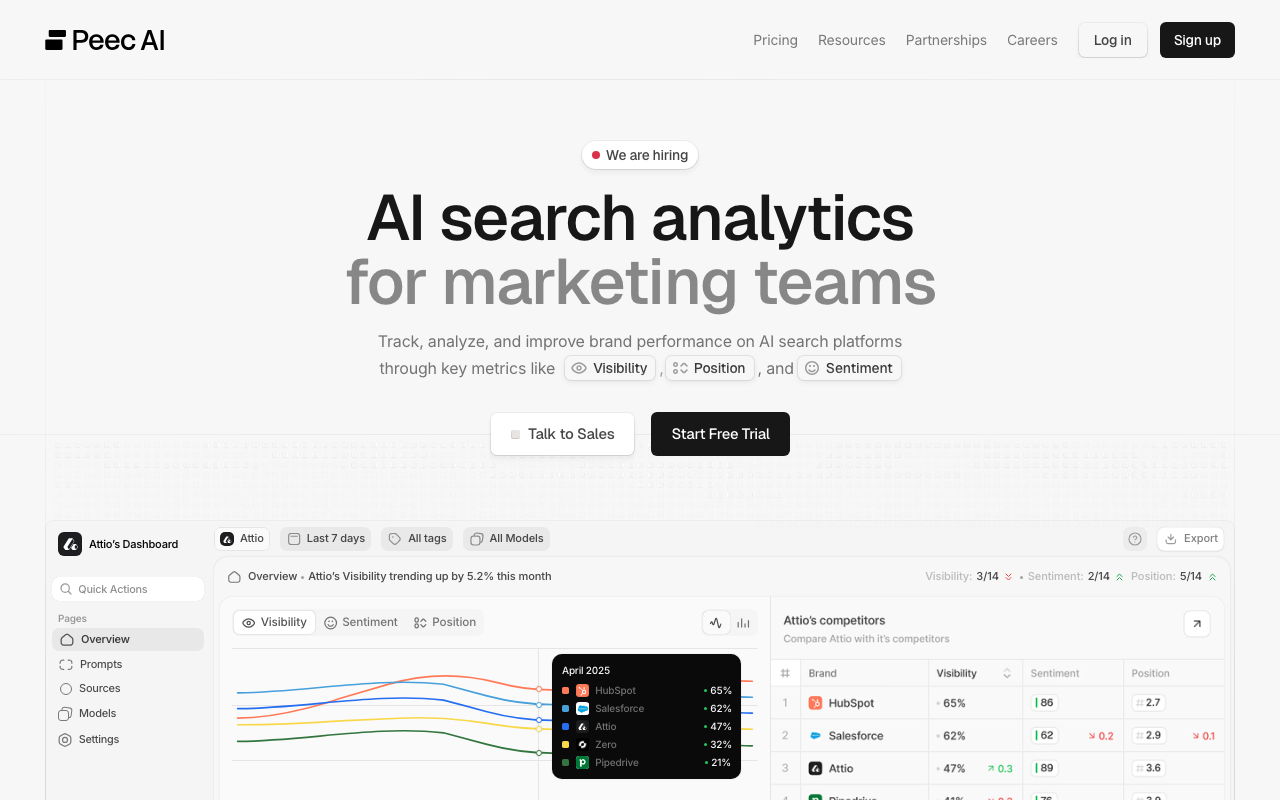
If you’re in B2B marketing, you’ve probably heard of Peec AI. It’s a platform built to do one thing really well: track how visible your brand is inside AI search engines like ChatGPT and Google’s AI Overviews. This isn’t your classic SEO tool. It focuses on how often you get mentioned in AI-generated answers, giving you a scorecard for this new era of search.

The ground is shifting under our feet. For years, the game was Search Engine Optimization (SEO)—a discipline all about ranking for keywords. But now, the rise of AI-powered search is creating a whole new playbook: AI Engine Optimization (AEO).

B2B buyers, especially those looking for answers to complex problems, are turning to conversational AI for direct, synthesized responses. According to a 2023 Gartner report, by 2026, generative AI will alter 75% of a B2B marketing function’s work. They aren’t just Googling anymore.

This changes everything. Visibility isn’t just about showing up in the top ten blue links. It’s about being mentioned and cited inside the AI’s answer. If your brand isn’t part of that conversation, you’re basically invisible to a growing chunk of your market. This shift demands a new strategy and new tools. You can get the full rundown in our guide on AI search engine optimization.

From Keywords to Prompts

The unit of measurement has officially changed. Keyword tracking, the foundation of old-school SEO, just doesn’t cut it anymore. What matters now are prompt tracking and source analysis.

Instead of asking, “What keywords do my buyers use?” the real question is, “What prompts are my buyers asking AI?”

The challenge for marketers today is to stop thinking about ranking and start thinking about influence. The goal is to become such a trusted source that AI models rely on your content to build their answers. You’re not just ranking; you’re shaping the narrative.

This isn’t some far-off trend. The data shows it’s happening right now. A study from Authoritas projects that AI-generated content in Google Search will jump from just 2.27% in 2019 to a massive 17.31% in 2025. AI content is already starting to dominate the top search results.

Businessman at a crossroads deciding between traditional SEO with keywords and modern AEO with data.

Google’s own systems are becoming more complex and deeply integrated with AI. To see how different tools are tackling this, you might want to check out a list of the best AI tools for marketers. Platforms like Peec AI are designed specifically for this problem, offering the analytics needed to actually win in this new, AI-first world.

How Peec AI Actually Works

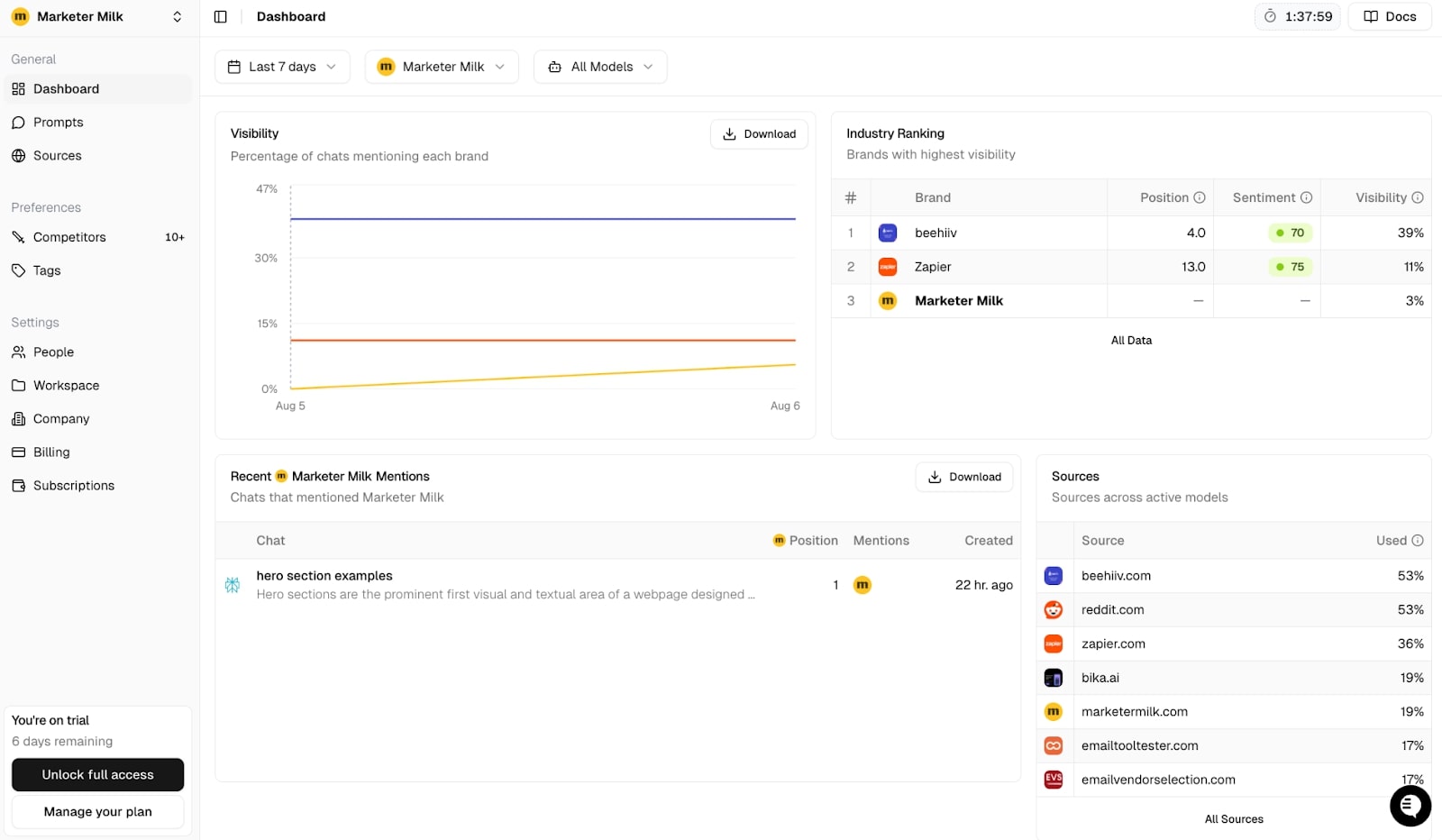
At its core, Peec AI is a visibility tracking platform. It’s built to answer one big question for marketers today: how does my brand show up when people ask questions to AI chatbots? The platform keeps a close eye on several key Large Language Models (LLMs), including ChatGPT, Perplexity, and Google AI Overviews, to give you a clear picture of your presence.

The whole system is built around three functions: tracking prompts, analyzing sources, and benchmarking against your competitors. It’s this combination that moves it beyond simple monitoring and into a more detailed view of the AI search world.

This is a big deal because getting seen by AI isn’t the same as traditional SEO. It’s less about gaming keywords and more about becoming a trusted source that LLMs want to cite. If you want to get into the weeds of how LLMs find and use information, our guide on protocols like llms.txt is a good place to start.

Prompt Tracking and Visibility Scoring

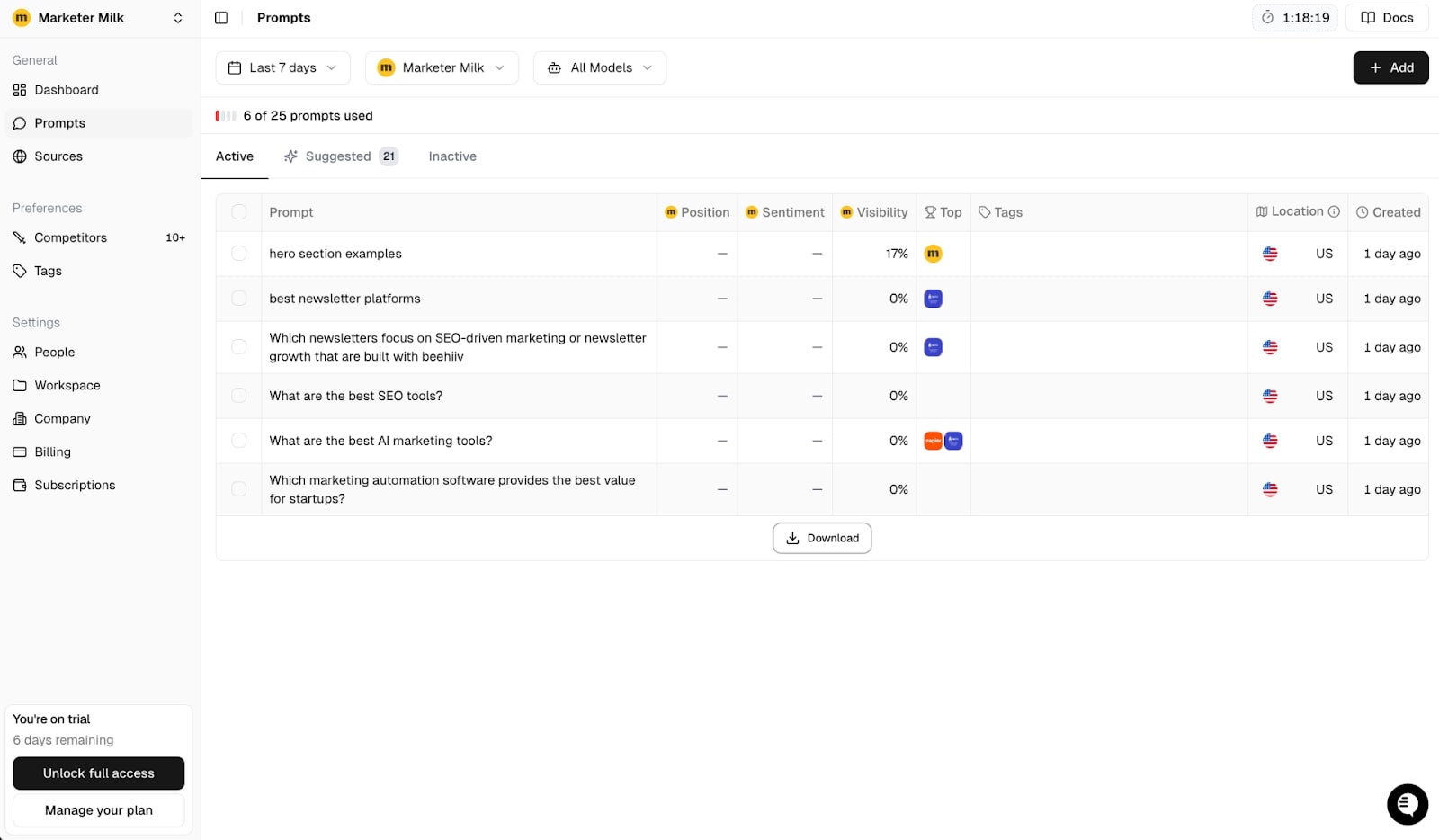
The first thing you do in Peec AI is define the conversation you want to monitor. You do this by adding prompts—the exact questions your customers are asking AI models. For a B2B SaaS company, this could be anything from “best project management software for small teams” to “HubSpot alternatives for marketing automation.”

Once you’ve added your prompts, Peec AI gets to work, running them through the AI engines continuously. It then boils everything down into a few key metrics:

  • Visibility Score: A simple percentage showing how often your brand was mentioned in the answers to your tracked prompts. A higher score means a stronger presence.
  • Average Position: When your brand does get mentioned, Peec AI tells you where it appeared in the response. First is always better than last.
  • Sentiment: The platform also looks at the language around your brand mention and scores it as positive, neutral, or negative.

The real power here isn’t a one-time search but the continuous monitoring. AI models are always changing, which means your visibility can shift overnight. Peec AI gives you a live pulse on your performance so you don’t get blindsided when an AI suddenly changes its mind about your brand.

Source Analysis and Competitor Insights

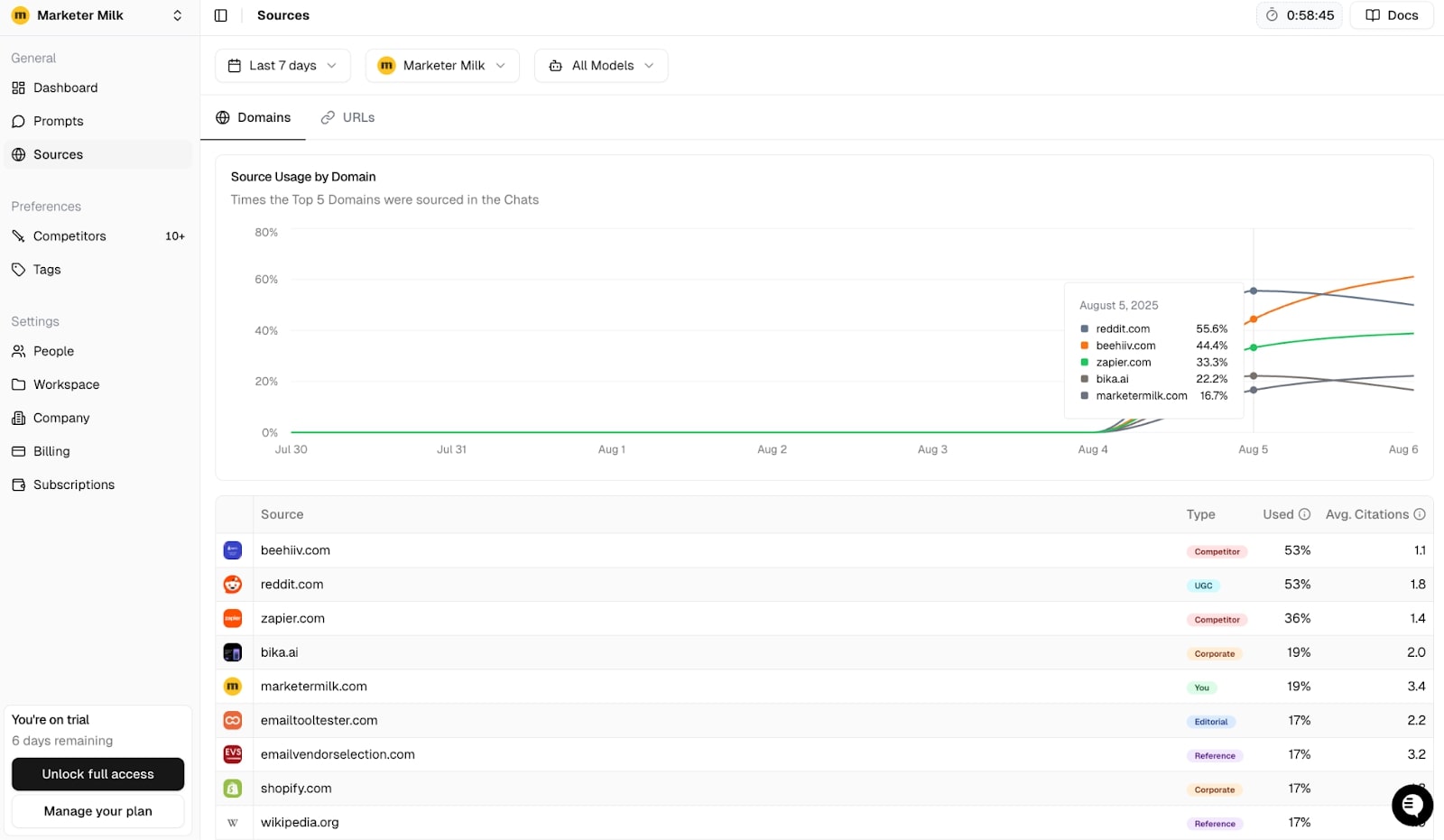
Knowing you were mentioned is one thing. Knowing why is everything. Peec AI’s Sources feature is designed to answer that by pinpointing the exact URLs and domains the AI models are citing in their answers.

This is where the platform starts to feel truly actionable. It sorts sources into categories like “UGC” (think Reddit), “Editorial,” or “Corporate,” showing you exactly where the AI is getting its information. You can see which articles, reviews, or forum discussions are driving the conversation. Users have said this is especially helpful for spotting when a competitor gets mentioned in a third-party article, creating a perfect opportunity for direct outreach.

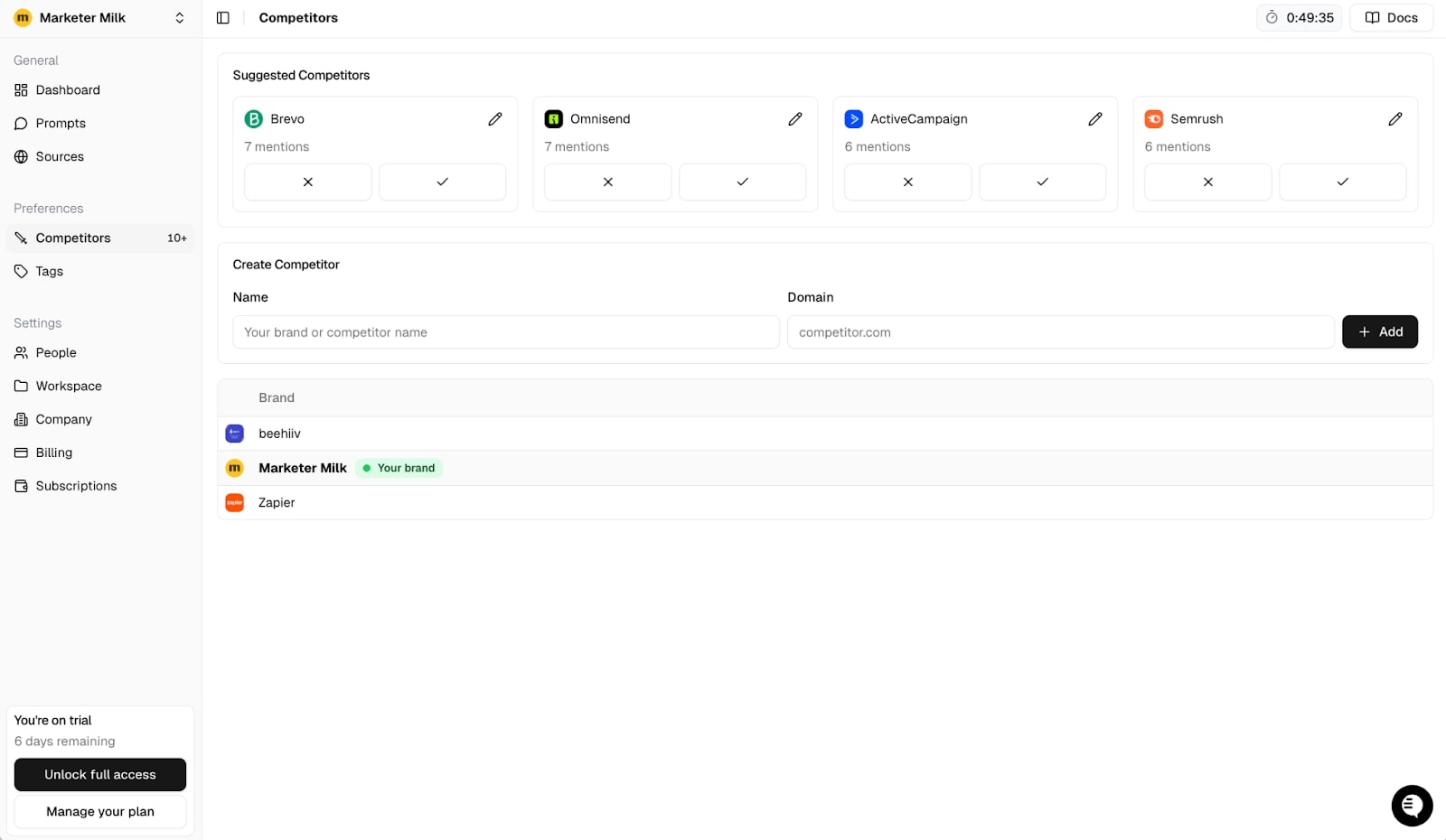
Finally, the platform overlays competitor data on top of everything. Once you add your competitors, every metric—from visibility scores to source mentions—is put into context. You’re not just looking at your own performance in a vacuum; you’re seeing how you stack up against everyone else fighting for the same AI-driven attention. It turns raw numbers into a clear competitive benchmark.

Peec AI vs Airefs: A Head-to-Head Comparison

Choosing the right AI Engine Optimization (AEO) platform isn’t about finding one “best” tool. It’s about matching a platform’s strengths to what you’re actually trying to accomplish. Both Peec AI and Airefs want to give you a look inside the AI “black box,” but they get there using different playbooks and features.

This breakdown cuts through the marketing noise. We’ll compare them on four criteria that matter for B2B marketers: how they track prompts, how deep they go on source analysis, whether they can attribute traffic, and how actionable the insights really are. This isn’t just a feature checklist; it’s a guide to how each one works in the real world.

For a wider view of the market, check out our guide on Peec AI alternatives to see how other tools fit in.

Prompt Tracking and Visibility Scoring

Both platforms start with tracking prompts, but their approach to setup and what data they show you is night and day.

Peec AI’s “Suggested Prompts” feature is a standout. It scans your website and spits out a list of relevant questions to start monitoring. For teams just dipping their toes into AEO who aren’t sure which conversations to even follow, this is a massive time-saver.

Airefs, on the other hand, makes you do a bit more homework upfront but backs it with hard data. It provides actual search volume for prompts, so you can prioritize what you track based on real user interest, not just an educated guess. This ensures you’re focused on high-impact conversations from day one.

Key Takeaway: Peec AI gets you started faster, making it great for teams new to AEO. Airefs offers a more strategic, data-driven setup for marketers who need to justify their focus with volume metrics.

Depth of Source Analysis

Knowing why an AI model mentions your brand is the whole point, and that comes down to source analysis.

Peec AI gives you a solid foundation here. It breaks down sources into categories like UGC, Editorial, or Corporate and shows you the exact URLs the AIs are citing. This is incredibly helpful for figuring out which third-party articles or Reddit threads are shaping your brand’s AI visibility.

Airefs pushes this a step further. It has a dedicated workflow built around high-impact sources, especially Reddit. It doesn’t just tell you Reddit is a source; it flags specific comments and content opportunities, even sending alerts for relevant conversations. This turns a simple analysis into a repeatable process for building authority where it really counts.

This basic workflow is the engine behind modern AEO strategy.

Flowchart explaining how Peec AI works, from data collection to personalized insights.

From tracking prompts to analyzing the sources and scoring visibility, this is how these platforms deliver insights that you can actually use.

Analytics and Traffic Attribution

This is where the two platforms really diverge. Measuring the true impact of AEO means connecting AI visibility to actual website traffic, and that’s a tough nut to crack.

Peec AI is laser-focused on visibility metrics: your brand’s share of voice, its sentiment, and where it ranks in AI answers. These are valuable for tracking brand presence, but they’re top-of-funnel indicators. They tell you you’re being seen, but not what happens next.

Airefs is built to close that loop. It connects AI visibility to referral traffic from the AI engines themselves. For B2B marketers who live and die by lead and revenue goals, this is a game-changer. It turns AEO from a branding exercise into a measurable channel for demand generation.

Feature Comparison Peec AI vs Airefs

To make the differences crystal clear, this table lays out how each tool stacks up on the features that matter most to a B2B marketing team.

FeaturePeec AIAirefsStrategic Advantage for B2B
Prompt DiscoveryAutomated suggestions from your website content.Manual selection backed by real user search volume.Airefs provides a data-backed way to prioritize high-impact conversations, which is critical for resource-strapped teams.
Source AnalysisIdentifies and categorizes source URLs (UGC, Editorial).Deep analysis with dedicated workflows, especially for Reddit.Airefs delivers more actionable insights for building off-site authority on influential community platforms.
Traffic AnalyticsFocuses on visibility metrics (share of voice, sentiment).Connects AI visibility to referral traffic and site clicks.Airefs lets marketers measure the direct business impact and ROI of their AEO campaigns.
ActionabilityProvides data that requires manual interpretation.Surfaces specific content and comment opportunities to act on.Airefs bridges the gap between data and execution, making it easier for teams to take immediate, effective action.
Ideal UserTeams new to AEO or focused on brand monitoring.B2B marketers focused on driving measurable inbound demand.Choose based on whether your primary goal is monitoring brand presence or generating attributable leads.

Ultimately, the choice between Peec AI and Airefs comes down to your team’s maturity and goals.

Peec AI offers a friendly, accessible entry point for tracking brand visibility in the AI space. In contrast, Airefs is an execution-focused platform built for B2B marketers who need to tie their AEO activities directly to traffic, leads, and revenue.

How AEO Platforms Actually Get Used

Understanding the features of an AI Engine Optimization (AEO) platform is one thing. Seeing how they deliver real business results is another. Let’s move past the technical specs and look at a few practical scenarios where tools like Peec AI or Airefs become essential for B2B SaaS founders, in-house content teams, and marketing agencies.

These examples show how specific features connect directly to clear, measurable outcomes—and a genuine return on investment.

Illustration of a founder, content marketer, and agency collaborating to drive ROI.

For B2B SaaS Founders Shaping a Narrative

Imagine a SaaS scaleup launching a new feature, putting them head-to-head with a massive, established competitor. The founder’s main goal is simple: control the narrative. They need to make sure their solution shows up whenever an AI compares products in their space.

With an AEO platform, the founder can get proactive:

  • Track Competitor-Focused Prompts: They set up monitoring for prompts like “best alternatives to [competitor]” or “[competitor] vs [their brand].”
  • Analyze AI Sentiment: By watching the sentiment score, they can instantly see if AI responses are framing their product positively against the incumbent.
  • Find the Narrative Sources: The platform shows them exactly which third-party reviews, articles, or forum discussions the AI is pulling from to form its opinions.

This shifts the founder from a reactive to a proactive strategy. Instead of just hoping for good press, they can pinpoint the sources influencing AI and focus their PR and outreach right there. It’s about making sure their story gets told correctly.

A key insight here is that AEO isn’t just about visibility; it’s about strategic positioning. For a founder, controlling how AI talks about your brand is as crucial as controlling your homepage messaging.

For In-House Content Marketers Updating for AI Visibility

Think about a content marketer at an established B2B company. They’re sitting on a huge library of blog posts, but they need to make sure this content stays relevant as more people turn to AI for answers. The big challenge is figuring out which of their hundreds of articles to update first.

An AEO platform gives them a clear path forward:

  1. Map Prompts to Existing Content: They can quickly identify which high-intent buyer prompts line up with their most valuable, evergreen articles.
  2. Uncover “Source Gaps”: The source analysis might reveal that even though their article on a topic is great, AI models are citing a competitor’s newer, snappier post instead.
  3. Prioritize High-Impact Updates: With this data, the marketer knows exactly which articles to refresh with new stats, better structure, or updated information to win over AI models.

This data-driven approach turns content maintenance from a guessing game into a precise, ROI-focused activity. This is critical, especially since data from BrightEdge shows 57% of searches now include Google AI Overviews. What’s more, 59.6% of citations in these overviews come from pages outside the top 20 organic results. This proves that influencing these sources is a core AEO strategy.

For Agencies Building Client Authority on Reddit

Now, consider a marketing agency managing AEO for multiple clients. One client, a niche B2B software provider, is struggling to get mentioned in AI answers because there just isn’t much third-party content about them yet.

Using a platform with strong user-generated content (UGC) analysis, the agency can run a powerful off-site strategy.

  • Find Influential Reddit Threads: The platform pinpoints specific Reddit discussions that AI models frequently cite when answering questions about the client’s industry.
  • Monitor for New Opportunities: The agency sets up alerts for relevant conversations, allowing them to jump in with timely, authentic comments.
  • Build Authority Systematically: By consistently adding value in these key threads—without being overly promotional—the agency builds the client’s reputation as a trusted expert.

Over time, AI models start to recognize this authority and begin citing the client’s contributions, or even their brand directly. This turns Reddit from just another social channel into a scalable engine for brand authority and AI search influence. It’s a tactic detailed in a case study about how Interact became number one in its category on ChatGPT. This shows how an agency can deliver measurable AEO results, even for clients who don’t have a massive backlink profile to start with.

Peec AI Pricing and Value

Let’s talk about the cost of Peec AI. Looking at the price tag is one thing, but figuring out if it’s actually worth the money for your business is the real question. Like a lot of SaaS tools, Peec AI uses a tiered, credit-based model that’s meant to grow with you.

Their pricing is pretty accessible, especially when you stack it up against some of the big enterprise platforms out there. The entry-level Starter plan is just $89 a month, which gets you tracking for 25 prompts across three countries. For a small shop or a marketing team just dipping their toes into AI Engine Optimization (AEO), that’s a pretty low-risk way to get started. Considering a HubSpot study found that companies using marketing automation software see a 14.5% increase in sales productivity, even a small investment in the right AI tool can pay off.

Breaking Down the Tiers

Each plan builds on the last, mostly by giving you more prompts to track. This means the cost is tied directly to how much you’re monitoring.

  • Starter Plan ($89/month): Great for small businesses or brands with a tight product focus. It’s enough to keep an eye on your core brand and a few key competitor prompts.
  • Pro Plan ($199/month): A better fit for growing B2B companies with more products or a wider competitive landscape. With 100 prompts, you can start tracking more specific, long-tail questions your buyers are asking.
  • Enterprise Plan ($499/month): Built for larger companies or agencies juggling multiple clients. This tier gives you over 300 prompts and lets you track more countries.

One nice perk is that all plans come with unlimited seats, which is a big win for teams that need to collaborate. But keep in mind, if you want to track extra AI models beyond the standard ChatGPT, Perplexity, and AIO, that’ll likely be a paid add-on, which can bump up your total cost.

Comparing Value Against Competitors

When you put Peec AI next to a tool like Airefs, its value becomes clearer. Peec AI is all about accessible monitoring. Its main strength is giving you straightforward visibility metrics at a price that won’t break the bank.

For a team whose main goal is just to get a baseline on their AI search presence, Peec AI is a cost-effective entry point. It answers the simple but crucial question: “Are we showing up?”

But the equation changes if your focus is less on monitoring and more on taking action. Peec AI tells you what’s happening, but tools like Airefs are designed to help you understand why it’s happening and then give you workflows to do something about it. The investment in a platform like Airefs is often justified by its ability to tie AI visibility directly to referral traffic and show you new content opportunities. It frames its ROI around demand gen, not just brand presence.

Is Peec AI Worth the Cost?

So, is it worth it? It really depends on your team’s goals and how far along you are with AEO. If you’re an established brand that needs to protect its reputation and see what competitors are up to in AI search, Peec AI offers solid value. The clean interface and easy setup make AEO analytics feel less intimidating.

On the other hand, if you’re a performance marketer who needs to tie every dollar back to leads and traffic, you might find its value a bit limited. Since it doesn’t directly attribute traffic or offer optimization workflows, you’ll have to connect the dots yourself or use another tool to turn those insights into action.

Which AEO Platform Is Right for You?

So, which one should you pick? Truth is, choosing between Peec AI and Airefs isn’t about finding a clear winner. It’s about figuring out which platform’s DNA matches your company’s goals, team size, and where you are right now.

What works for a fast-moving startup is totally different from what an enterprise brand or a busy agency needs. This final breakdown cuts through the noise and gives you clear recommendations based on who you are. Making the right call is a big deal—the right search marketing intelligence is what separates the winners from the losers in this new game. As you weigh your options, it’s also smart to look at the broader B2B intelligence market by checking out things like comprehensive ZoomInfo reviews.

The Agile B2B SaaS Startup

If you’re a B2B SaaS startup, your world is all about speed and getting your name out there without getting bogged down. For you, Peec AI is the better place to start. Its setup is dead simple, and the automated prompt suggestions mean you can get a quick read on your AI visibility without a massive learning curve.

Your main goal is probably just to see where your brand and competitors are popping up in AI answers. Peec AI nails this, and its lower price point makes it a no-brainer when every dollar counts.

Recommendation: Go with Peec AI if you need accessible brand monitoring today. It gives you the baseline visibility data to understand where you stand in AI search without needing a Ph.D. in strategic analysis.

The Established Enterprise

For a big company with a serious SEO history and a dedicated content team, basic monitoring just doesn’t cut it. You need to protect your brand’s authority, find optimization opportunities across thousands of pages, and prove the ROI of it all.

This is where Airefs shines. It connects AI visibility directly to referral traffic, giving you the hard numbers to show executives that your efforts are paying off. Better yet, its deep source analysis and clear workflows give your content team exact, data-backed actions to take.

  • Traffic Attribution: Finally connect AEO work to real business results.
  • Actionable Workflows: Turn data into specific content ideas and off-site plays.
  • Scalable Insights: Easily manage complex prompt portfolios for multiple product lines.

The Marketing Agency

Agencies live and die by efficiency, scale, and client results. Airefs was practically built for this. The platform’s execution-focused features—especially the workflows for spotting content gaps and Reddit opportunities—create a repeatable system for delivering real value to every client.

With Airefs, you can move beyond just showing clients visibility scores and start actively building their authority in AI conversations. It turns AEO from a simple monitoring task into a high-value strategic service that locks in retainers and actually grows your clients’ businesses.

Frequently Asked Questions about Peec AI

What’s the real difference between Peec AI and my SEO tool?

Think of it this way: traditional SEO tools like Ahrefs or Semrush are built to win you a spot on Google’s list of links. They track keyword rankings, backlinks, and all the technical stuff that gets your blue link to the top. A 2024 report by HubSpot found that over 64% of marketers still list keyword rankings as a primary success metric for their SEO campaigns.

Peec AI plays a different game. It doesn’t care about your rank on a search results page. It cares if you’re mentioned inside the AI-generated answer itself—whether that’s from ChatGPT or a Google AI Overview. Instead of keywords, it tracks the prompts your buyers are asking and shows you which sources the AI trusts. It’s a shift from getting a click to becoming part of the answer.

How does Peec AI actually measure ROI?

Peec AI turns the fuzzy idea of “AI visibility” into hard numbers. Its main metric is a ‘brand visibility score,’ which tells you how often your brand gets mentioned for the prompts that matter most to your business. It also tracks your share of voice against competitors and whether the AI is saying good things about you (sentiment analysis).

The whole point is to connect the dots between showing up more in AI answers and seeing a real lift in qualified traffic and leads. This gives you a tangible way to prove your AEO efforts are impacting the business, not just creating buzz.

The core value is turning the abstract concept of ‘AI visibility’ into a measurable number. By tracking your visibility score over time, you can correlate your AEO activities with top-of-funnel growth, providing a clear indicator of performance.

I’m new to AEO. Can I still use Peec AI?

Absolutely. In fact, tools like Peec AI are probably the best way to get started. They give you a structured path so you aren’t just guessing what to do. The user interface is designed for simplicity, with features like “Suggested Prompts” to reduce the initial learning curve.

For anyone just starting out, here’s a simple game plan:

  • Start by tracking the handful of prompts you know your ideal customers are asking.
  • Plug in your top 2-3 competitors to see where you stand today.
  • Look for the low-hanging fruit—the source recommendations the tool gives you—and start there.

This makes getting into AEO feel a lot less overwhelming.

Does Peec AI have a free trial?

Yes, Peec AI offers a 7-day free trial with full access to its features. This is a good way to test the platform with your own prompts and competitors before committing to a paid plan.

Can Peec AI suggest prompts for me to track?

Yes, this is one of its core features. The “Suggested Prompts” tool scans your website and generates a list of relevant prompts to track, which takes a lot of the initial guesswork out of getting started and helps ensure you’re monitoring the most relevant conversations from day one.


Ready to move from monitoring AI search to actively shaping it? Airefs provides the actionable insights, competitor benchmarks, and source analysis needed to turn AI visibility into measurable inbound demand.

Discover how Airefs can drive your AEO strategy today

Published Jan 16, 2026

Genlook

How Genlook became #1 in ChatGPT

🪄 Case Study