

You can win the recommendation and still lose the deal. That happens when a buyer asks an AI tool for options, sees your brand, and then does the part that decides the sale: they check Google, read reviews, compare third-party sources, and look for proof that other people trust you.
That’s why a reputation management platform matters now in a way it didn’t before. It’s not just about cleaning up public comments, it’s about managing the whole trust chain that sits between an AI mention and a signed contract.
Table of Contents
- Introduction When AI Recommends You Then Buyers Verify You
- What a Reputation Management Platform Actually Does
- Core Features That Drive Monitoring Response and Reporting
- How EmbedMyReviews Can Help
- How AI Answer Tracking Differs From SEO and PR Tools
- Buyer Checklist Implementation Steps and Pitfalls to Avoid
- Real World Use Cases and KPIs for B2B SaaS and Agencies
- Reputation Management Platform FAQs for AI Search Buyers
Introduction When AI Recommends You Then Buyers Verify You
A prospect is on a laptop, half an hour before a team meeting, and asks an AI assistant for vendors in your category. Your brand shows up, maybe even near the top, and that feels like a win. Then the prospect opens a new tab, searches your name, skims reviews, checks a few directories, and looks for signs that real customers got value.
That second step is where the deal gets made or lost. A 2026 survey found that only 2% of U.S. consumers would buy from an unfamiliar brand based solely on an AI recommendation, and 98% took another verification step, usually Googling the brand or visiting review sites, with verified customer reviews cited as the strongest trust signal by 78% of respondents reported in Entrepreneur. In other words, AI visibility can start the conversation, but it doesn’t close it.
That’s the shift B2B teams keep missing. For years, reputation work mostly meant monitoring comments, answering reviews, and keeping listings accurate, which still matters, but buyer behavior now stretches across AI answers, branded search, third-party validation, and owned proof. The brand that appears in the answer is not always the brand that earns the next click.
Practical rule: treat an AI mention as the start of a verification chain, not the finish line.
A useful way to think about this is to map the journey like a relay race. AI hands off to search, search hands off to reviews, reviews hand off to your website, and your website has to carry the buyer across the finish line. If one leg drops the baton, the recommendation stalls.
That’s also why generic brand monitoring is no longer enough. A team can see its name mentioned inside AI answers and still miss the core problem, which is weak review quality, thin source coverage, or inconsistent claims across the web. If you want a simple starting point on the older side of this problem, see brand monitoring in an AI-era context.
What a Reputation Management Platform Actually Does
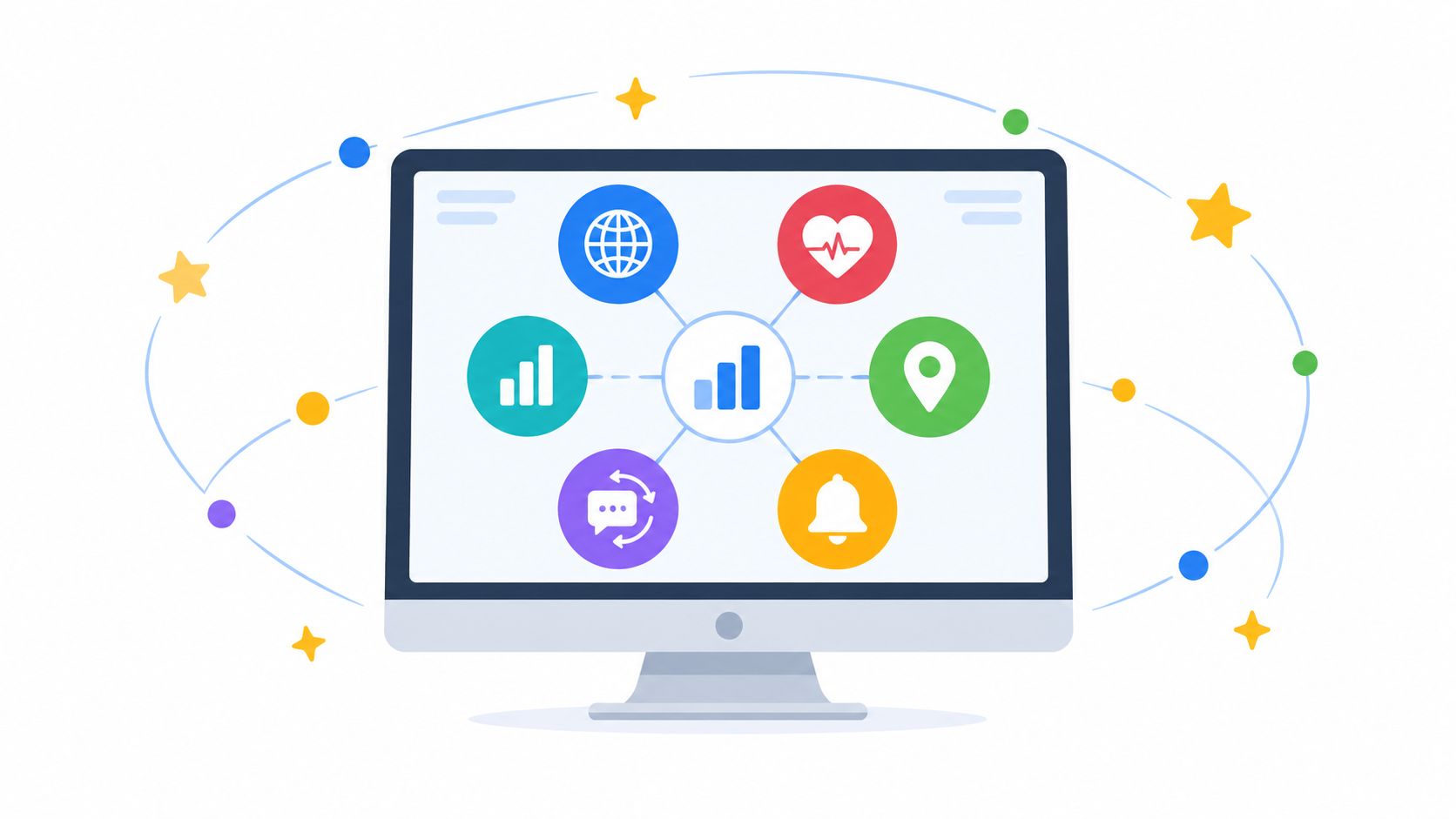
A reputation management platform is the control tower for everything people say, read, and verify about your company. It gathers signals from review sites, directories, social discussion, search results, and other public sources, then helps your team decide what needs attention, what needs a response, and what needs better proof.
The reason this became operational, not optional, is simple. Before the internet, buyers relied on a small number of sources, like personal recommendations and the Yellow Pages. Now feedback is persistent, searchable, and visible to many more people, which means every complaint, praise post, and third-party mention can shape the next buying decision.
A European Commission-hosted literature review found that 93% of surveyed travelers use online reviews when choosing a hotel, while 53% would not book a hotel with no online reviews. The same review cites findings that 68% of consumers trust peer reviews and 53% are influenced by user-generated content during a purchase European Commission review. Different market, same pattern, buyers look for proof before they commit.
The control tower view
Think of the platform like an airport control tower. Planes are mentions, reviews, posts, and search results, and the tower’s job is to see traffic early, spot risk, and guide the right response before a small issue becomes a runway problem.
That means the platform does more than count stars. It helps teams monitor multi-source sentiment, catch patterns in complaints, route replies to the right owner, and keep core information consistent across the places buyers check. If one location has a pricing mismatch or one review source keeps surfacing the same service complaint, the platform should make that visible fast.
A good platform doesn’t just tell you what happened. It helps you decide what to do next.
The value is not the dashboard by itself, it’s the workflow behind it. Monitoring tells you where the conversation is, response tools help you join it, and reporting shows whether trust is improving or slipping over time. If you’re comparing software at that level, the review management software category is a useful lens for understanding the older, review-first version of the problem.
Why buyers still care about response time and consistency
BrightLocal’s 2025 Local Consumer Review Survey, based on a representative panel of 1,026 U.S. adults, found that only 4% of consumers never read online business reviews. It also found that 40% use at least two review websites when researching a local business, and 63% expect a business to reply within two to three days to one week BrightLocal survey.
That matters because reputation is no longer judged on a single site. Buyers compare platforms, notice whether your responses are thoughtful, and use that as evidence of how you’ll behave after the sale. Consistency becomes a trust signal, not just a housekeeping task.
Core Features That Drive Monitoring Response and Reporting
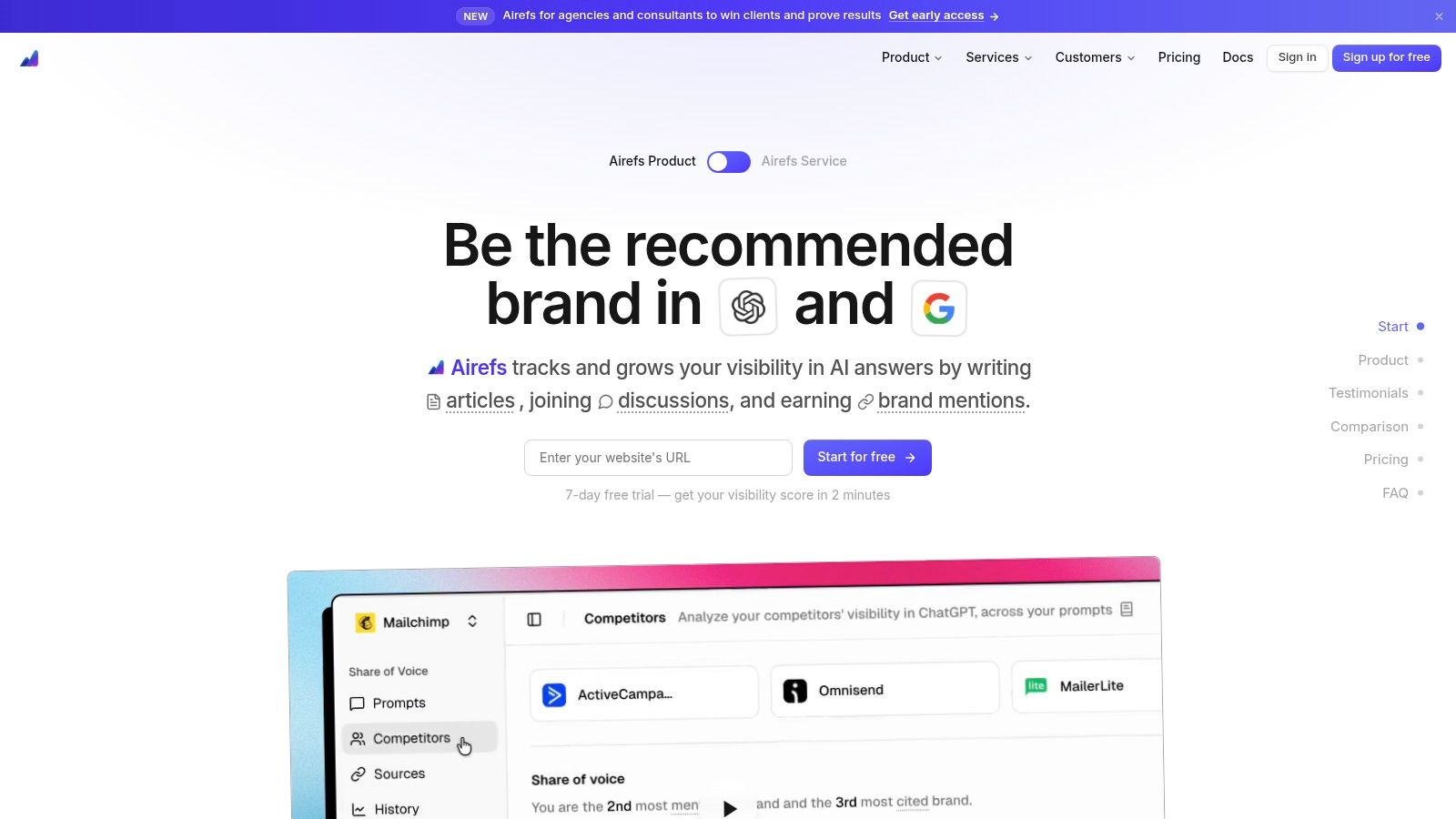
A buyer may first hear about you through AI, then verify you through reviews, search results, and source pages. The platform features that matter most are the ones that help you see that verification path clearly and act on it quickly.
The first thing to look for is multi-source monitoring. If your platform only watches one review site, you miss the places where buyers compare options. A stronger setup shows where trust starts to wobble, so you are not guessing after the fact.
Monitoring should connect to action
A useful system does more than collect mentions. It sorts feedback by source, topic, location, and urgency, so the right person can respond without bouncing across five tabs. That saves time and keeps small issues from becoming repeated public patterns.
Then comes sentiment analysis, which groups feedback by tone and theme. If buyers keep raising the same complaint in different places, the platform should surface that pattern clearly. The fix may belong to operations, support, or product, not marketing.
Practical rule: if the same complaint appears in multiple places, treat it as an operational signal, not a communications problem.
Alerts matter too. You do not need every mention in real time, but you do need fast notice when something negative starts to spread or when a key account, location, or product line gets pulled into a public thread. That lets you decide whether to reply, escalate, correct, or observe.
A good platform also makes the response chain easier to manage. Owners, templates, approval steps, and reminders keep reviews from sitting untouched while team members assume someone else handled them.
Reporting turns activity into proof
Reporting is where many tools get weak. A good reputation management platform shows trends over time, not just screenshots of nice comments, so you can tell whether response habits, content updates, and review generation efforts are helping. That is the difference between saying you are active and showing whether trust is improving.
A simple before-and-after view helps. If one location had slow replies and scattered feedback last month, and this month response times are tighter while repeat complaints are dropping, the report should make that pattern easy to read. That kind of view gives managers a way to connect the work to a business result without guessing.
The reporting layer should also answer practical questions. Which threads still need a reply? Which location keeps drawing the same complaint? Which page or profile needs an update before it affects more buyers? If the platform cannot show that chain, it is only storing comments.
A solid platform usually gives you:
- Source coverage: one place to track reviews, directories, and discussion threads.
- Response workflows: owners, templates, and approval paths for public replies.
- Issue visibility: recurring themes, sentiment shifts, and location-level problems.
- Reporting: evidence that your brand is responding faster and learning from feedback.
If you are comparing feature sets, the features overview is a useful way to map capabilities against your internal gaps.
How EmbedMyReviews Can Help
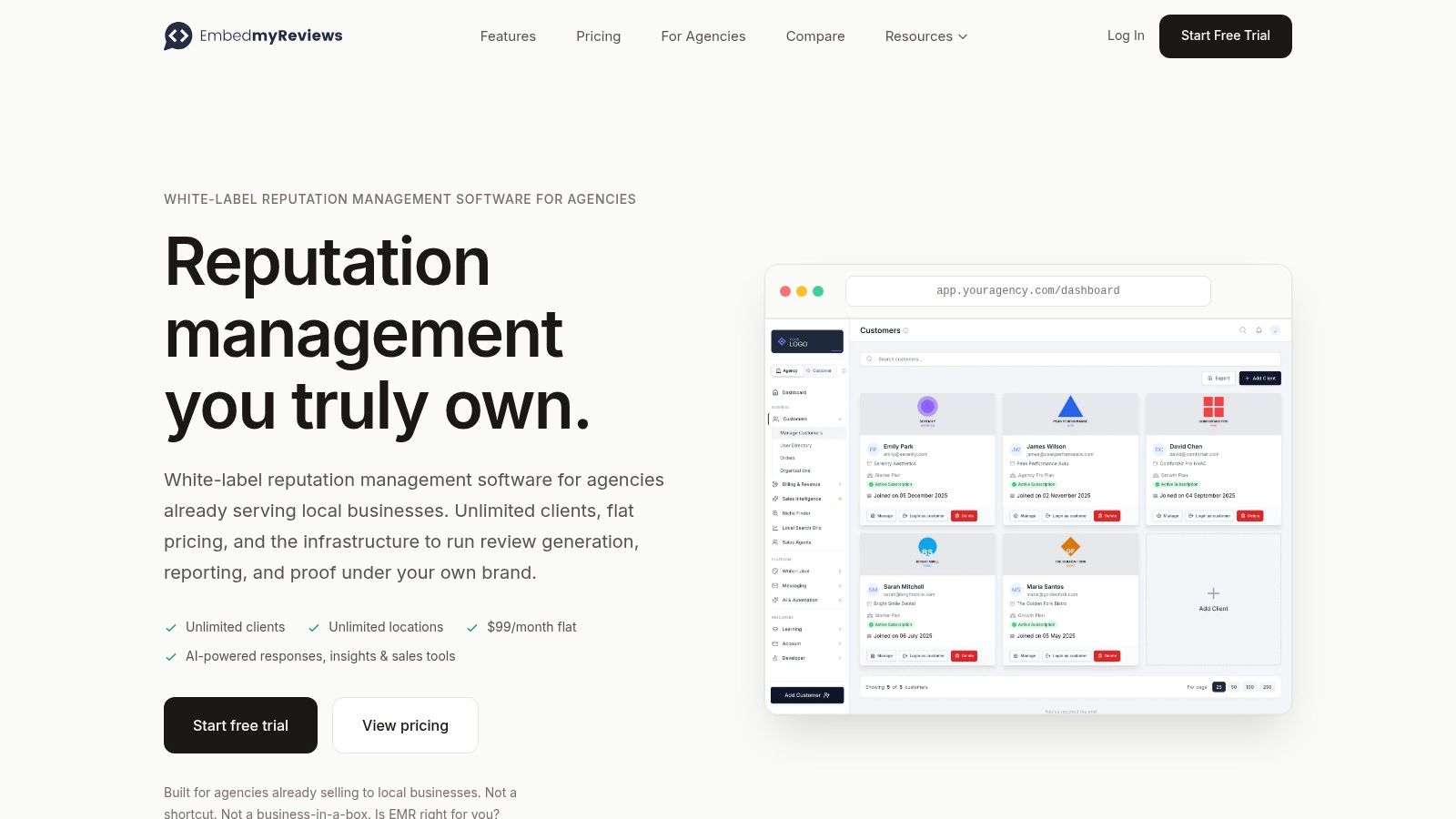
For agencies and operators that serve local businesses, EmbedMyReviews is built around ownership. It’s a white-label reputation management platform that runs under the agency’s own domain, so the client sees the agency brand, not a third-party vendor.
That matters when the work goes beyond monitoring. The platform centralizes review collection, response workflows, Google Business Profile posting, local rank tracking, analytics, and sales intelligence, which makes it easier to show the full reputation story in one place. It’s especially relevant when a team wants the service delivery, billing, and client experience to feel fully in-house.
Where it stands out
The platform is built for agencies, consultants, franchises, and local-service operators that need scale without adding a lot of tool sprawl. It supports branded deployment, multilingual interfaces, and workflows for reviews, posts, reporting, and client-facing proof, which can reduce the friction of managing many accounts at once.
It also has practical use in sales. The audit reports, Trust Score, competitor benchmarks, and AI visibility testing can help teams turn reputation work into a clearer business case, especially when a prospect wants to know what to fix first. For teams balancing execution and client reporting, that’s often the difference between a nice dashboard and a service that helps sell.
How AI Answer Tracking Differs From SEO and PR Tools
A ranking report can tell you a page is visible. A press report can tell you a story was published. AI answer tracking asks a different question, whether your brand appears inside the answer a buyer reads before they click, compare, or move on.
That difference matters because visibility alone does not guarantee trust. A brand can earn links and coverage, yet still be absent from the answer if the AI system favors other sources, different phrasing, or stronger proof. AI visibility needs its own workflow, not a renamed SEO report.
The issue is what happens after the recommendation. Buyers rarely stop at a single AI mention. They check the brand name in search, scan reviews, and look for the pages or sources that confirm the claim. If those proof points are thin, the recommendation may create curiosity but not confidence. The verification chain is where the sale is won or lost.
Traditional tools versus AI answer reputation tracking
| Capability | Traditional SEO PR Tools | Reputation Platform with AI Tracking |
|---|---|---|
| Primary question | Do we rank or get covered? | Are we mentioned inside AI answers? |
| Main signal | Keywords, links, clicks, coverage | Prompts, brand mentions, cited sources, share of voice |
| Buyer behavior covered | Search and media discovery | AI answer, then verification chain |
| Source visibility | Usually page-level or outlet-level | Source-level and answer-level context |
| Best use | Search performance and press monitoring | Tracking recommendation quality and downstream trust |
| Decision supported | What page or pitch to improve | What content, discussion, or proof needs fixing |
How to evaluate the stack
Start with prompt coverage. If you do not know which questions buyers ask AI tools, you cannot tell whether your brand is missing from important answers or only appearing in low-value ones. Then check source transparency, because the pages, forums, and reviews behind the answer show where the weak point lives.
Competitor benchmarking matters too. If another brand is cited more often, the gap may sit in third-party validation rather than on your own site. A tool like AI overview tracking helps teams focus on answer visibility instead of page-one vanity.
A practical example makes the difference clear. A brand can be mentioned in an AI response, then lose the deal when a buyer searches the name, finds a thin review profile, and sees little recent proof from customers or partners. The recommendation created interest, but the follow-up checks did not support it.
Buyer checklist: keep your SEO and PR tools for their core jobs, then add AI answer tracking when the question becomes why the model chooses one brand over another.
Buyer Checklist Implementation Steps and Pitfalls to Avoid
A practical rollout starts with a baseline. One SaaS marketing lead I spoke with, for example, looked at AI prompts, branded search queries, review sites, and the company’s own proof pages before changing anything, because the team wanted to know where trust was leaking instead of guessing.
The next question is what the platform needs to support. For B2B SaaS and agencies, that usually means prompt coverage, source transparency, competitor comparison, alerting, multi-brand support, and a way to turn findings into action, whether that’s content updates, community participation, or review generation.
What to buy first
Buy for the workflow you need. If your team only wants monitoring, don’t overbuy a heavy execution layer. If your team needs to move from insight to action quickly, make sure the platform supports clear next steps and ownership so you don’t end up with another dashboard no one checks.
The FTC’s Consumer Reviews and Testimonials Rule, effective October 21, 2024, makes compliance mandatory. It prohibits businesses from creating, selling, buying, or distributing fake reviews, including reviews from people who do not exist, people without actual product experience, and AI-generated reviews that misrepresent a real consumer experience FTC rule announcement.
Pitfalls to avoid
- Chasing mention volume: more mentions don’t help if the underlying sources don’t build trust.
- Ignoring disclosure and authenticity: AI-era reputation work breaks fast when it looks manipulated.
- Responding too slowly: buyers notice whether you answer public concerns on time.
- Tracking without ownership: if nobody owns alerts, the platform becomes passive reporting.
- Skipping the verification layer: if buyers always cross-check reviews, your owned proof has to be ready.
A lean rollout works better than a big-bang launch. Start with a handful of high-value prompts, the review sources buyers consult, and one simple reporting cadence, then add response workflows and content actions once the team knows what signals matter most. That keeps the program tied to revenue behavior instead of tool usage.
Real World Use Cases and KPIs for B2B SaaS and Agencies
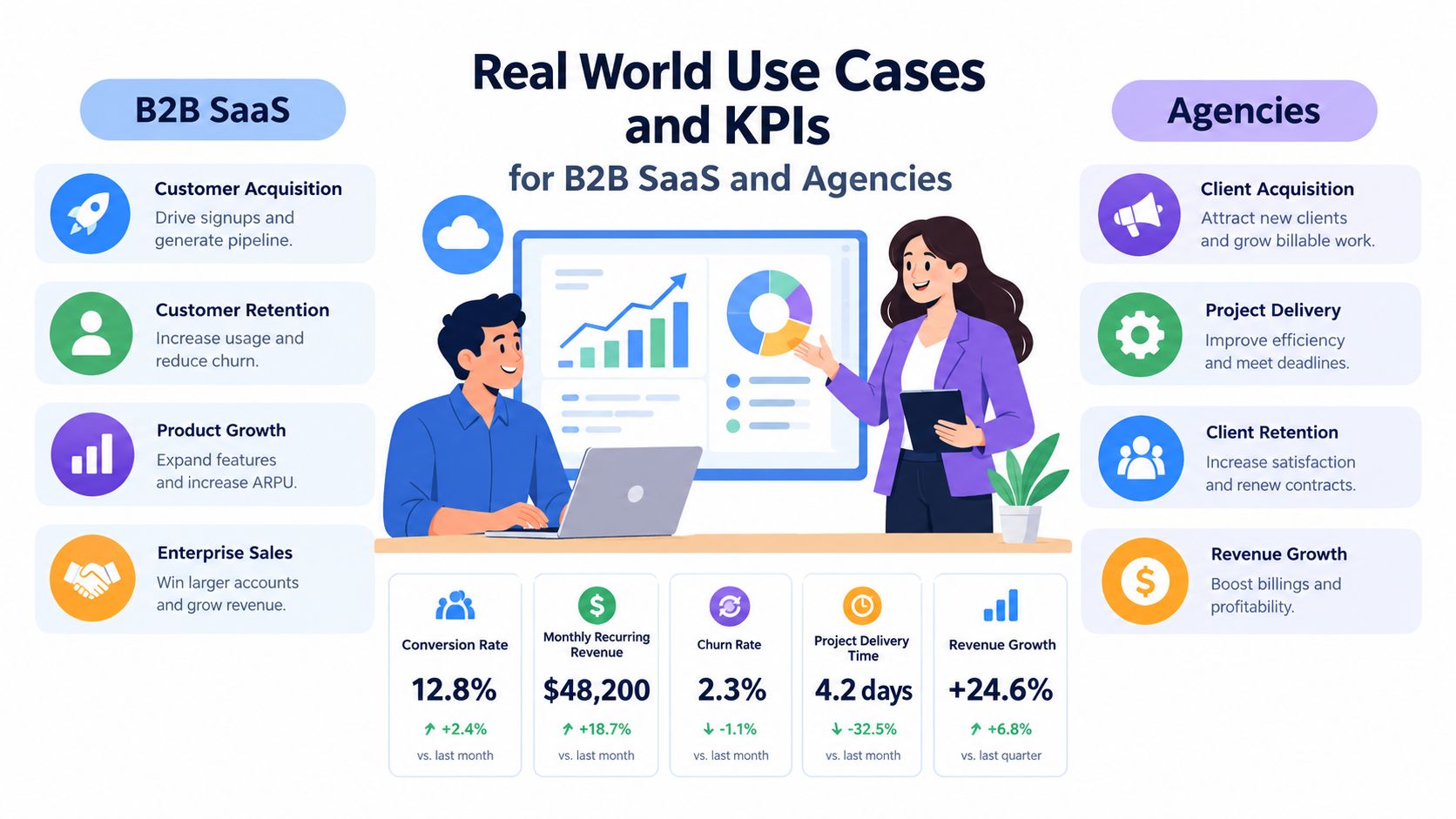
A SaaS startup with strong content but weak third-party proof usually has a simple problem, it shows up in answers but not in enough trusted places. The fix is often less about adding more blog posts and more about strengthening the pages and discussions AI systems already pull from, then measuring whether the brand starts appearing more consistently in those answers.
An in-house team faces a different issue. It may already have search traffic and brand awareness, but the buyer still leaves the AI result, checks reviews, and runs into inconsistent proof, so the KPI is not just visibility, it’s conversion after verification.
Three practical scenarios
-
SaaS brand building default-answer status
The team tracks prompts, updates cited pages, and joins relevant discussions where AI systems already pull evidence. The KPI is AI share of voice, source coverage, and branded search lift after answer visibility improves. -
In-house team fixing post-recommendation leakage
The company gets mentioned by AI, but buyers don’t convert because review quality and independent validation are thin. The KPI is not just mentions, it’s review rating, response time, and signups from buyers who come back through search after verification. -
Agency running multi-client programs
The agency manages several brands at once and needs to prove progress without rebuilding reports for every client. The KPI set usually includes source coverage, response speed, reputation trend movement, and client-level reporting that shows where the next opportunity sits.
Practical rule: if the buyer has to verify you, measure the verification outcome, not just the recommendation.
The old business lesson still applies. A 2011 Harvard Business School study of Yelp reviews and Washington State restaurant revenue found that a one-star increase in a restaurant’s Yelp rating was associated with a 5 to 9% increase in revenue, with the effect concentrated among independent restaurants and no comparable effect for chain-affiliated restaurants HBS study. The numbers come from a different market, but the pattern is familiar, reputation only matters when it changes buying behavior.
For teams that want proof of how these programs are framed in practice, the case studies collection is a useful reference point. It helps connect the work to measurable outcomes instead of abstract brand health.
Reputation Management Platform FAQs for AI Search Buyers
Can fewer credible mentions beat broad visibility?
Yes. If buyers verify your brand after an AI recommendation, a smaller number of trusted sources can do more work than a pile of weak mentions.
How do you improve AI reputation without gaming the system?
Use accurate first-party information, keep profiles consistent, respond publicly where the conversation already exists, and avoid fake or incentivized reviews. The goal is to earn trust signals, not manufacture them.
What happens after ChatGPT recommends a brand?
Most buyers check something else. They usually search the brand name, visit review sites, or look for independent proof before they act.
How should agencies report value?
Report on the full chain, prompt visibility, source coverage, review quality, response speed, and the actions that follow. That shows whether reputation work changed buyer behavior, not just dashboard activity.
Is AI visibility enough on its own?
No. AI visibility is the opening move, but conversion depends on the verification layer that comes next. If the supporting proof is weak, the mention won’t carry the deal.
If your team is trying to understand where AI answers, reviews, and third-party proof are helping or hurting conversion, start with one focused audit of your category prompts, review sources, and brand pages. Then choose a platform that fits the way you work, and if you need support on the AI visibility side, explore Airefs to see how your brand appears across AI-generated answers and where the trust chain breaks.